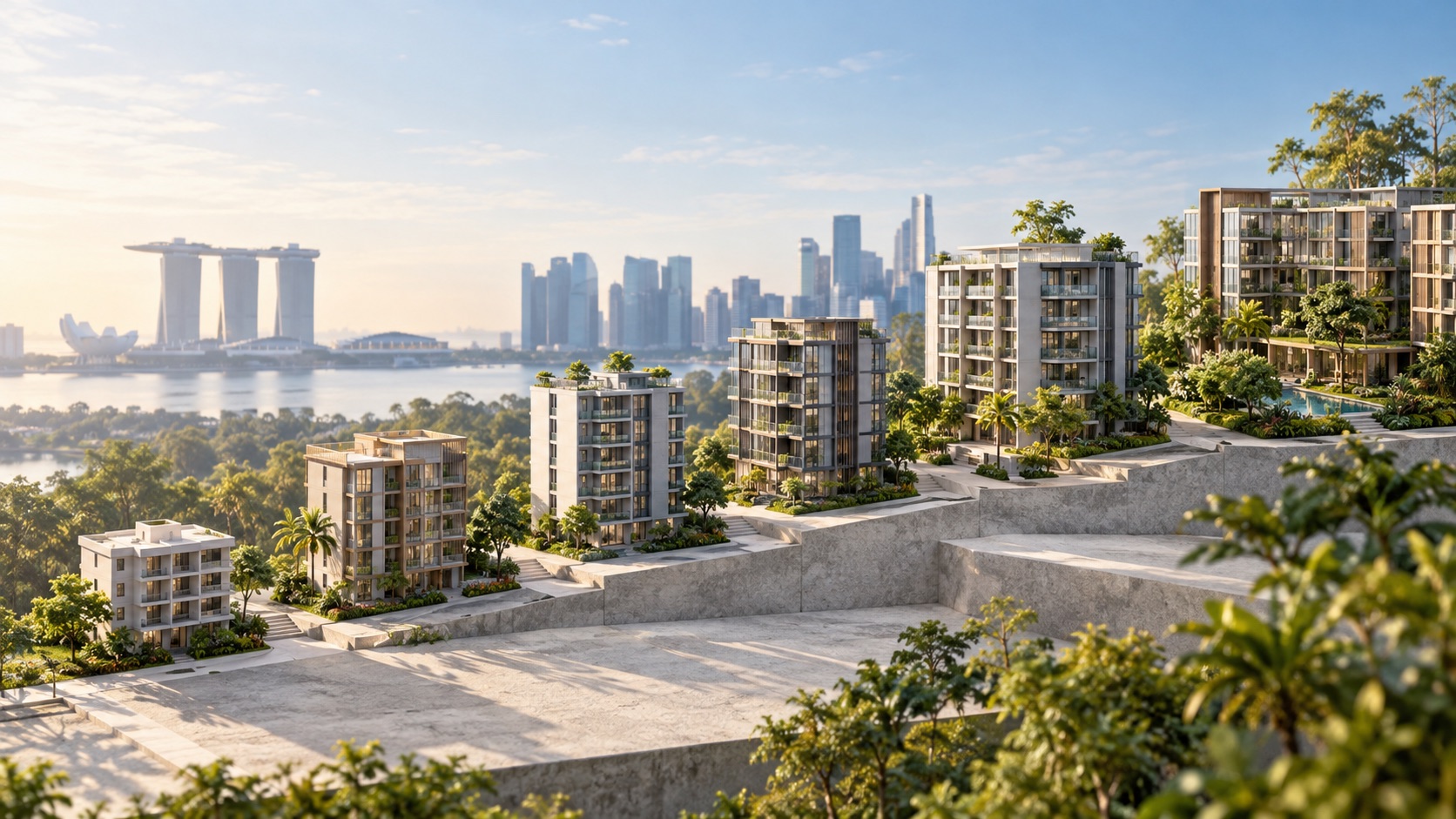
The 35% Rule: Singapore's New En Bloc Bill Makes Starting a Collective Sale Harder Than Finishing One
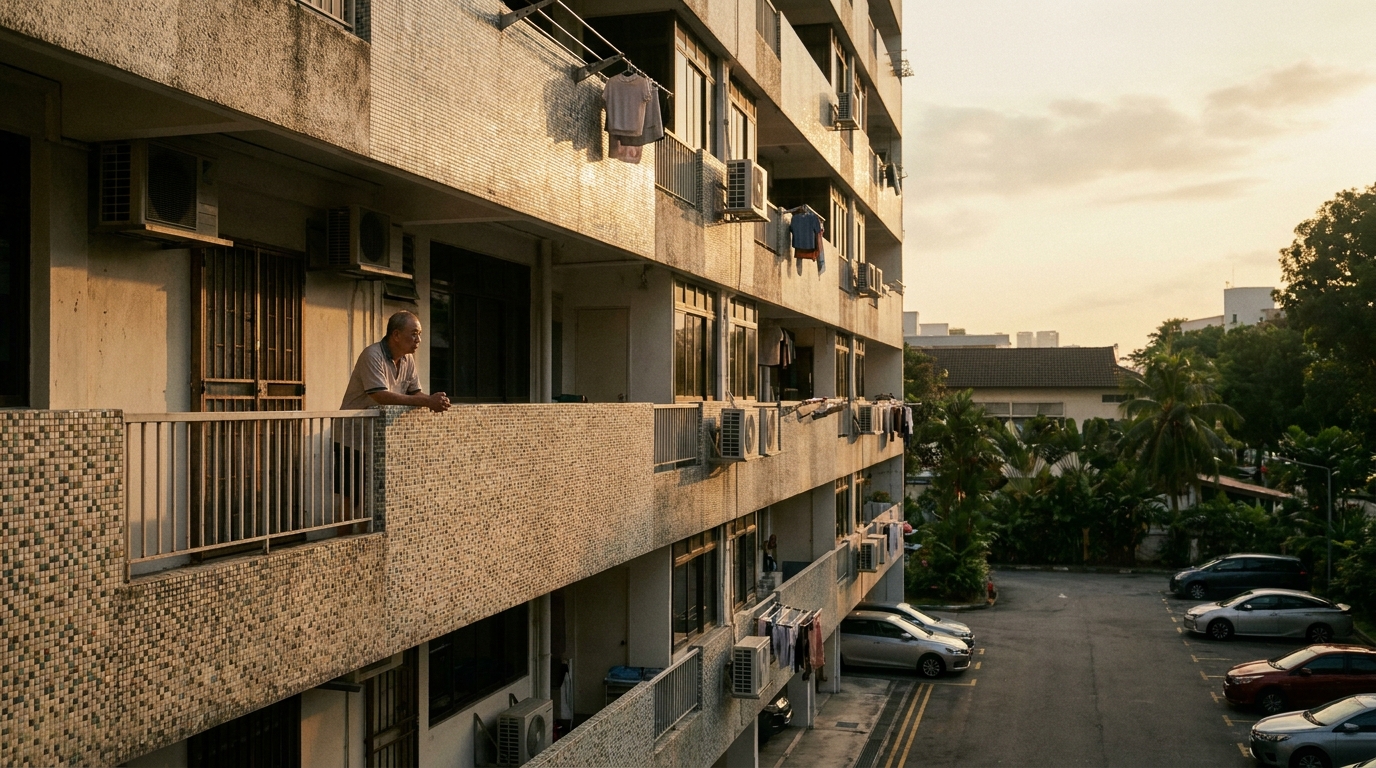
Everyone is reading the headline numbers — 70% and 65%. The number that will actually decide which ageing condos sell is the one at the front of the process, not the end.
The gist
- Consent thresholds fall to 70% for estates aged 40–59 years and 65% for those 60 and above.
- The requisition to convene an EGM rises from 20% to 35%, shifting difficulty to the start.
- Signature-gathering shortens from 12 months to six, and failed attempts now lock estates out three years.
- Lower thresholds do not create bids: 40% ABSD, modest price growth and plentiful state land constrain developers.
On 4 August 2026, the Ministry of Law tabled the Land Titles (Strata) (Amendment) Bill 2026 for First Reading — the first substantive rewrite of Singapore's collective sale regime since 1999. Almost every reading of it has focused on the two numbers that fell. The number that rose is the one that will decide which estates actually get to market.
The headline is 70% and 65%. The mechanism is 35%.
The Bill tiers the en bloc consent threshold by building age. Developments aged 40 to 59 years drop from 80% to 70%. Those 60 years and above drop to 65%. Estates aged 10 to 39 stay at 80%; those under 10 years stay at 90%.
That is the part everyone can quote. Less discussed: the requisition needed to convene an EGM to elect a collective sale committee rises from 20% to 35% of owners. The signature-gathering window for the collective sale agreement is cut from 12 months to six. And the lockout after a failed attempt stretches from two years to three.
Do the arithmetic on the funnel. Under the old regime, a 40-year-old estate needed 20% to start and 80% to finish — a 60-point climb. Under the proposed regime, it needs 35% to start and 70% to finish. That climb is now 35 points. For a 60-year-old development, the gap between the front door and the finish line narrows to 30 points.
The reform does not make collective sales easier. It moves the difficulty forward — from the campaign to the decision to campaign at all. Estates that cannot muster 35% of owners on day one will never reach the ballot they were hoping to win.
Failure now costs three years, not two
Raising the cost of a failed attempt is not incidental — it is the design. A committee that misses the mark under the new rules locks its estate out for three years, and must do its signature-gathering inside six months rather than twelve.
That combination rewards one kind of estate and punishes another. Pre-organised developments — where owners have already circulated valuations, agreed a rough apportionment method and know who lives overseas — can run a tight, compressed campaign. Loosely organised ones cannot.
Under the old rules, an en bloc attempt was a cheap option. Under the new ones, it is a bet with a three-year penalty attached.
Kevin Liang, who chaired the sale committee at International Plaza, has welcomed the lower thresholds for large estates that previously stalled near 80% — while cautioning that six months is tight for complex, mixed-use or multi-block developments with absentee and overseas owners. That warning cuts both ways: the estates most likely to benefit from a 70% threshold are often precisely the large ones least able to sprint.
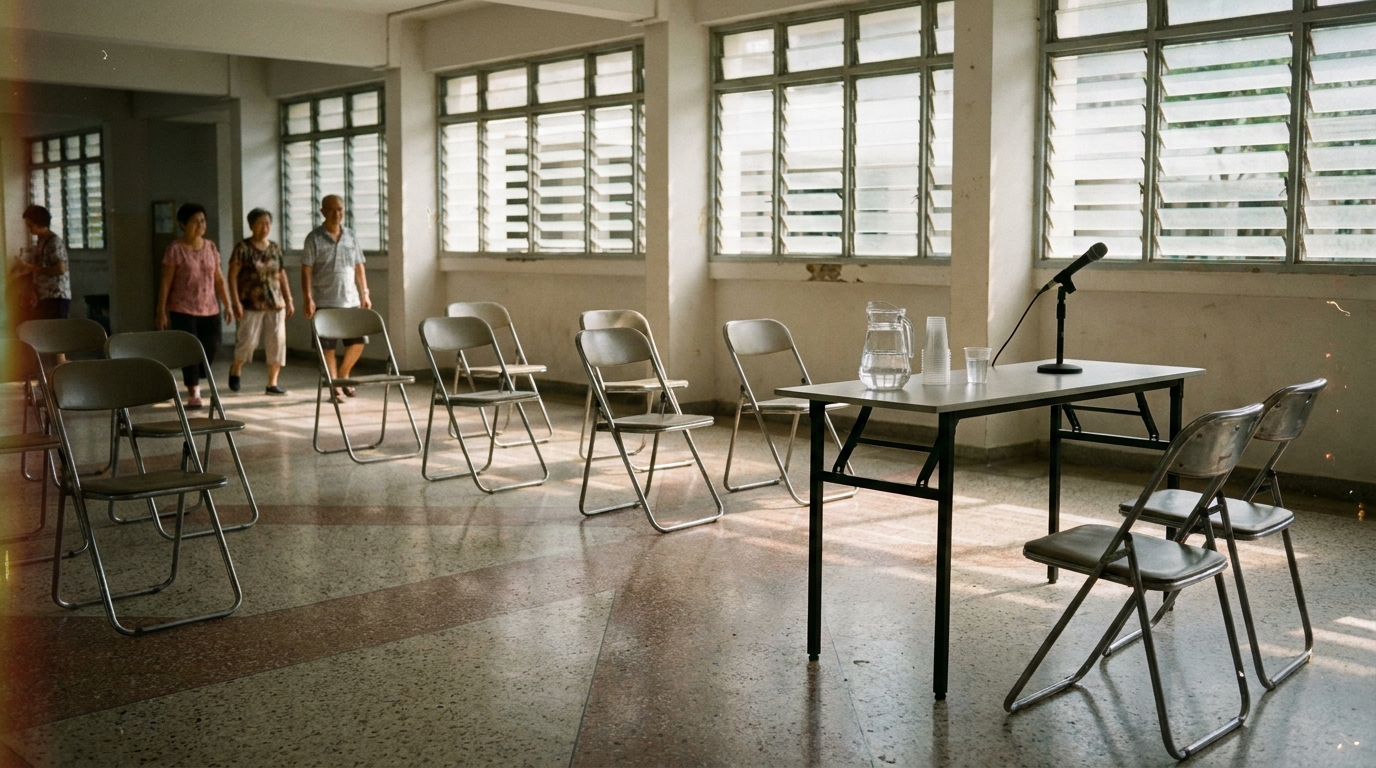
The Bill also lifts the compensation cap for objecting owners who can show financial detriment, to 0.5% of sale proceeds or $2,000, whichever is higher. And it extends the majority-consent mechanism to older non-strata residential developments where owners hold long leases without owning the land — a category that includes legacy estates such as Neptune Court, 752 units on a 99-year lease from 1975, which previously faced a practical requirement of unanimity.
Consent was never the binding constraint. Developers were.
Here is the uncomfortable part for owners drawing up reserve prices. Lowering a voting threshold lowers the barrier to launching a tender. It does not create a bid.
In 2025, five of 16 collective sale attempts succeeded. Annual completions across 2024 and 2025 ran at roughly four to five deals — against 28 deals in 2017 and 38 in 2018, the latter year producing S$10.84 billion in collective sales. The bottleneck in that slump was not owners refusing to sign. It was the gap between what owners wanted and what developers would pay.
That gap has structural causes that the Bill does not touch. Licensed developers still face 40% ABSD — 35% remittable, 5% not. Private residential prices have normalised, rising 3.3% in 2025 and 1.4% in the first half of 2026 on URA data, which keeps land bids conservative. And the state is competing directly with owners: the 2026 Confirmed List carries around 9,320 units, roughly 50% above the 10-year average.
A Government Land Sales site is clean. A collective sale site comes with land betterment charge, possible lease top-up premium, demolition, and the risk that the tender fails after months of work. When state land is plentiful, the private site has to be cheaper — or better — to win attention.
The stock in play is smaller than the noise suggests
Official figures put over 360,000 private non-landed units at under 40 years old, and roughly 20,000 units at 40 years and above. Industry estimates count about 150 developments in the 40–59 bracket and fewer than 10 at 60 years or older.
So the newly-lowered 65% threshold applies to a single-digit number of developments. The 70% threshold is where the volume sits — and even that is around 5% of the private non-landed stock.
Where they sit matters more than how many there are. About 40% of developments aged 40 and above are in Districts 9, 10 and 11, where GLS supply has historically been tight. That is the intersection the reform is really aimed at: constrained state supply, ageing low-density stock, and unutilised plot ratio under the URA Master Plan.
Freehold boutique versus leasehold mega: the split is about to widen
Expect the reform to sort the ageing stock into two very different outcomes rather than lifting all of it.
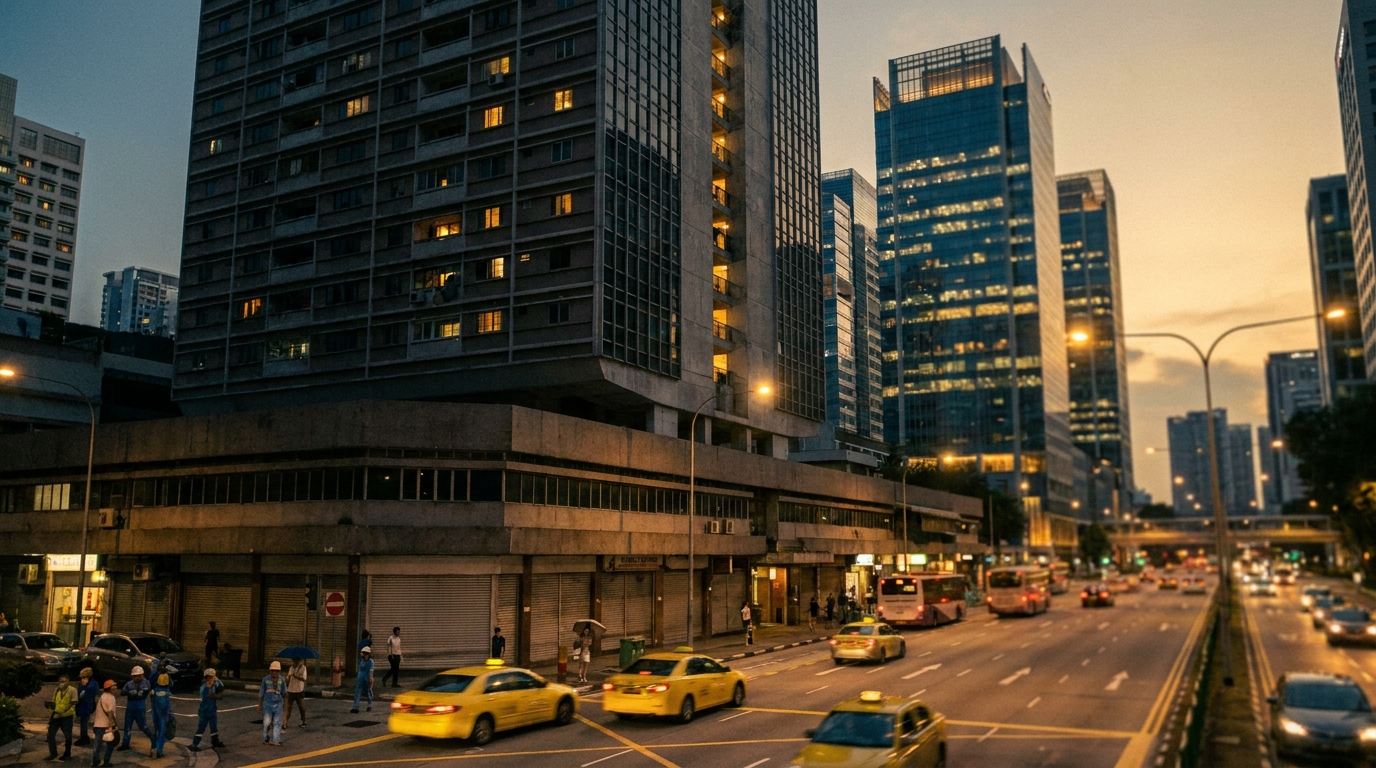
- Smaller freehold and 999-year estates in prime districts with headroom under the Master Plan require a smaller absolute cheque from a developer. Lower consent thresholds convert a stalled 74% campaign into a live tender.
- Large 99-year leasehold estates with meaningful lease decay face state lease top-up premiums that come straight out of the payout. Consent gets easier; the maths does not.
The government has tried to address the second problem from the developer side. ABSD remission build-and-sell timelines have been extended to six years for sites yielding 700 to 1,399 units, and seven years for sites yielding 1,400 or more — the latter conditional on selling at least half the homes by the end of Year 6. That is a genuine concession on carrying risk for mega sites, of the kind Pine Grove, at a S$1.78 billion reserve price, has struggled with.
It is not, however, a subsidy on price. A seven-year runway makes a large site financeable. It does not make an over-priced one attractive.
What owners of ageing condos should actually do now
First, note the status: the Bill has passed First Reading only. It is not yet law. Anyone buying an old unit purely on speculative en bloc hopes is pricing an outcome that Parliament has not yet approved and no developer has yet bid on.
Second, the honest test of en bloc potential has changed. It is no longer "can we eventually get to 80%". It is a four-part question: can this estate reach 35% requisition; can it collect signatures in six months; does the site carry unutilised plot ratio; and can a developer buy it at a price owners will accept, against a Confirmed List running 50% above its 10-year average.
Third, the case for selling into an ageing estate's own maintenance cycle has not gone away. Depleting sinking funds, concrete spalling and lift and wiring replacement are real costs borne by owners while they wait — and former HUDC estates such as Laguna Park, Pine Grove and Braddell View illustrate how long the waiting can run.
The rehousing problem is the one nobody legislates away
A payout is only as good as what it buys. Displaced owners re-entering the private market face elevated new-launch pricing, MAS's 4.0% medium-term stress-test floor and the 55% TDSR ceiling — constraints that bite hardest on older sellers with limited income runway.
One thing has moved in their favour: the 15-month wait-out period for private owners buying non-subsidised HDB resale flats has been lifted, so an en bloc seller can right-size into public housing without an enforced gap. For elderly owner-occupiers in 40-year-old estates, that is arguably a bigger practical change than the consent threshold itself.
The Real Estate Developers' Association of Singapore has backed the amendments as enabling timely rejuvenation of ageing precincts. It probably will — at the margin. But the market that produced S$950 million for Tan Boon Liat Building and S$810 million for Thomson View did so on site economics, not voting rules.
Watch the Second and Third Readings for any softening of the six-month window or transitional provisions. Watch land betterment charge revisions and the next GLS quotas. And watch whether committees can clear 35% before they ever get to argue about 70%. That is where the new en bloc market will be decided.