The Community Relations Unit Goes Islandwide on Sept 1 — And Refusing Mediation Now Costs S$1,500
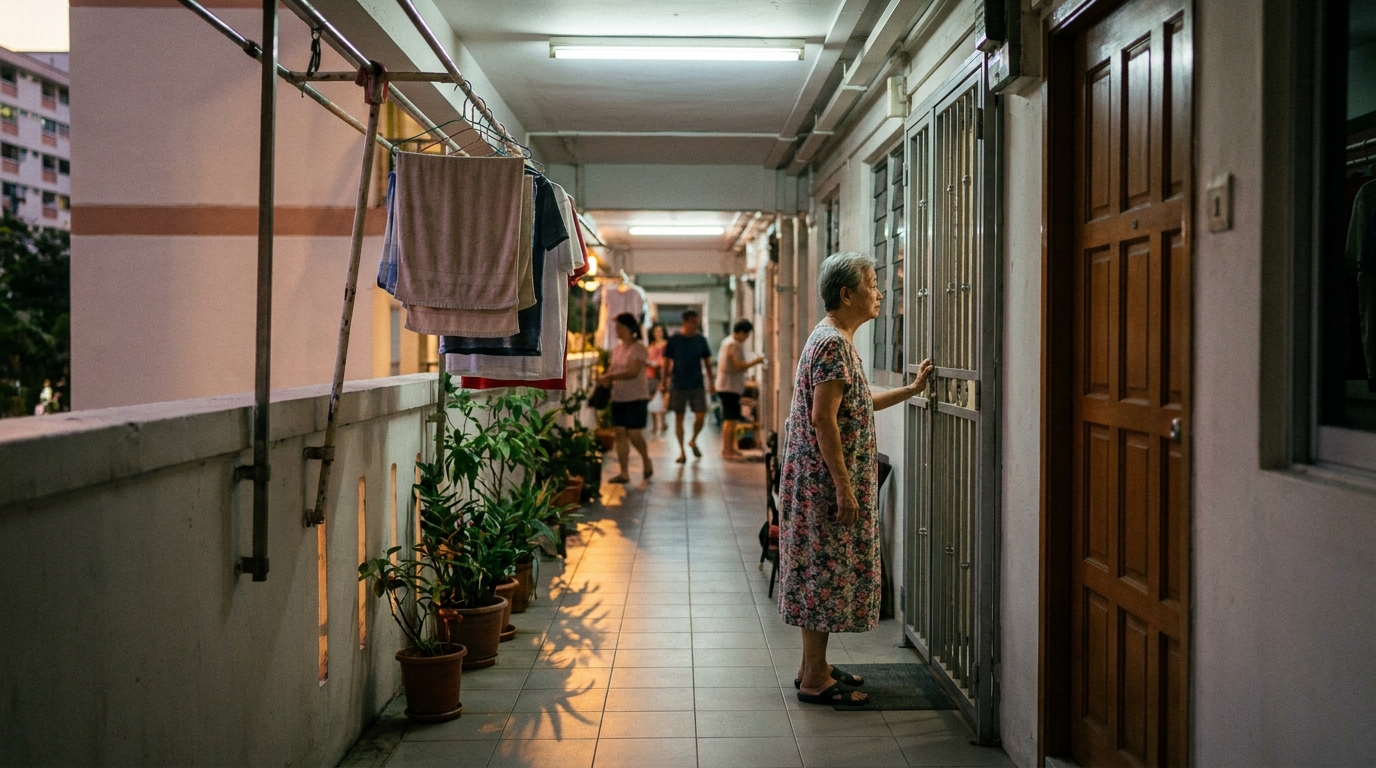
Singapore's neighbour dispute unit leaves Tampines with statutory teeth, and for the first time the framework reaches private estates as well as HDB blocks.
The gist
- From Sept 1, 2026, the Community Relations Unit and Mediation Directions apply islandwide, covering private estates too.
- Skipping a directed mediation without reasonable excuse carries a fine of up to S$1,500.
- In 2025, 1,198 of 1,676 neighbour dispute cases collapsed because one side declined to respond.
- Only about 18 officers cover the whole island, so the unit targets severe cases, not everyday friction.
In 2025, Singapore registered 1,676 voluntary neighbour dispute cases. Only 317 made it to mediation. The other 1,198 collapsed because one side simply declined to respond — and until now, that was a complete defence.
The 1,198 disputes that went nowhere
That single statistic explains the whole policy. Nearly 994 of the 2025 cases were noise-related, and of the 317 that reached the Community Mediation Centre, 250 settled. Mediation works. The problem was never the process — it was attendance.
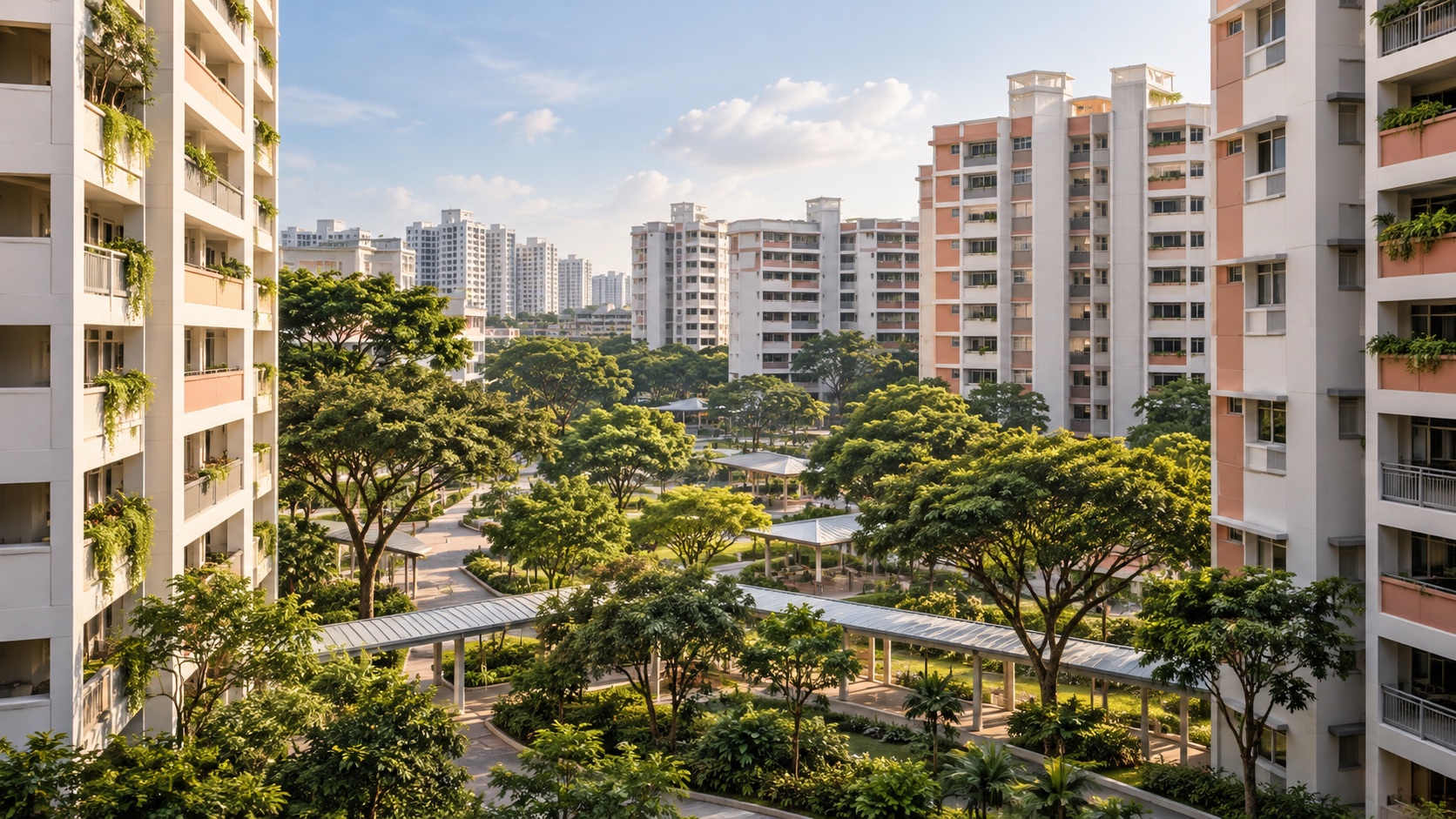
From September 1, 2026, that changes. The Ministry of Culture, Community and Youth, the Ministry of Law and the Ministry of National Development announced on Aug 28 that the Community Relations Unit (CRU) and the Mediation Direction framework go islandwide, after a pilot that ran in Tampines HDB estates from April 2025.
Both mechanisms sit under enhancements to the Community Disputes Management Framework and the Community Disputes Resolution Act. The headline consequence is blunt: failing to attend a directed mediation session without reasonable excuse — or walking out before the mediator ends it — is an offence carrying a fine of up to S$1,500.
What actually changes on Sept 1
Two separate levers, often conflated, and worth separating.
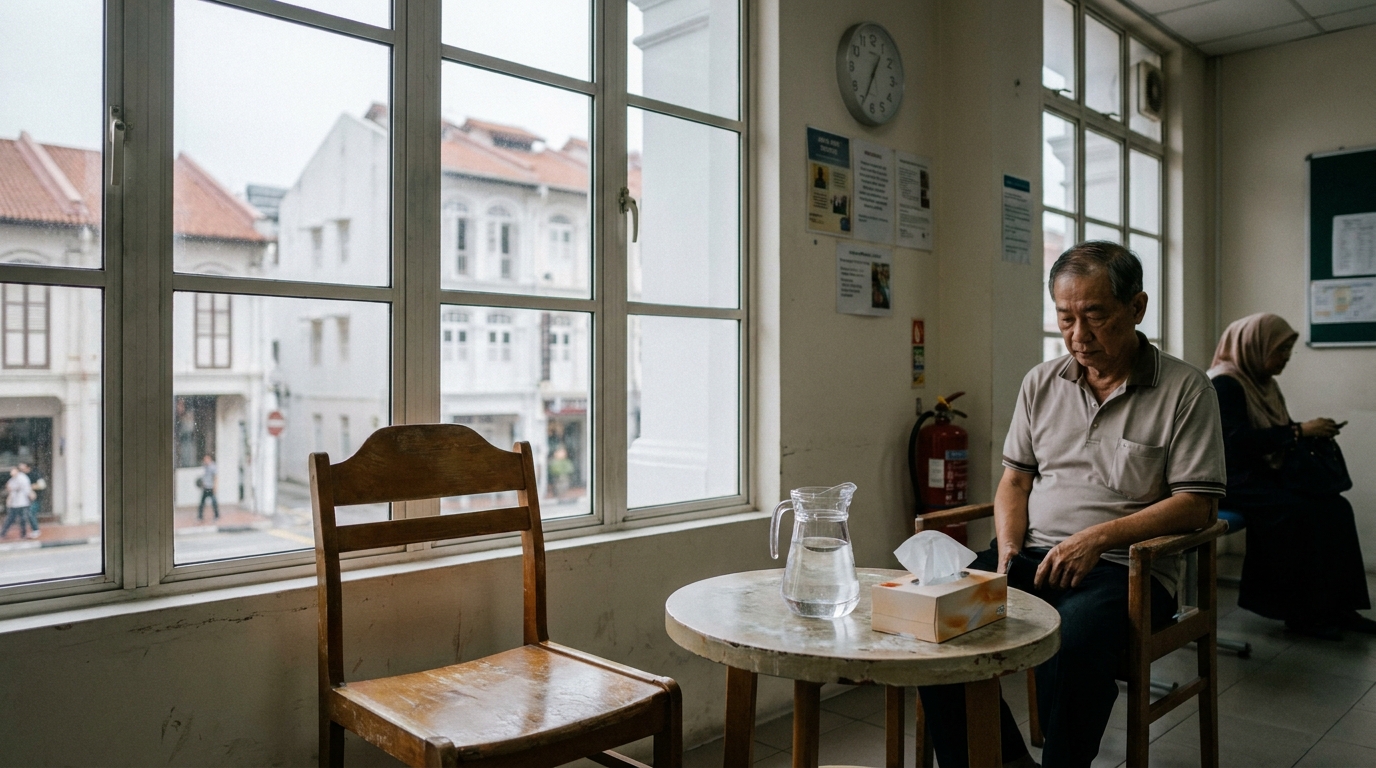
The first is compulsory mediation. HDB and the People's Association can issue legally binding Mediation Directions in public housing estates; the People's Association can issue them in private estates. Both sides must show up at the Community Mediation Centre. Notably, the obligation is symmetrical — a complainant who ignores a Mediation Direction forfeits the right to file a subsequent claim at the Community Disputes Resolution Tribunals (CDRT).
The second is investigation and enforcement. CRU officers can take formal statements and, with the resident's consent, install noise sensors inside homes to capture the intensity, timing and direction of the disturbance. After investigating, they can issue advisories or warnings — neither carries a penalty — and then a legally binding abatement order. Breaching an abatement order is a criminal offence.
At the far end of the ladder, the CRU can refer the most severe nuisance-makers to HDB to consider compulsory acquisition of the flat. And from Sept 1, the CDRT can order a person to undergo a mental health assessment or treatment where they have previously refused and there is reason to believe an underlying condition is driving the disamenity.
The policy shift is not that Singapore now punishes noisy neighbours. It is that ignoring the process is no longer free — for either side of the dispute.
The private estate clause is the underrated part
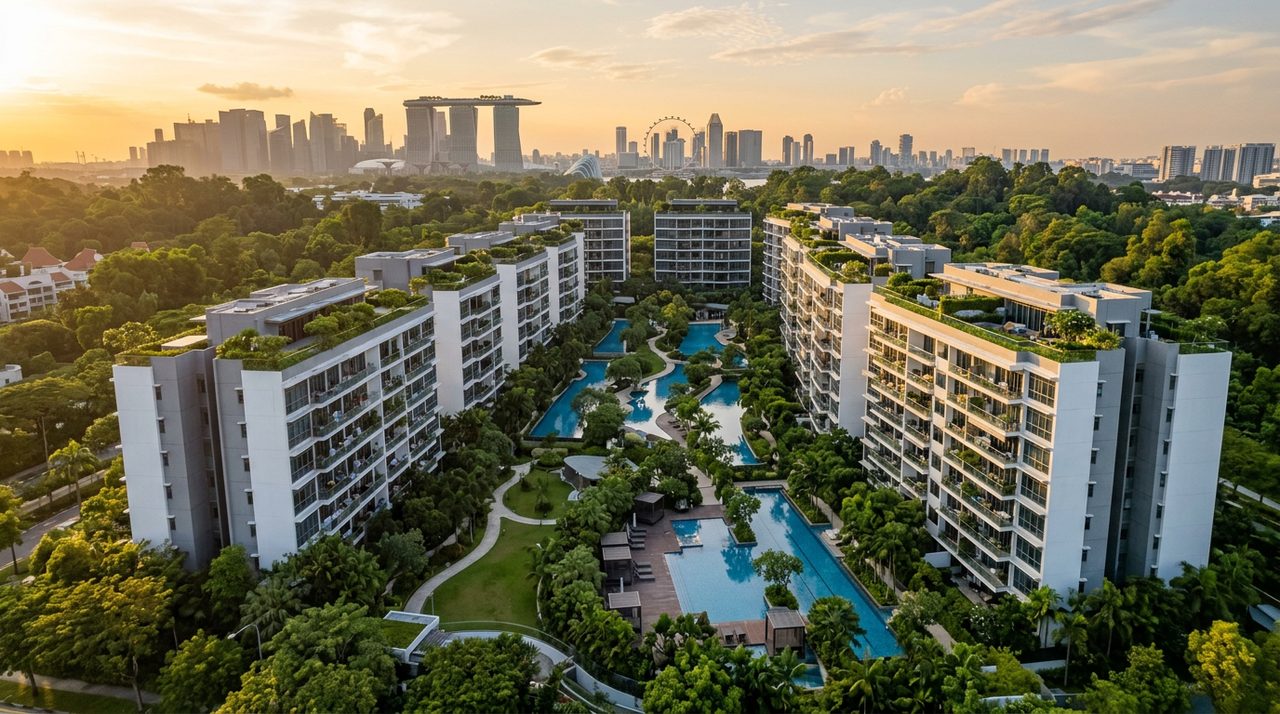
Most coverage frames this as an HDB story. It isn't only that. The framework applies to neighbour disputes in both public and private housing estates, and in private developments the issuing authority for Mediation Directions is the People's Association.
That is a genuine structural change for condo living. A managing agent can write letters. A council can cite by-laws. Neither could previously compel an unresponsive owner or tenant to sit in a room and negotiate. Now a statutory body can — with a fine attached.
For years, the practical remedy for a noisy neighbour in a private development was to move. That was not a legal system. It was a market outcome.
The asymmetry that remains is at the top of the ladder. Compulsory acquisition is an HDB instrument; there is no equivalent lever over a private title. What private estates get is everything upstream — investigation, evidence, abatement orders, and the CDRT — which is where the overwhelming majority of cases live anyway.
Eighteen officers, one island
Now the sobering arithmetic. The CRU scales to roughly 18 dedicated public officers, up from 15 during the pilot, supported by auxiliary officers and trained with the Agency for Integrated Care to handle cases with mental health dimensions.
Eighteen officers for a country where more than 80 per cent of residents live in high-density public housing, plus every private estate. That is not a mass-enforcement machine. It is a scalpel.
The pilot numbers reinforce that reading. Over roughly sixteen months in Tampines, the CRU handled nine severe noise cases and no hoarding cases at all. Four of the nine involved mental health conditions or special needs, requiring coordination with the Institute of Mental Health, the Agency for Integrated Care and Family Service Centres. Four Mediation Directions were issued: two ended in amicable settlements, one improved after further CRU engagement, and one non-compliant complainant was warned and subsequently withdrew.
Read that honestly and the message is clear: this unit is for the egregious residue, not for your upstairs neighbour's Saturday drilling. Everyday friction still routes through the ordinary channels. Anyone expecting an officer with a sensor kit within a week of a complaint will be disappointed.
What it does to the resale conversation
The market context matters here. HDB resale price growth moderated to about 2.9 per cent in 2025, with private home prices posting modest quarterly gains in the region of 0.5 to 0.9 per cent. In a moderating market, buyers get pickier — and liveability, not just floor area and lease, starts to price.
Meanwhile the supply pipeline keeps churning households through the system. Roughly 13,500 flats reach their Minimum Occupation Period in 2026, rising to 15,000 in 2027 and 19,500 in 2028, on top of a BTO programme of more than 55,000 flats launched between 2025 and 2027. More new clusters, more first-time neighbours, more scope for friction to set hard.
Does a hoarder next door affect resale value? Nobody publishes that number, and anyone who quotes you one is guessing. But the mechanism is not mysterious: corridor clutter and audible disturbance during a viewing shape offers, and a buyer who walks is a buyer who walks. What the CRU changes is that a seller now has an institutional route to fix the problem rather than discount around it.
Landlords and tenants now share an exposure
Investors should read the private-estate provision carefully. If a tenant becomes the subject of a dispute, a statutory Mediation Direction can land on the household, and persistent nuisance can escalate to an abatement order — with criminal consequences for breach.
Severe disturbance is already a common trigger for early lease termination and extended vacancy. A framework that resolves it faster protects yield on the receiving end. On the offending end, it creates a compliance question that tenancy agreements have historically handled with vague boilerplate about "nuisance".
There is also a quieter procedural gain. If neighbours settle at mediation, the agreement can be registered as a CDRT order with all parties' consent — meaning a breach is enforceable by application rather than by starting the fight again from zero. That is the difference between a promise and an instrument.
The court data explains the urgency
Between April 2025 and July 2026, 299 claims were filed at the CDRT. Eighty-five per cent were noise-related. About half were resolved amicably; the rest were ruled on, had orders made, or remain pending.
As at July 31, the CDRT had issued three exclusion orders — temporarily evicting residents from their own homes. Three is a small number, and that is the point. Courts reach for that remedy only when everything upstream has failed, which is precisely the gap the CRU is designed to fill.
The critique writes itself, and it is not unreasonable. Compelling attendance under threat of a fine does not manufacture good faith. Acoustic monitoring inside homes, even with consent, is an intrusion the state did not previously make. And a framework that leans on official intervention may erode the ordinary habit of knocking on a door.
What to watch from September
Three things will tell us whether this works, and none of them will be visible in the first month.
- Conversion rate. In 2025, 317 of 1,676 cases reached mediation. If compulsory directions push that ratio decisively upward without collapsing the settlement rate, the policy has done its job.
- Private estate uptake. How actively the People's Association issues directions in condominiums and landed enclaves — and how managing agents route matters to it — is untested. The pilot was HDB-only.
- Evidence quality at the CDRT. Sensor data and official investigation logs should shorten hearings and harden orders. Watch whether case throughput improves.
For buyers, the practical shift is modest but real. Neighbour risk in the resale market has always been the one variable no valuation captures and no OTP protects against. It still isn't searchable, and nothing announced on Aug 28 makes it so. But for the first time, the remedy after you move in is a statutory process rather than a war of attrition — and that is worth something on a floor plan that otherwise checks every box.