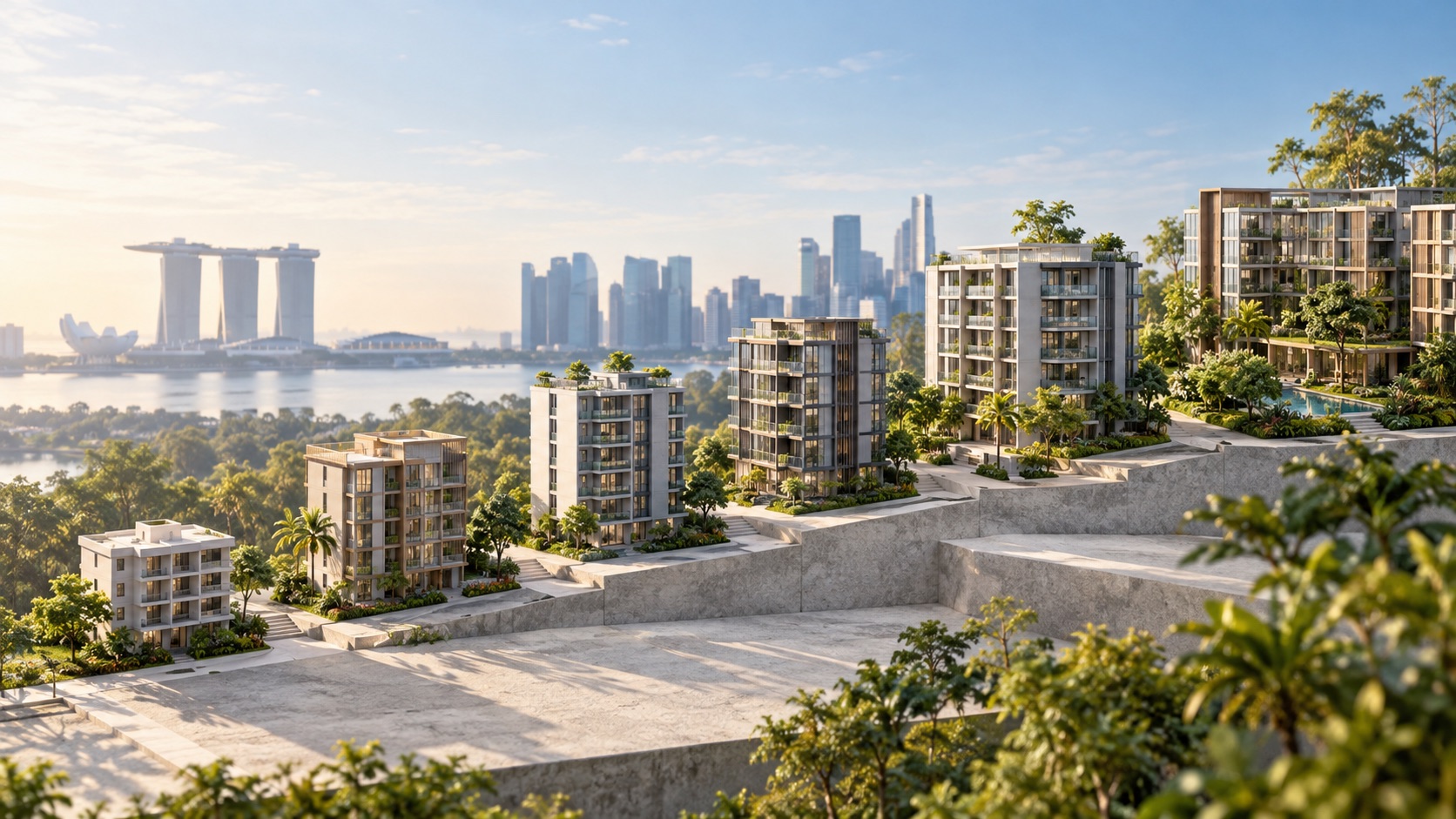
The 70% En Bloc Rule: What Falling Consent Thresholds Really Do to Pine Grove-Era Estates
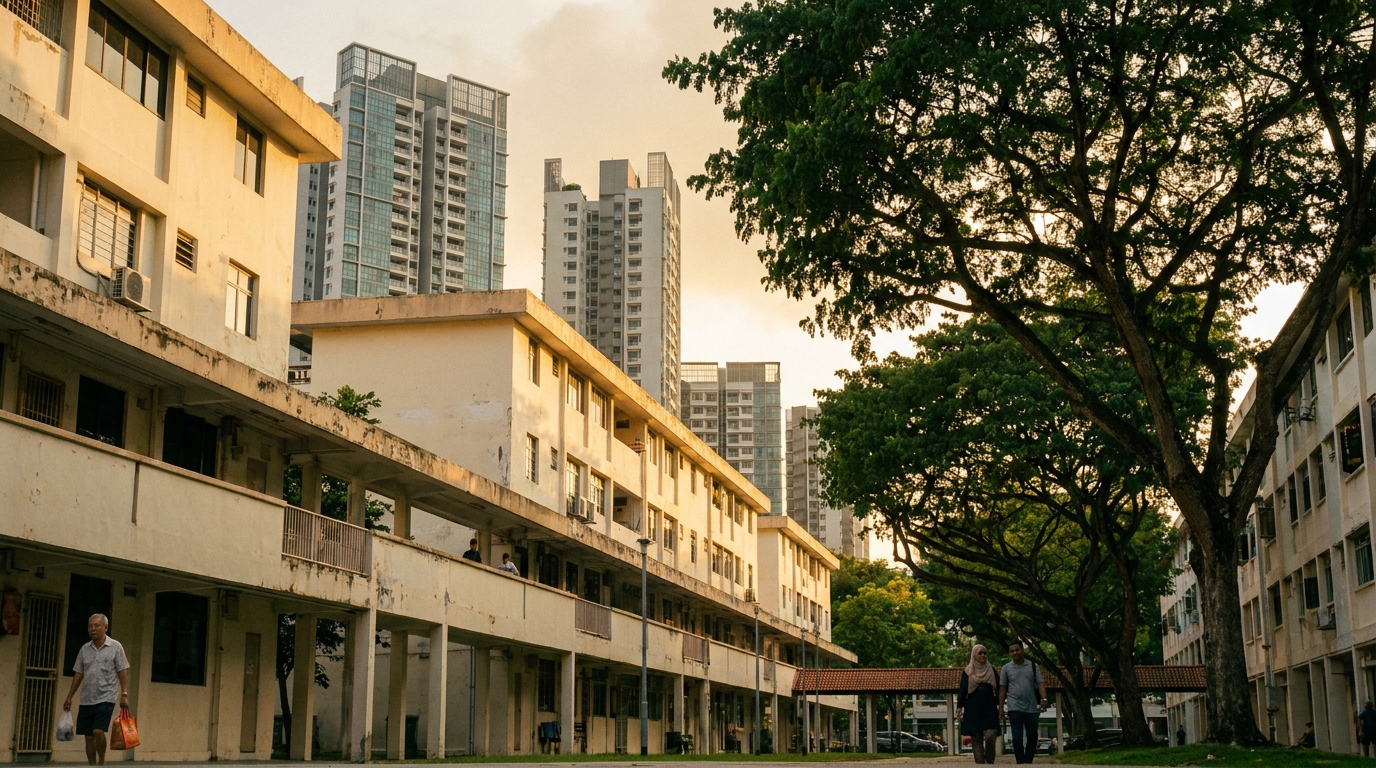
A Bill tabled on Aug 4 would cut the collective sale consent bar to 70% for developments aged 40 to 59 and 65% for those 60 and older — a narrow reform with concentrated consequences.
The gist
- A Bill tabled Aug 4 would cut en bloc consent to 70% for estates aged 40-59 years.
- Estates 60 years and older would need just 65%; under-40 developments keep existing 80-90% thresholds.
- Only about 20,000 private non-landed units are over 40 years old, versus 360,000 below.
- Around 40% of these older developments sit in Districts 9, 10 and 11.
The Ministry of Law has tabled a Bill that would cut the collective sale consent threshold to 70% for developments aged 40 to 59 years and 65% for those 60 years and older. It is a small change on paper. Inside a 1980s condominium block, it is the difference between a stalled sale committee and a live one.
What the Bill actually changes
The Land Titles (Strata) (Amendment) Bill was tabled in Parliament on Aug 4. For estates aged 40 to 59 years, the consent threshold drops from 80% to 70%. For estates aged 60 and above, a new 65% threshold applies.
Everything else stays put. Developments under 10 years old remain at 90%. Those between 10 and 39 years remain at 80%. Nothing has been relaxed for the bulk of Singapore's private housing stock.
And nothing is law yet. The amendments will be debated in Parliament before being put to a vote. Anyone treating the new numbers as settled is running ahead of the process.
MinLaw's rationale is maintenance economics as much as urban planning. The collective sale regime dates from 1999; the buildings it was written for have aged nearly three decades since, and many now face substantial spending on repairs, upgrading and replacement of ageing systems.
Roughly one private non-landed unit in 20
Here is the number that should frame every reaction to this Bill. Government records show about 20,000 private non-landed residential units are more than 40 years old, against more than 360,000 units below 40 years.
That is roughly one unit in 20 sitting inside the newly relaxed brackets. Industry estimates put the count at about 150 private non-landed developments aged between 40 and 59 years, and fewer than 10 at least 60 years old.
So this is not a market-wide loosening of en bloc rules. It is a targeted intervention aimed at a shrinking, geographically clustered tail of the stock — and the 65% tier applies to a set of estates you could count on your fingers.
The reform touches about 20,000 units out of a private non-landed stock exceeding 380,000. Its significance lies not in scale but in concentration: a small number of large, under-built sites, many of them in prime districts.
Pine Grove and Braddell View: the intensification arithmetic
The case for the change is easiest to see in floor area, not consent percentages. Pine Grove, completed in 1984 with 660 units, may be redeveloped into a new development of about 2,000 units. Braddell View, completed in 1978 with 918 units, could yield some 2,600 new homes.

Put those two together and 1,578 existing units become roughly 4,600 — close to triple the housing on the same land. That is the whole argument for lowering the bar, compressed into two addresses.
Older estates were built to the planning assumptions of their era, often before the MRT lines and amenities that now surround them. The result is a set of low-intensity sites in high-accessibility locations — precisely the mismatch that land-scarce cities try to correct.
Put Pine Grove and Braddell View together and 1,578 existing units become roughly 4,600 homes on the same land. That is the whole argument for lowering the bar, compressed into two addresses.
Why the prime districts matter most
About 40% of these older developments sit in Districts 9, 10 and 11. That single statistic explains why developers will pay closer attention to this Bill than the 20,000-unit headline suggests.
Government Land Sales supply in the prime districts is limited. Where the state is not releasing sites, the collective sale market is effectively the only route to a sizeable prime freehold or long-lease parcel. Lowering the consent threshold on 40-year-old estates in Districts 9, 10 and 11 widens a channel that has been narrow for years.
That has a second-order effect worth naming. If prime redevelopment land becomes marginally easier to assemble, the pipeline of future prime new launches becomes less dependent on the GLS calendar — and less prone to the scarcity premiums that thin supply produces.
It also means the benefit of the Bill will not be evenly distributed. An ageing estate in a location with weak redevelopment economics does not become saleable because the threshold fell 10 points. It merely becomes easier to attempt a sale.
The minority's arithmetic just moved
Consent thresholds are, in practice, blocking thresholds read backwards. Under the current 80% rule, owners holding more than 20% can stop a sale. At 70%, they need more than 30%. At 65%, more than 35%.
In a 660-unit or 918-unit estate, that is a meaningful shift in who has to be persuaded. Sale committees will need fewer holdouts to convert; holdouts will need a substantially larger bloc to hold the line.
MinLaw has framed the package as pairing lower thresholds with tighter safeguards for minority owners. The detail of those safeguards is what the parliamentary debate should be judged on, because the trade-off is explicit: the state is making sales easier to initiate while promising the dissenting minority stronger protection at the back end.
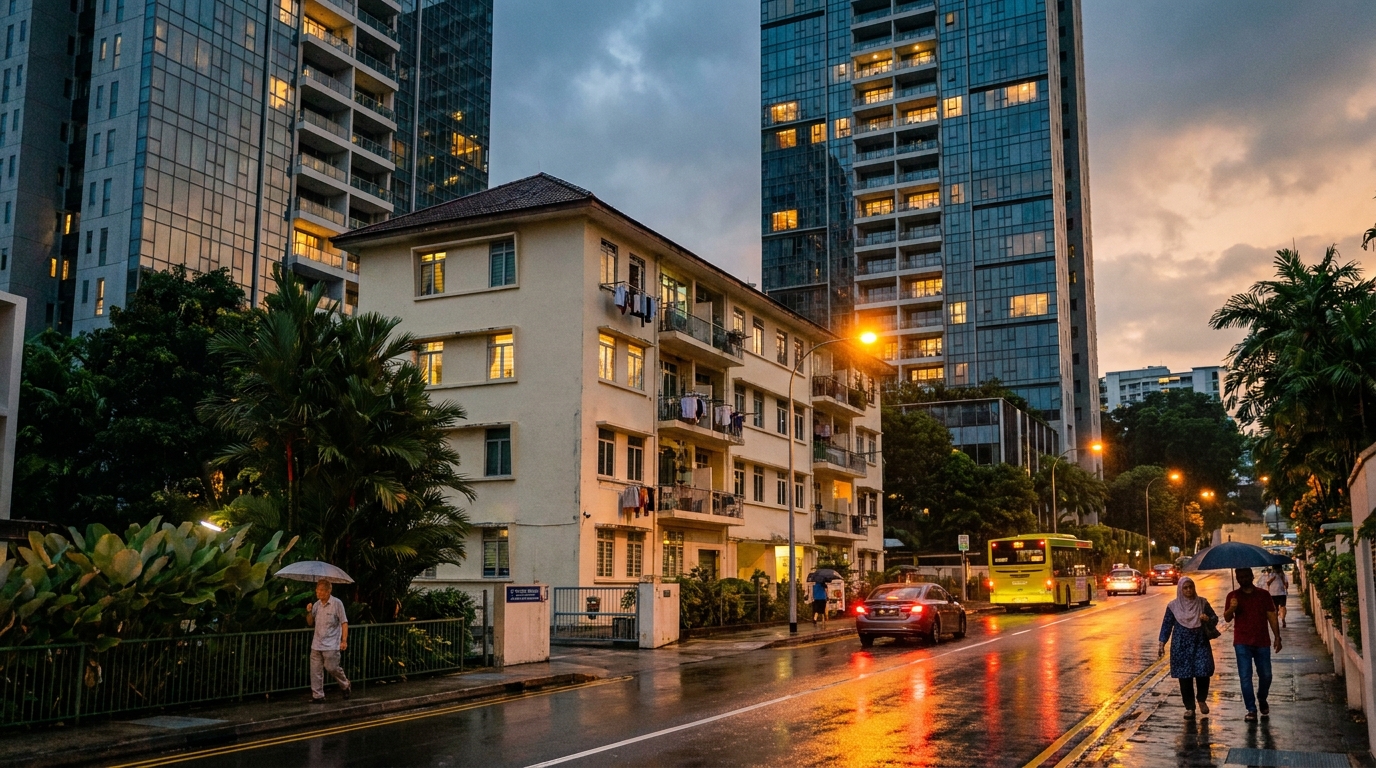
Owners in affected estates should read the safeguard provisions as carefully as the threshold table. For anyone who does not want to move — the retiree who has paid off the mortgage, the owner whose replacement cost exceeds their sale proceeds — the protections, not the percentages, are the operative part of the law.
Consent is the first gate, not the last
A lower threshold does not create a buyer. It removes one obstacle from a sequence that still includes reserve price agreement, tender, developer underwriting, financing, and the redevelopment maths on plot ratio and construction cost.
Recent policy has moved on the developer side too, with longer ABSD remission timelines for those taking on large and mega collective sale sites. Read together, the direction of travel is clear: government is trying to make big, complicated redevelopment sites financeable at both ends — easier to assemble, less punishing to hold.
That is a coherent policy posture. It is not a guarantee of transactions. Collective sale cycles have always turned on price expectations inside the estate meeting the numbers a developer can justify, and no threshold change alters that test.
Expect more attempts than completions. A 70% bar will produce sale committees at estates that could never previously muster 80% — and some of those will discover that the reason for the earlier failure was the reserve price, not the rulebook.
What owners of a 40-year-old unit should do now
First, establish the age bracket precisely. The Bill draws hard lines at 40 years and 60 years, and an estate completed in the mid-1980s may cross into the 70% band within the lifespan of a single sale attempt.
Second, separate two different value cases:
- Redevelopment potential — the gap between existing units and what the site could hold, as the Pine Grove and Braddell View figures illustrate.
- Standing maintenance liability — the repairs and upgrading MinLaw cites as a driver of ageing-estate renewal, which falls on owners whether or not a sale ever happens.
Third, resist repricing on an unpassed Bill. The amendments still face debate and a vote. Sellers who mark up asking prices today on a threshold that does not yet exist are pricing a hypothetical, and buyers in ageing estates have no obligation to fund it.
The honest summary is this: for about 20,000 units, the odds of a collective sale ever succeeding have improved. For the other 360,000-plus, nothing has changed at all. Both halves of that sentence deserve equal weight.