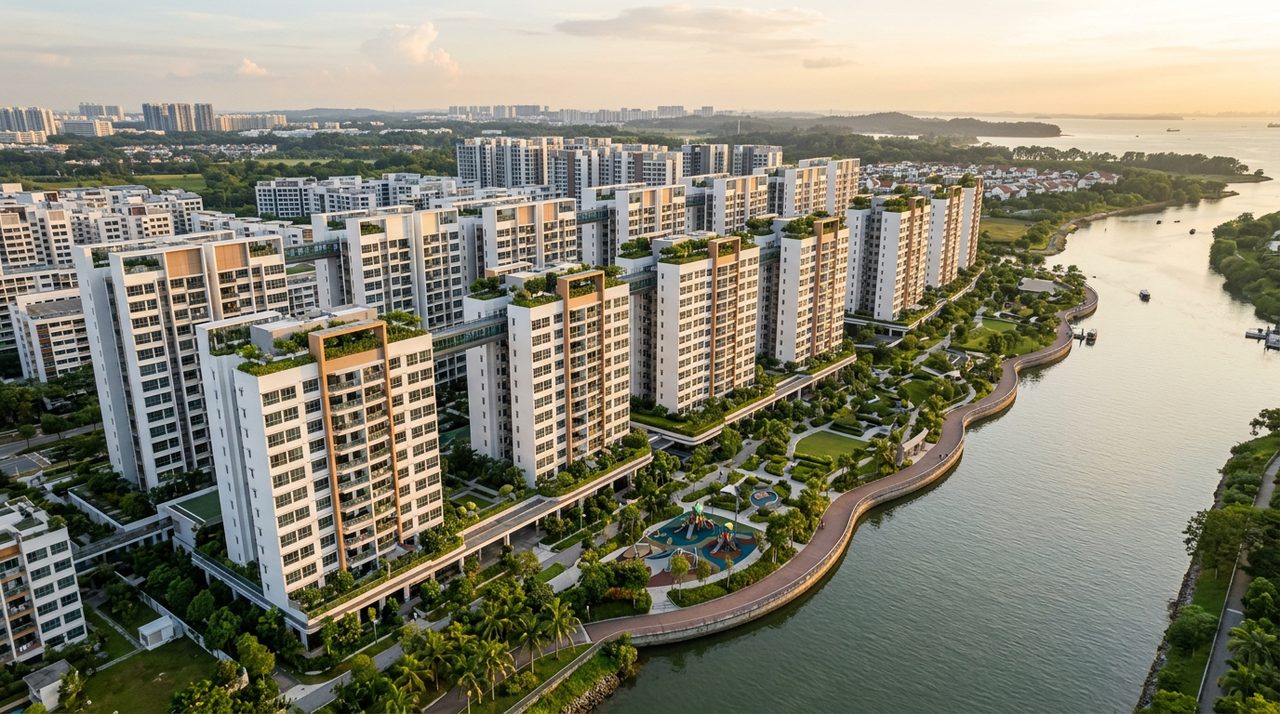
 plan
planWoodlands Street 81’s $1.01 million sale reveals the premium on scarce family space
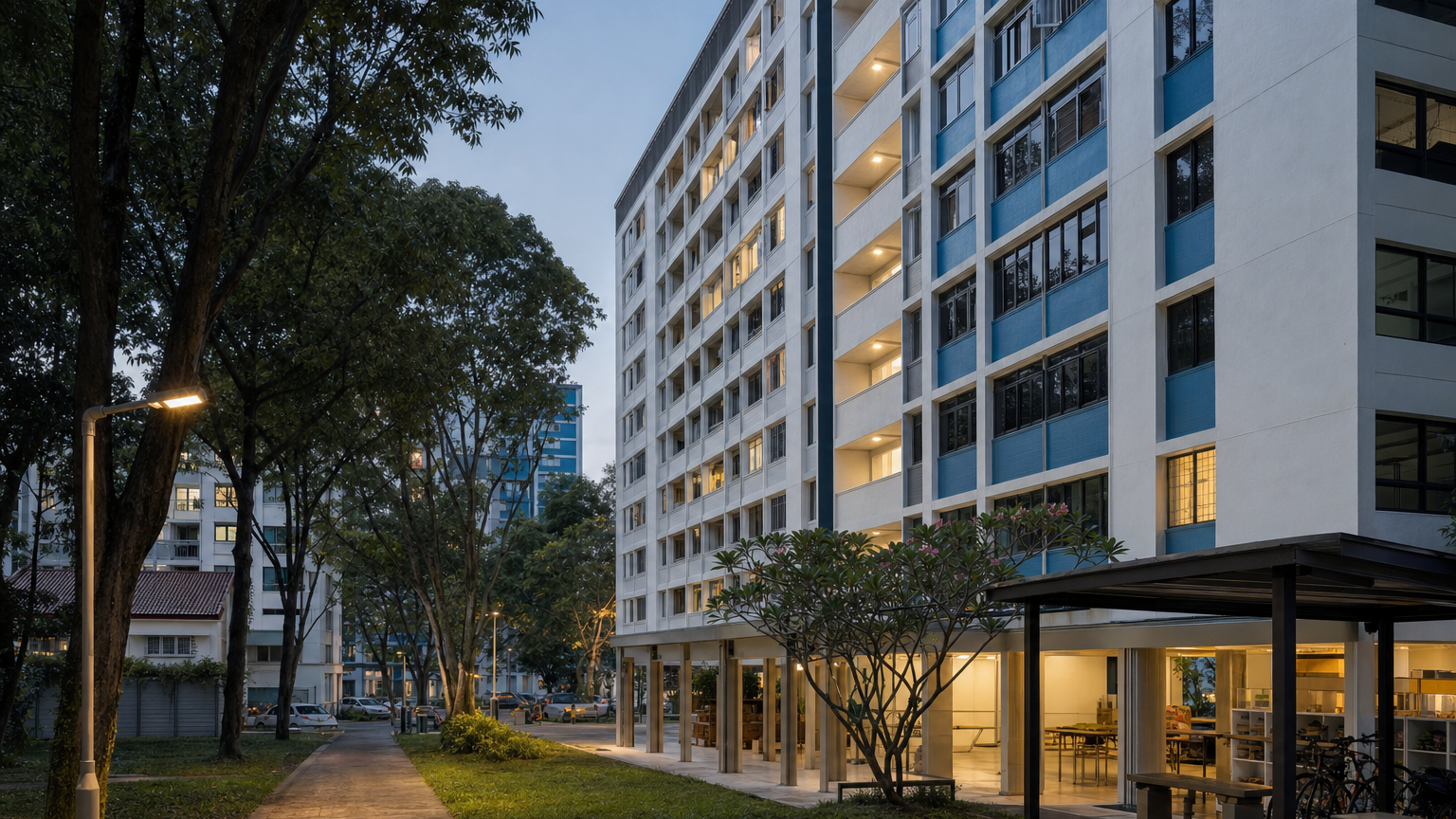
The renovated executive apartment achieved a standout price in a softer resale market. Its real signal concerns a thin pool of unusually large homes—not every flat in Woodlands.
The gist
- The renovated executive apartment achieved a standout price in a softer resale market.
- A 1,582 sq ft executive apartment on Woodlands Street 81 sold for $1.01 million in May 2026, equivalent to about $638 per sq ft (psf).
- The seven-figure result is striking, but its significance is narrower than the headline number suggests.
A 1,582 sq ft executive apartment on Woodlands Street 81 sold for $1.01 million in May 2026, equivalent to about $638 per sq ft (psf). The high-floor home had about 66 years and eight months left on its lease, while its sellers had reportedly spent around $200,000 on renovation and furnishing after buying it in 2019.
The seven-figure result is striking, but its significance is narrower than the headline number suggests. It shows how scarce floor area, a suitable layout and move-in-ready condition can attract a premium from the right household. It does not establish a new benchmark for ordinary Woodlands flats.
The gist
- The Woodlands Street 81 executive apartment fetched $1.01 million, or about $638 psf, in May 2026.
- It stood roughly 7.9% above the official 1Q 2026 median of $935,900 for Woodlands executive flats, based on a simple calculation.
- Its large floor area, high-floor position and extensive fit-out made it an uncommon product, not a direct comparable for every flat in the town.
- The more meaningful signal would be a series of closely comparable executive-flat sales at similar prices, particularly while the broad resale market is easing.
A standout result in a thin segment
This was not merely another resale flat crossing an attention-grabbing threshold. The transaction set a then-high price among Woodlands executive apartments of the same 1,582 sq ft size, although other larger executive apartments and maisonettes in the town had changed hands for $1 million or less during the preceding year.
A 1,518 sq ft executive apartment subsequently sold for $988,000, or $651 psf, in August 2026. The higher psf figure but lower total price illustrates why headline quantum alone can mislead: buyers have to assess size, floor, block position, condition and lease together.
Executive flats also form a much narrower comparison set than standard four- or five-room homes. When a household specifically wants generous living space without moving into private housing, the available alternatives can be limited by location, layout and timing.
That scarcity gives a distinctive unit more room to depart from a town-wide median. It does not mean every large flat will command the same departure.
“The million-dollar figure is the result; scarcity is the mechanism.”
The official reference point helps put the premium in proportion. The median price of Woodlands executive-flat resale cases registered in 1Q 2026 was $935,900. The $1.01 million transaction was $74,100 higher, or approximately 7.9% above that median—a mastREplan calculation based on the two reported figures.
That is useful context, not a valuation. A quarterly median pools homes with different floor levels, remaining leases, orientations, layouts and conditions. It identifies the middle transaction in a broad category; it cannot determine what another specific unit should fetch.
The renovation sold convenience, not just finishes
The sellers had reportedly spent about $200,000 renovating and furnishing the home. Its presentation was central to the sale story, giving prospective buyers a clear picture of how an unusually large executive apartment could function as a polished family home.
A completed fit-out can carry real practical value. It reduces the disruption, coordination and immediate expenditure faced by a household that likes the design and wants to move in quickly. In a resale market where two structurally similar homes can present very differently, that convenience may help widen the pool of serious buyers.
But renovation cost is not automatically recoverable. A seller’s expenditure is a historical cost, while a buyer values the present usefulness of the work. Bespoke cabinetry, room alterations or an elaborate kitchen may be an asset to one family and a removal expense to another.
There is also no public breakdown showing how much of the $1.01 million price was attributable to the fit-out rather than the floor area, high-floor position, layout or negotiating circumstances. Assigning the entire premium to renovation would therefore mistake a persuasive sales narrative for a measurable valuation formula.
The more durable attributes were the ones a future owner cannot easily reproduce: 1,582 sq ft of internal space, the executive-flat format, the unit’s position and its remaining lease. Presentation helped buyers recognise those strengths, but it did not create the underlying scarcity.
For other sellers, the implication is not to undertake a six-figure makeover in pursuit of the same result. Repairs, decluttering, sensible lighting and clear records for approved works may improve marketability without assuming that every renovation dollar will return through the sale price.
One sale can coexist with a softer market
The broader HDB resale market was no longer rising at its previous pace. HDB’s flash estimate put the Resale Price Index at 202.8 in 2Q 2026, down 0.3% quarter on quarter, after a 0.1% decline in 1Q 2026.
There is no contradiction between that movement and an exceptional Woodlands transaction. The index tracks the overall resale market, whereas the Street 81 deal concerned one large, renovated executive apartment. Aggregate conditions can soften even while scarce homes attract strong bids.
Different segments also respond to different constraints. A buyer choosing among common flat types may have many substitutes across nearby blocks. A multi-generational household seeking a very large home on one level can face a much shorter list.
The strongest counterargument is that the $1.01 million sale, together with the subsequent $988,000 executive-apartment transaction at a higher psf rate, points to a genuine repricing of large Woodlands flats. That possibility deserves attention. Repeated deals can gradually become evidence for valuers, agents, sellers and buyers.
Yet the reported executive-flat comparisons remained widely dispersed, at approximately $474 psf to $667 psf. Such a range suggests that buyers were still distinguishing sharply among individual homes. If the entire segment had established a clear new floor, transaction prices would be expected to cluster more consistently after accounting for size and lease.
The evidence therefore supports a scarcity premium more strongly than a town-wide reset. Confirmation would require several recent, closely matched sales—not merely more transactions that happen to cross $1 million.
Woodlands’ growth story matters, within limits
Woodlands has a credible long-term planning narrative. The Woodlands Regional Centre is intended to serve as the economic hub of Singapore’s Northern Gateway, with improved connections to the rest of Singapore and Johor Bahru. Plans for the area include more commercial activity and integration with the Johor Bahru–Singapore Rapid Transit System Link.
This can make the town more relevant to households that value northern employment nodes, rail connectivity or cross-border access. Expectations of improved accessibility can also influence how buyers compare Woodlands with other non-central towns.
Planning context is not a blank cheque for resale prices, however. Different projects have different delivery schedules, and their benefits are unevenly distributed. Walking distance to transport, noise exposure, daily amenities and the quality of the immediate block remain more tangible to a buyer than a regional vision.
Nor can future infrastructure remove lease decay. The Street 81 flat had around 66 years and eight months left when it was sold. Its buyer acquired a long period of potential occupation, but not a new 99-year lease.
The transaction is therefore compatible with confidence in Woodlands’ future, but it does not prove that planned development caused the premium. The direct evidence is that one buyer paid for this particular combination of space, position, condition and location.
What the price changes for owners and buyers
For owners of comparable executive apartments, the deal is relevant evidence—but only after narrowing the comparison. The closest benchmarks will share the same model or layout, a similar floor area and storey range, comparable lease length and a recent transaction date.
A $1.01 million asking price becomes less defensible as those attributes diverge. A lower-floor unit needing extensive work, for example, is not made equivalent by being in the same street or town. Conversely, an especially well-positioned flat might compete even if its renovation is less elaborate.
Buyers should separate the home’s durable attributes from its decorative appeal. Floor area, circulation, natural light, block position and journey times remain after tastes change. Furnishings and finishes may reduce immediate work, but they should be assessed according to the buyer’s own intended use rather than the seller’s expenditure.
The total budget matters as much as psf. At $638 psf, the Woodlands flat may appear inexpensive beside private housing, but its $1.01 million quantum still places a substantial financing and opportunity-cost decision on the household. Relative value is not the same as affordability.
The sale also shows why buyers should not treat a record as a deadline. A thin market can produce a high transaction because one suitable buyer and one unusual home meet at the right time. The next comparable unit may attract several bidders—or none prepared to match the same price.
What would materially change the interpretation is a sustained cluster of similar Woodlands executive apartments clearing around the same psf level despite softer overall resale conditions. Until that evidence appears, the Street 81 deal is best read as a premium for a scarce, finished family home—not a new price floor for Woodlands.