 plan
planS$38 million HDB shop portfolio splits its wager between Toa Payoh and Jurong East
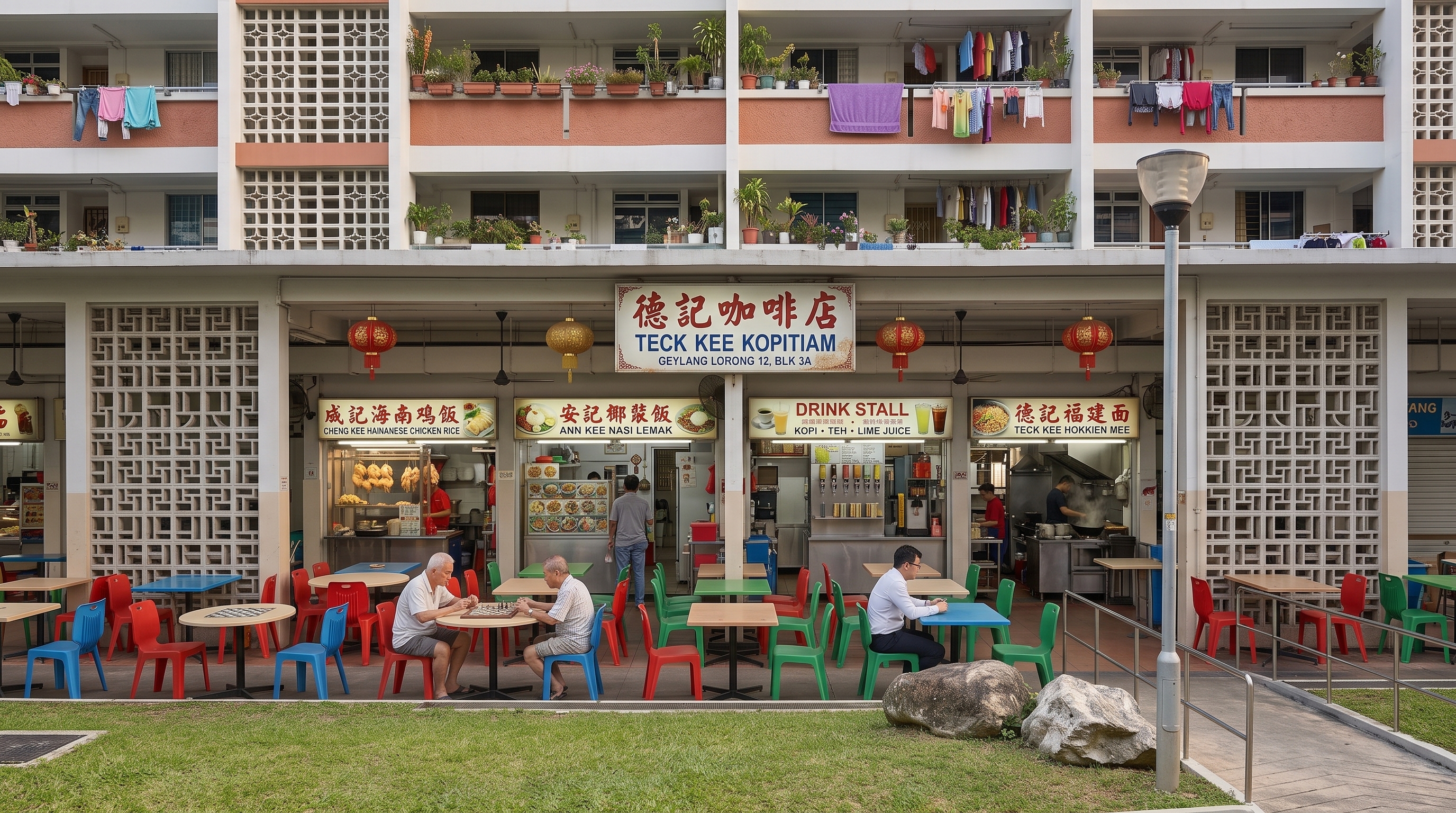
The coffeeshop at 183 Toa Payoh Central offers established daily trade; the three Jurong Gateway shops lean more heavily on future footfall. Any eventual bids will show which proposition buyers value.
The gist
- The coffeeshop at 183 Toa Payoh Central offers established daily trade; the three Jurong Gateway shops lean more heavily on future footfall.
- A ground-floor coffeeshop at 183 Toa Payoh Central and three retail units at 135 Jurong Gateway Road are being offered separately or together at a combined guide price of S$38 million.
- The package joins two quite different propositions.
A ground-floor coffeeshop at 183 Toa Payoh Central and three retail units at 135 Jurong Gateway Road are being offered separately or together at a combined guide price of S$38 million. The expression-of-interest exercise closes at 3pm on 8 October 2026; this is a marketing process, not a completed transaction.
The package joins two quite different propositions. Toa Payoh offers established daily-needs trade in a mature town centre, while the Jurong East units carry more exposure to future development and changing pedestrian flows. The headline price conceals that split—and the distinct risks a buyer would have to underwrite.
The gist
- The four properties have a combined floor area of 4,833 sq ft, comprising a 1,851 sq ft coffeeshop and three Jurong East shops measuring 1,195 sq ft, 592 sq ft and 1,195 sq ft.
- The individual guides are S$16 million for the Toa Payoh coffeeshop, S$8.25 million for each larger Jurong unit and S$5.5 million for the smaller shop.
- The marketed net yield is above 3.7%. Applied mechanically to S$38 million, that implies annual net income exceeding about S$1.406 million, but the underlying tenancy accounts have not been independently verified here.
- These are commercial properties in HDB developments, not HDB flats. HDB resale approval, approved use and liabilities involving alterations or defects remain relevant.
An asking price, not a market verdict
Guide prices are negotiating positions. Until a bid is accepted and the transaction completes, the S$38 million figure cannot establish either market value or a new benchmark for HDB commercial property.
At the guides, the package averages approximately S$7,863 per sq ft. The Toa Payoh coffeeshop is about S$8,644 psf; each 1,195 sq ft Jurong unit is about S$6,904 psf; and the 592 sq ft unit is approximately S$9,291 psf.
These are mastREplan calculations based on the marketed areas and prices, not comparable-sales evidence. They show why an overall portfolio average can mislead: smaller units commonly produce a different per-square-foot result, while frontage, use approval, configuration and immediate pedestrian traffic can matter more than town-level location.
The yield requires similar care. A stated net yield above 3.7% may appear straightforward, but a buyer must establish what “net” excludes, whether current rents are sustainable and how soon individual leases expire. Vacancy, rent-free periods, maintenance, insurance, management expenses and capital works can all separate the headline yield from cash ultimately available to the owner.
“The package combines proven daily-needs trade with a future-footfall thesis; it is not one homogeneous retail investment.”
Toa Payoh supplies the established-income story
The portfolio’s largest component is the S$16 million coffeeshop at 183 Toa Payoh Central. It is marketed as a ground-floor corner unit with about 30 metres of frontage, opposite Toa Payoh Public Library and within walking distance of Toa Payoh MRT station, the bus interchange and HDB Hub.
Its location gives the investment case a tangible base. Food outlets in mature town centres can draw from residents, workers, commuters and people visiting public facilities rather than relying on a single customer group. The corner configuration and long frontage may also improve visibility, although footfall and actual sales have not been disclosed.
Scarcity adds to the pitch. The marketing material estimates that only about 402 of roughly 8,500 privately held HDB shophouses are approved for coffeeshop use, and says sales of new HDB shophouses ceased in 1998. Those figures support the claim that the format is limited, but scarcity does not guarantee rental growth or protect an owner from a weak operator.
The harder questions sit behind the shopfront. How long does the existing tenancy run? Are rents supported by the operator’s trading performance? Which repairs fall to the landlord? Are outdoor seating rights or other operational approvals transferable? Without those answers, the guide price says more about the seller’s expectations than the durability of the income.
For nearby flat owners, the offering has no direct mechanical effect on residential values. Its relevance is at street level: a well-used coffeeshop supports everyday convenience and activity, while a change of operator or format could alter noise, opening patterns and the mix of affordable food. That makes the eventual outcome an amenity issue, not evidence that Toa Payoh flats have suddenly been repriced.
Jurong Gateway carries greater upside—and timing risk
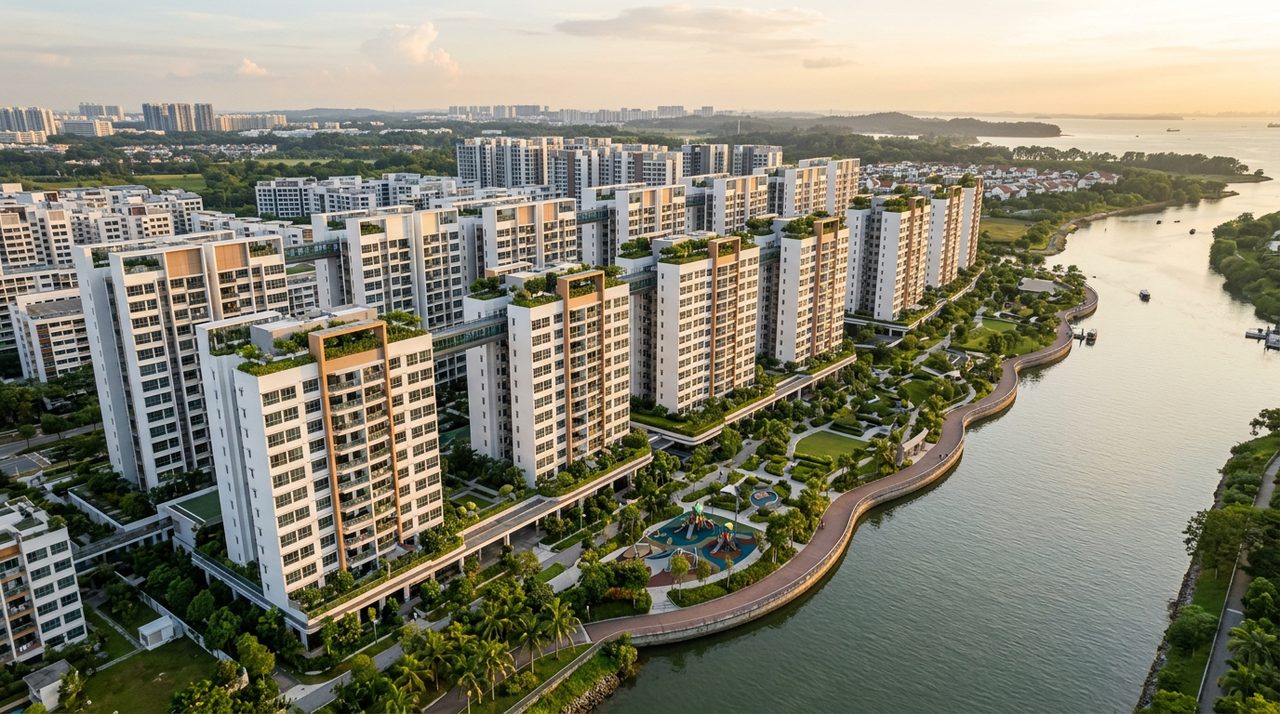
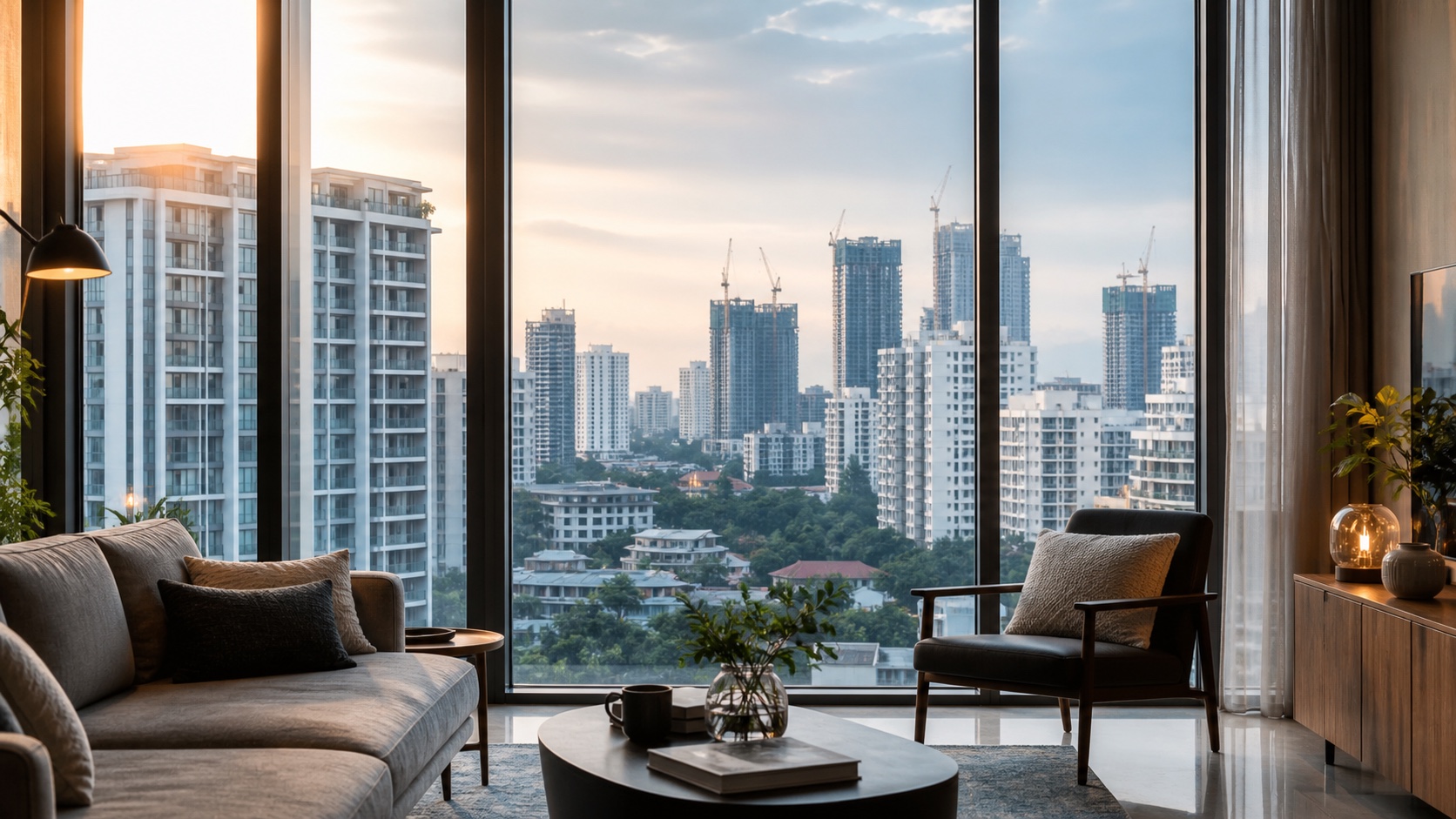
The three shops at 135 Jurong Gateway Road are offered at a combined S$22 million. They face the forthcoming J’den development, which the marketing material says will contain a retail podium and 368 homes, with completion expected in 2028.
They also sit within the wider Jurong East growth narrative. Official plans identify Jurong Gateway Hub beside Jurong East MRT as a development incorporating offices, retail space, community facilities and a bus interchange. The authorities continue to position Jurong Lake District and related infrastructure as part of the Western Gateway’s development.
That direction can deepen the eventual catchment. More homes, workplaces, transport connections and community uses could put more people within walking distance of the shops. Existing ground-floor units may benefit if they occupy a natural route between the interchange, malls, offices and residential developments.
But future population and footfall should not be treated as present income. Construction can disrupt access before new projects contribute customers, completion schedules can change, and new retail space may compete for the same spending. Better connectivity can also redirect pedestrians rather than simply increase their numbers.
This is the strongest counterargument to the portfolio pitch. Jurong East’s development is not in doubt as a planning direction, but the commercial benefit to these three particular units remains uncertain in scale and timing. A defensible valuation would begin with current leases and observed traffic, then apply a separate, discounted assumption to possible future rental growth.
The different guide rates may contain another warning against broad conclusions. The smallest Jurong unit carries the portfolio’s highest calculated asking price per square foot, while the two larger units are considerably lower. That could reflect size, frontage, tenant profile or other unit-specific attributes; without title, lease and tenancy documents, it should not be read as evidence that one section of Jurong Gateway Road is intrinsically worth more.
HDB premises bring practical resale constraints
“HDB commercial property” describes premises within HDB’s commercial stock; it does not give a buyer the same rights or obligations as buying an HDB flat. HDB’s published resale terms require buyers to be at least 21 and provide for the resale application to be submitted online through solicitors.
Crucially, HDB approval for the transfer does not itself approve the buyer’s intended trade or remove the need for permission from other authorities. A shop presently used for one purpose cannot automatically be assumed suitable for another.
That makes approved use central to value. HDB’s change-of-trade conditions state that approval may be needed for a proposed change, alongside compliance with requirements imposed by other relevant authorities. For a coffeeshop, practical matters such as exhaust systems, electrical load, fire-safety provisions, refuse handling and any outdoor dining area can materially affect both operating flexibility and capital expenditure.
Physical condition also matters because resale does not wipe the slate clean. HDB’s terms address responsibility for defects, unauthorised additions and alterations, and costs associated with applicable upgrading works. A purchaser therefore needs to compare the premises with approved plans rather than rely only on an inspection of what is currently operating.
There can also be household-level ownership implications. HDB’s commercial resale conditions restrict certain concurrent ownership involving an HDB flat that has not fulfilled its minimum occupation period and an HDB shop, including specified situations involving shops with living quarters, multiple shops and companies owned by flat applicants, owners or occupiers. The precise effect depends on the buyer’s circumstances and should be established before bidding.
What the portfolio structure changes
A single buyer could diversify income across two towns and several tenancies. That reduces reliance on one unit, but it does not necessarily reduce risk if lease expiries cluster or if the Jurong units depend on the same pedestrian corridor.
Buying the assets separately permits more selective underwriting. An investor seeking established trade might prefer the Toa Payoh coffeeshop; another willing to wait for district growth might focus on Jurong East. Separate bids would also reveal whether the portfolio discount or diversification argument is strong enough to overcome the locations’ different risk profiles.
The core evidence should therefore be assessed asset by asset: current rent, tenancy expiry and renewal provisions; arrears and deposits; remaining lease; approved trade; title restrictions; alterations; maintenance history; fire-safety records; and notices concerning estate or upgrading works. Only after that review can the four income streams be sensibly combined.
Financing can sharpen the distinction. A lender’s valuation may fall below the guide, and commercial debt terms need not mirror residential mortgage terms. Higher equity requirements or a conservative assessment of rental income would reduce the return on the buyer’s cash even if the properties achieve the advertised net yield.
The result will matter more than the guide
This offering is best read as a test of two forms of confidence. The Toa Payoh component asks buyers to pay for scarcity and an established central location; the Jurong component asks them to value present leases alongside a longer-term redevelopment story.
A portfolio bid near the combined guide would suggest that at least one buyer accepts both arguments and the supporting income evidence. Stronger bids for Toa Payoh but weaker interest in Jurong East would indicate a preference for visible daily trade over forecast footfall. Until the 8 October 2026 exercise concludes, however, neither outcome has occurred.
For homeowners and buyers in the two estates, the development to watch is not the S$38 million headline. It is whether the assets transact, whether they sell together or separately, and what the eventual ownership change means for the shops operating at ground level.