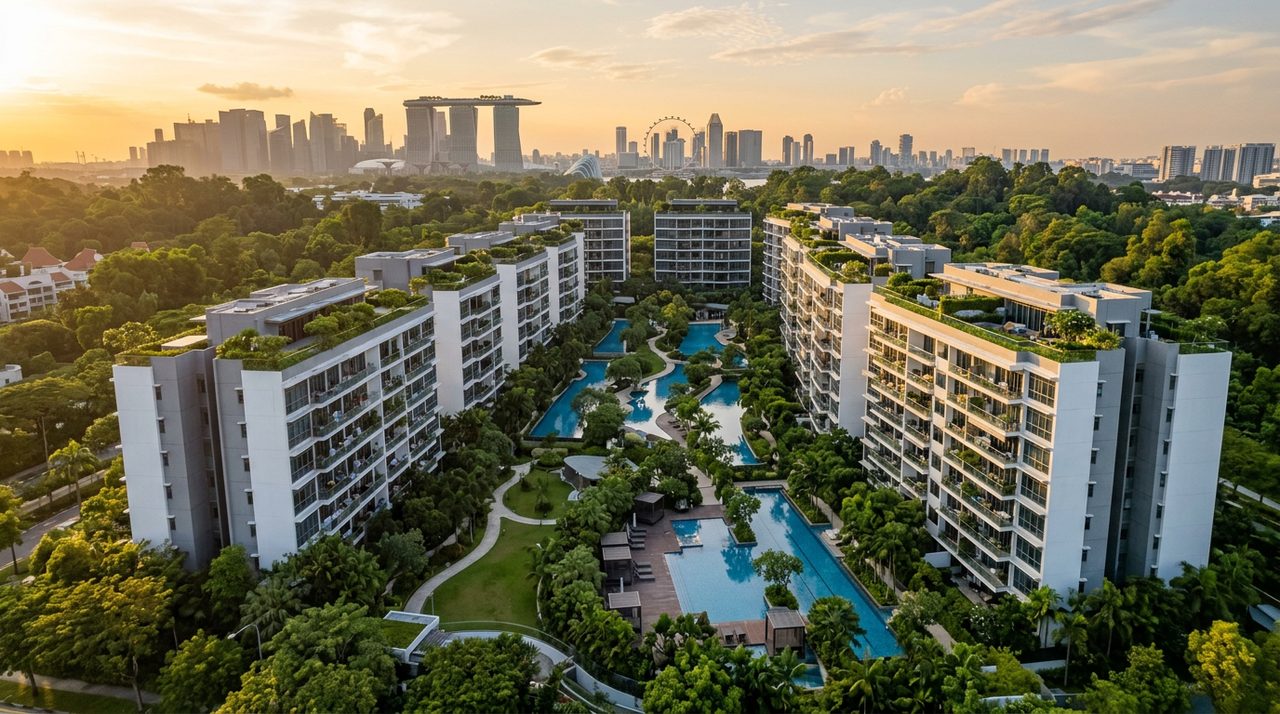
Condo to HDB, No Waiting: The Squeeze Now Lands on 5-Room and Executive Flats
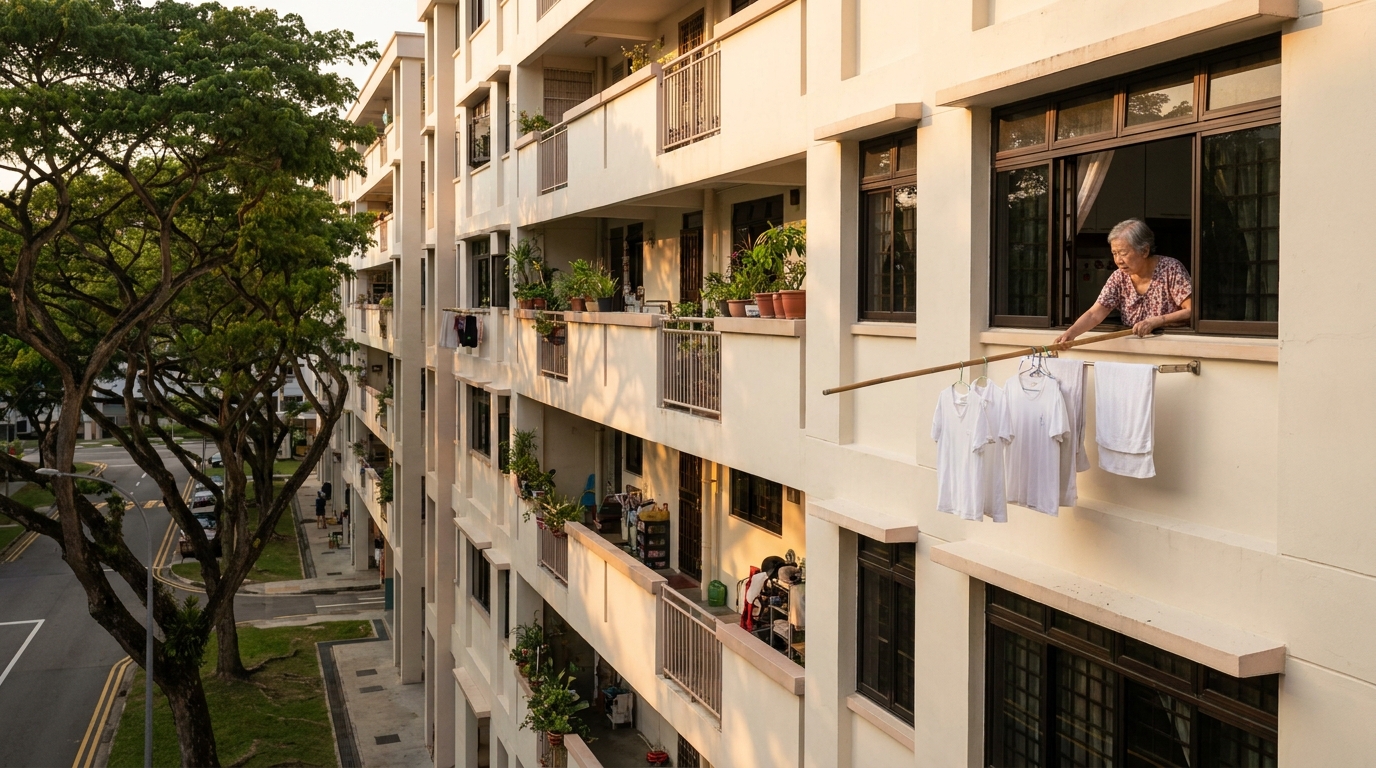
The removal of the 15-month wait-out period does not release demand evenly — it channels well-capitalised private sellers into the one slice of HDB stock that the incoming MOP wave replenishes least.
The gist
- From 28 July 2026, private property owners can buy non-subsidised HDB resale flats immediately, without the 15-month wait.
- Concession applies only to cash or bank loan buyers; the 30-month wait remains for subsidised flats and HDB loans.
- Resale price growth slowed from 10.4% in 2022 to 2.9% in 2025, turning negative in Q1 and Q2 2026.
- The MOP wave delivers mainly 4- and 5-room stock in Punggol and Tampines, not finite Executive flats.
On 28 July 2026, National Development Minister Chee Hong Tat removed the 15-month wait-out period for private property owners buying non-subsidised HDB resale flats — with immediate effect. The headline reads like a broad loosening. It isn't. It is a narrow, targeted release of demand into the tightest corner of the public housing market.
What changed, precisely
Private residential property owners (PPOs) and ex-PPOs of any age can now buy a non-subsidised HDB resale flat on the open market immediately, without serving the 15-month wait-out that had applied since 30 September 2022. The concession applies only to buyers using cash or a bank loan — not an HDB housing loan.
Two conditions survive. Buyers must obtain an HDB Flat Eligibility (HFE) letter before purchase, and PPOs must dispose of all private residential property — local or overseas — within six months of completing the flat purchase.
And the harder gate is untouched. The 30-month wait-out period remains in force for PPOs and ex-PPOs seeking a subsidised flat (BTO or a resale flat with grants), an Executive Condominium unit from a developer, or an HDB housing loan. So no, private property owners have not been handed the keys to subsidised housing. They have been handed the open market, at full price, with their own money.
The wait-out removal does not create new demand — it re-routes existing demand into 5-room, Executive and 3Gen flats in mature estates, which is the one segment the incoming MOP supply wave replenishes least directly.
The rule worked. That is why it's gone.
The 2022 measure was designed to stop cash-flush private sellers from bidding up flat prices and cash-over-valuation. On the numbers, it did the job. HDB resale price growth slowed from 10.4% in 2022 to 2.9% in 2025, then turned negative: -0.1% in Q1 2026 and -0.3% in Q2 2026.
Volume told the same story. Q2 2026 resale transactions came in at 6,396 flats — the weakest second quarter since Q2 2020's 3,426, when the country was in circuit breaker. A cooling measure that produces the thinnest quarter in six years has stopped cooling and started freezing.
MND's stated rationale is stabilised conditions plus supply: flats reaching their five-year Minimum Occupation Period are set to rise to about 13,500 in 2026, 15,000 in 2027 and 19,500 in 2028, with more than 50,000 BTO units slated for delivery across 2025 to 2027. The Minister's position is that the wait-out met its purpose, and that removing it restores flexibility for households with genuine right-sizing needs.
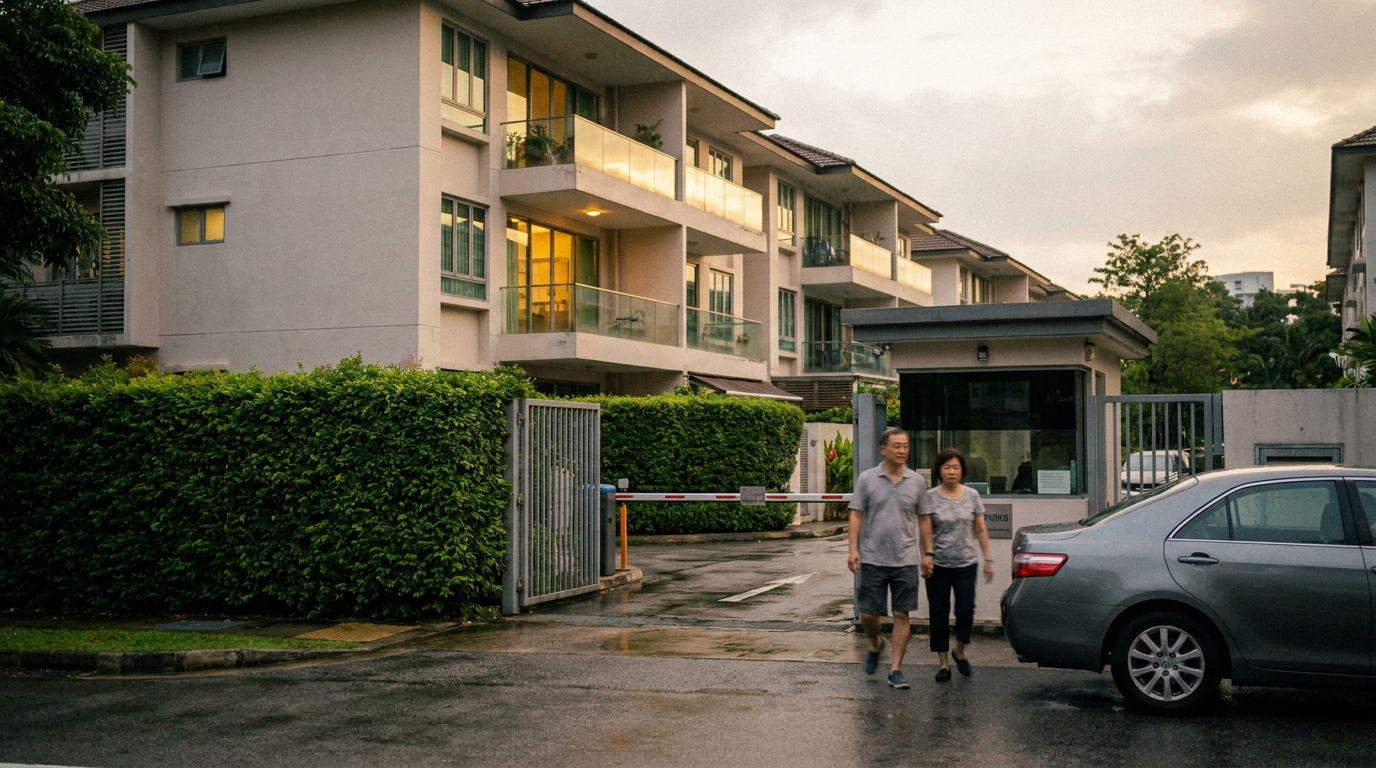
The demand that comes back is not general demand
Here is the part that gets flattened in the coverage. The 15-month rule did not suppress the whole resale market evenly — it suppressed a specific buyer, chasing a specific flat.
Sales of 5-room flats fell from 6,951 units in 2022 to 5,966 in 2025. Executive and multi-generational flat sales fell from 1,946 to 1,539 over the same period. Add those gaps and you get roughly 1,390 fewer large-flat transactions a year than in 2022. Not all of that is the wait-out rule — interest rates, price levels and buyer fatigue all played a part. But the shape of the decline points straight at the cohort that was locked out.
Note also who was previously exempt: only seniors aged 55 and above moving into 4-room or smaller flats. So the rule specifically penalised middle-aged owners and pre-55 retirees who wanted to right-size without shrinking their floor plate to a 4-room. Those are exactly the buyers now returning, and they are not looking at 3-room flats in the suburbs.
Supply is arriving. It is not arriving in the same place.
The official comfort blanket is the MOP wave, and it is real: about 13,480 flats reach MOP in 2026, close to double the previous year's tally. But look at where. The concentration sits in Punggol (3,222 units), Queenstown/Dawson (2,405), Tampines (2,133) and Toa Payoh/Bidadari (1,594).
Two mismatches follow. First, geography: Punggol and Tampines volume does little to relieve competition in Queenstown, Toa Payoh or Bishan, which is where cash-backed downgraders concentrate. Dawson and Bidadari supply lands in precisely the estates where the new buyer pool is strongest — supply and demand arriving together, which supports turnover more than it caps price.
Second, flat type. The MOP pipeline is new-generation stock, weighted to 4- and 5-room configurations. Executive apartments and maisonettes belong to an earlier building era and are a finite pool — they cannot be replenished by a MOP wave. If the returning demand is disproportionately for the biggest flats, the supply answer is only a partial answer.
A cooling measure that produces the thinnest second quarter in six years has stopped cooling and started freezing.
What HDB owners of big flats actually gained
If you own a 5-room, an Executive apartment or a 3Gen flat in a mature estate, you have just been given a wider and better-funded buyer pool — buyers who cannot use an HDB loan and are therefore transacting in cash or bank finance, having just liquidated a private property.
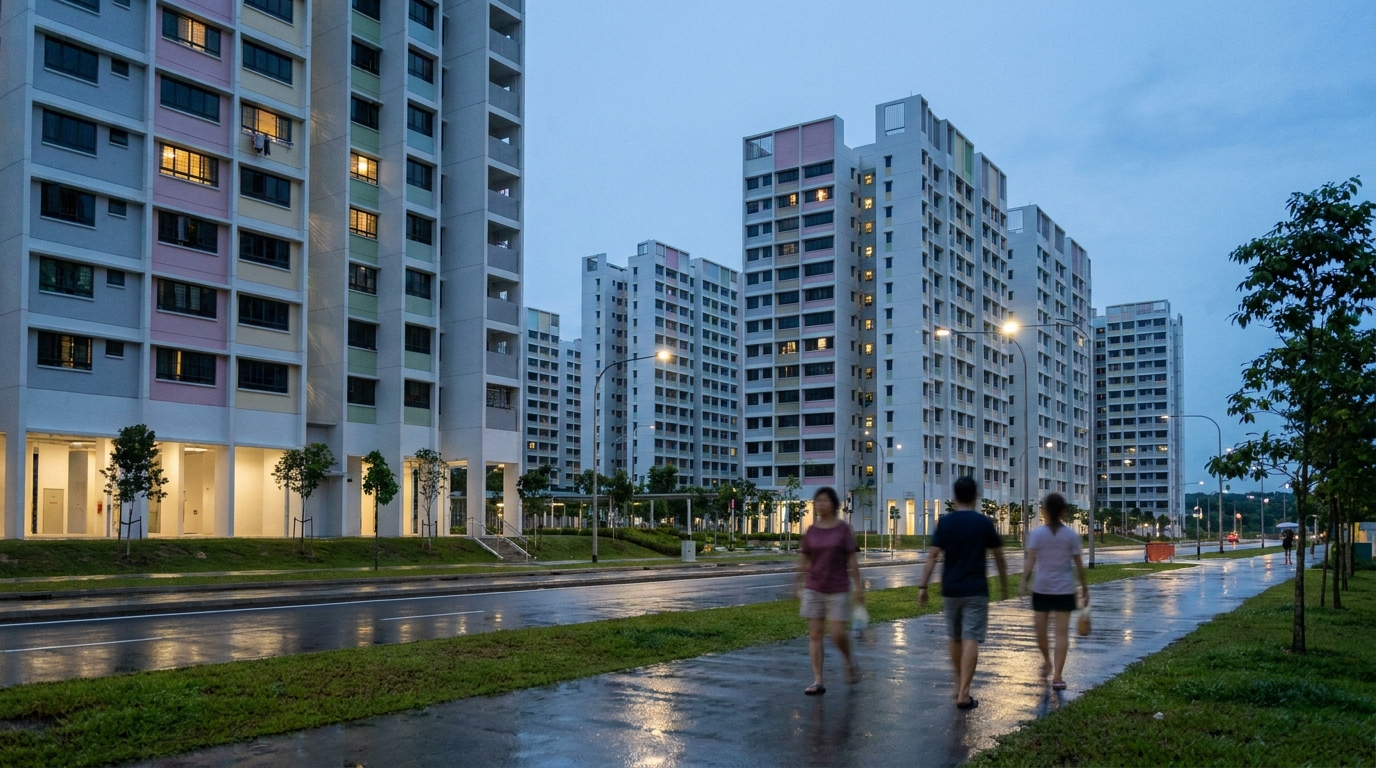
The realistic gain is liquidity before price: more viewings, shorter time on market, fewer failed negotiations. Analysts across the industry converge on the same view — this improves transaction velocity rather than triggering a price spike, given the MOP pipeline and unchanged loan curbs including TDSR and MSR. One published forecast puts full-year resale price growth at a modest 0.5% to 2.0%.
Where it could get frothy is narrow: cash-over-valuation on prime, large, well-located units, and the million-dollar transaction count, which several researchers expect to tick up as downgraders re-enter. Sellers should read that as segment-specific strength, not a licence to reprice a suburban 4-room. Overpricing into a market that fell in two consecutive quarters is still overpricing.
The condo side: the arbitrage is self-limiting
For private owners, the immediate saving is obvious. No 15-month interim lease, no double move, no reliance on HDB waiver appeals, which historically cleared only around a quarter of applications. Estimates of the avoided interim rental bill run from S$50,000 to more than S$80,000.
But there is a second-order effect that cuts the other way. Every downgrader who takes up the new flexibility becomes a forced seller inside six months, and the friction that previously kept older or larger private homes off the market has been removed. Expect more secondary listings, concentrated in the Outside Central Region and Rest of Central Region.
That is thicker inventory in exactly the segment downgraders are exiting. Save S$60,000 in rent, then discount the condo by more than that to clear it inside the window, and the trade has gone backwards.
The policy saves a downgrader tens of thousands in rent. It does not guarantee they sell their condo for what they hoped. Sequencing matters more than ever: securing the flat first is now permitted, but the six-month clock starts at completion of the flat purchase, not at the point you decide to list.
Who absorbs the cost
Policy changes have payers. Here they are, in order:
- First-time buyers on the open market without grants — the clearest loser. They now bid against ex-private owners for large, well-located flats, with COV pressure the likely pinch point.
- First-timers on BTO or grant pathways — largely insulated. The 30-month rule still walls off subsidised flats, ECs from developers and HDB loans.
- Landlords of interim rental stock — small one- and two-bedroom condos and larger flats lose a cohort of 15-month tenants, easing rental demand at the margin.
- HDB upgraders — better exit liquidity on a large flat makes the move to private housing cleaner to execute.
Two things to watch through Q3 and Q4 2026. First, COV levels and million-dollar resale counts in mature and central estates — that is where a demand shock would show up first, and where MND would look if it needed to reconsider. Second, private resale listing volumes: if downgrader supply builds faster than buyers appear, the price gap between private property and prime flats narrows, and the economics of right-sizing dull on their own.
This is a calibrated adjustment to a market that had gone quiet, not a dismantling of HDB's cooling framework. The 30-month rule, the no-HDB-loan condition, the HFE requirement and the six-month disposal deadline all remain. What changed is timing — and in a market where two quarters of price declines coincided with the thinnest transaction volume since 2020, timing was the binding constraint.