City Plaza's $970 Million En Bloc: The Price Never Moved. The Mandate Did.
Eight years, three attempts and the same guide price as 2021 — what finally changed at City Plaza was consent and planning clarity, not the number.
The gist
- City Plaza launched for tender on 11 August 2026 at $970 million — the same guide price as 2021.
- Earlier attempts failed: 53% consent at $1.05 billion in 2018, then 79.3% in 2021.
- February 2026 consent reached 83.05% by strata area but only 81.26% by share value.
- URA's 9 July 2026 outline advice backing residential-led mixed use expires after six months.
City Plaza went to public tender on 11 August 2026 at a guide price of $970 million — the exact figure its owners failed to sell at in 2021. Five years on, the ask is unchanged. What changed is that this time, the owners have the votes.
Three attempts, one price cut, and a consent problem
The history is unusually well documented. In 2018, the owners of the freehold Geylang Road complex set a reserve of $1.05 billion and secured just 53% support — nowhere near the statutory 80% threshold. In 2021, they cut the ask to $970 million and got to 79.3%. Agonisingly close, and still a failure.
The third attempt held the price at $970 million and, in February 2026, finally crossed the line: 83.05% by strata area and 81.26% by share value. The public tender closes on 13 October 2026.
Read those two numbers together and you learn something. Support by strata area runs comfortably clear of the threshold; support by share value sits barely a percentage point above it. The bigger, more valuable stakes are the less enthusiastic ones — which is exactly what you would expect in a development where the retail owners, not the residents, hold the balance of power.
384 shopkeepers, 66 flats, and a payout range that explains everything
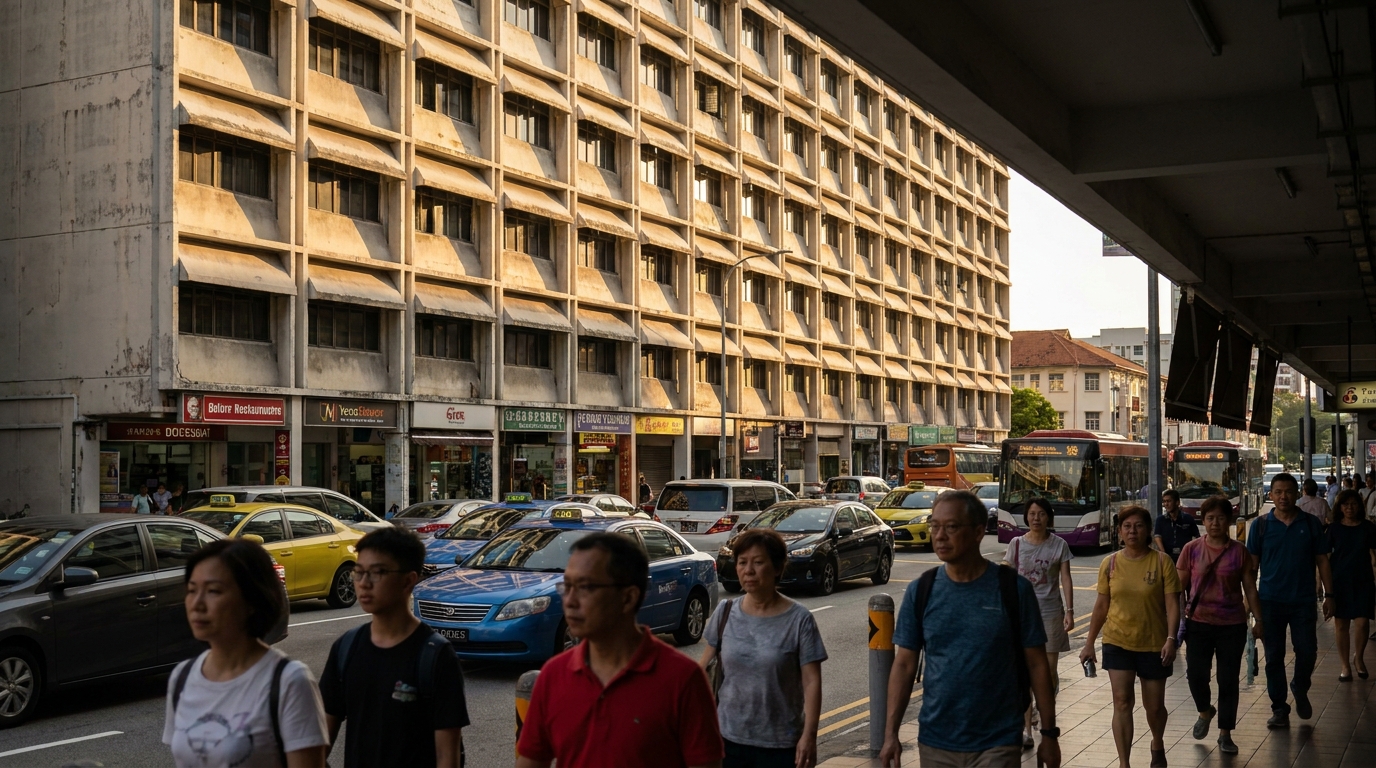
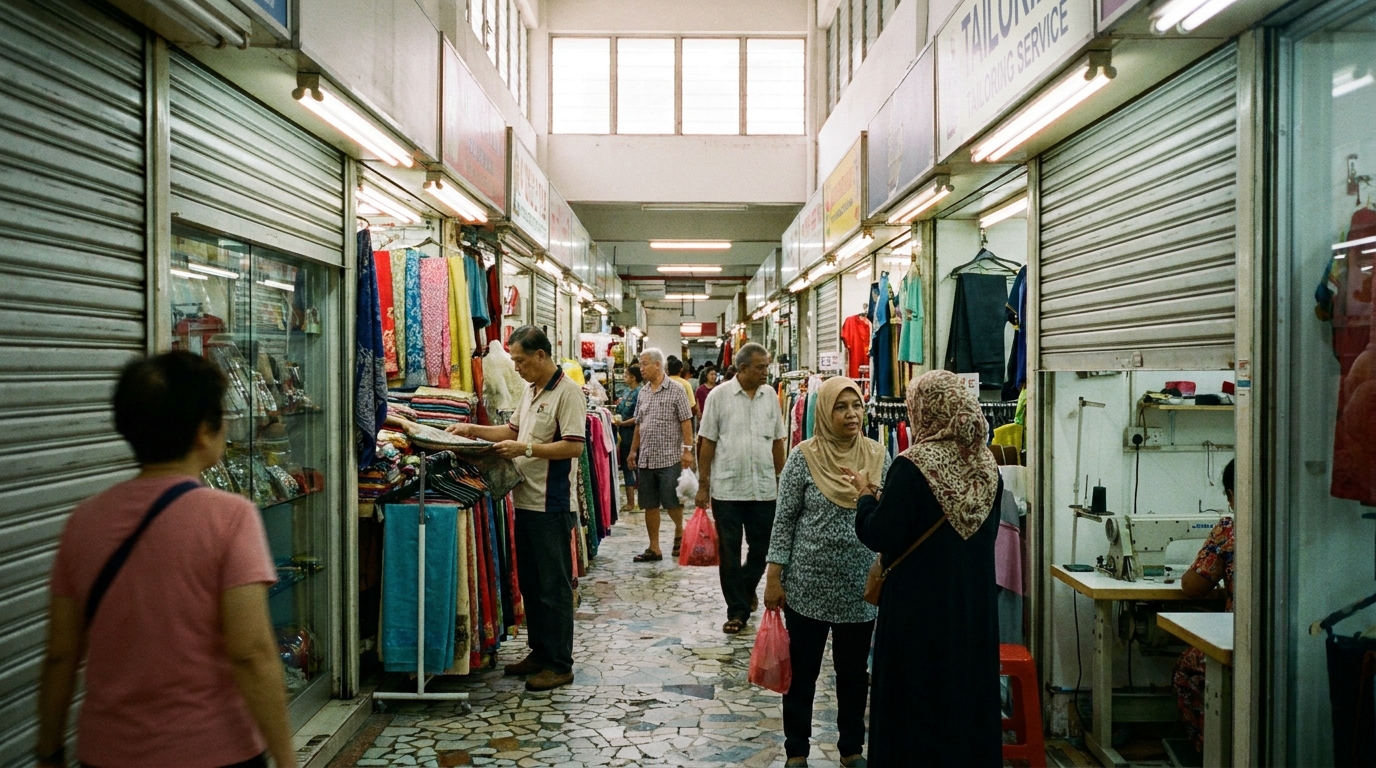
City Plaza is an 18-storey mixed-use block built by City Developments in the 1970s, comprising 384 strata retail units and 66 residential apartments. That composition is the whole reason this took eight years.
Residential owners are looking at estimated proceeds of $2.18 million to $3.44 million per apartment — a tight, legible band. Retail owners face something else entirely: an estimated $722,000 at the bottom to $32 million at the top, depending on size and share value.
A range that wide does not produce a single collective interest. It produces dozens. A shopkeeper whose unit is both livelihood and retirement plan weighs $722,000 very differently from an owner sitting on eight figures of share value. And in a strata commercial estate, every one of those calculations has to land on the same side of the ledger before a tender can happen.
A payout range from $722,000 to $32 million does not produce one collective interest. It produces hundreds of them.
Note too that City Developments retains roughly 6.5% of share value — around 16 strata commercial units — in the project it built. One party alone therefore controls a meaningful slice of the consent arithmetic, which puts the narrow share-value margin in sharper relief.
What URA actually signed off — and the clock attached to it
The genuinely new element in this attempt is not the price. It is the paperwork done before the tender opened.
On 9 July 2026, URA issued Written Outline Advice supporting in principle the site's redevelopment into a residential-led mixed-use project with commercial use on the first storey, subject to the usual planning and statutory approvals. The site is currently zoned Commercial with a gross plot ratio of 3.0 under Master Plan 2025.
That matters because the standard developer objection to a large mixed-use en bloc is not the price — it is the unknowns. What can I build? How tall? What use mix? Getting a written in-principle answer before bids are due removes a layer of that risk from the underwriting.
But the advice carries a six-month validity from 9 July. The tender closes 13 October. If the sale spills into the ten-week private treaty window that follows an unsuccessful tender, the planning clarity that was meant to de-risk the deal starts running out of road. Execution speed is not a nice-to-have here; it is part of the value.
The arithmetic under the guide price
At a plot ratio of 3.0, the 141,503 sq ft site permits roughly 363,616 sq ft of gross floor area. Divide $970 million by that and the land rate lands near $2,670 per sq ft per plot ratio before any Land Betterment Charge.
Now take the indicative yield being marketed: about 450 residential units in a block of up to 19 storeys, at an average 85 sq m (915 sq ft). Multiply it out and you get roughly 411,750 sq ft of apartment area — before the ground-floor retail. That is more than the commercial baseline permits on paper.
Which tells you the indicative scheme is not a straight like-for-like swap. It leans on the residential-led conversion, and on whatever balcony and bonus allowances a final design can justify. That gap is precisely where LBC lives, and the marketing itself concedes the indicative charge could vary significantly depending on the concept the buyer pursues.
The $970 million guide price is the knowable part. The Land Betterment Charge — driven by the buyer's final land-use mix and plot ratio — is the number that decides whether this site is cheap or expensive, and nobody will know it on tender day.
There is a neat symmetry worth pausing on: 450 existing strata units would be replaced by roughly 450 new homes. Same unit count, radically different asset — 384 ageing shop spaces and 66 flats becoming a high-rise residential block with retail at grade.
Who writes a $970 million cheque in 2026
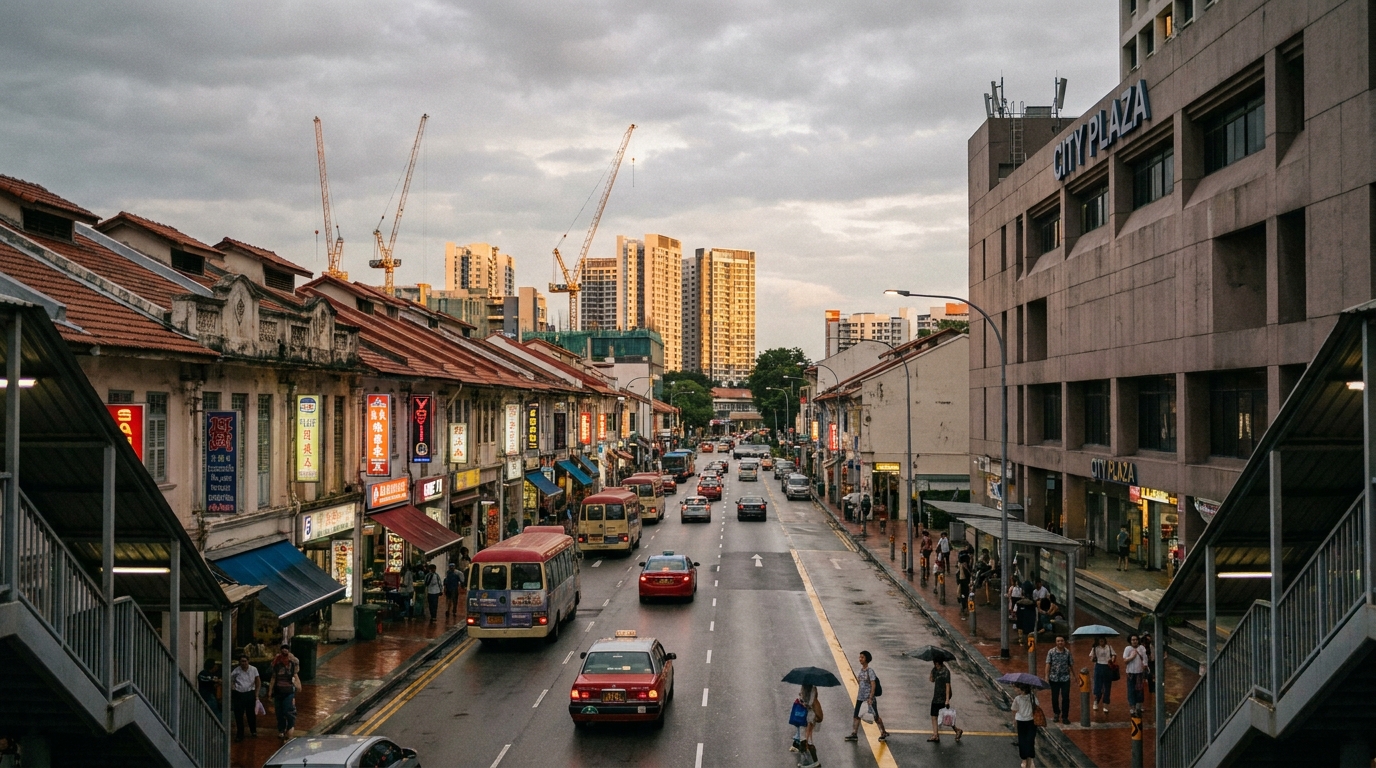
The case for the site is straightforward. It is freehold, and Government Land Sales supply is almost entirely 99-year leasehold — collective sales remain the only real channel to freehold land in city-fringe locations. It sits about 300m from Paya Lebar MRT interchange on the East–West and Circle lines, across the road from Paya Lebar Quarter, PLQ Mall, SingPost Centre and Kinex. And because the site is commercially zoned today, no additional buyer's stamp duty is payable on the acquisition — a meaningful saving against a residential en bloc of similar scale.
The case against is the quantum. Near-billion-dollar mixed-use sites have been a hard sell. Tan Boon Liat Building in Outram returned to market at a reduced $1.0 billion guide price, down from $1.15 billion. The Centrepoint rear block is on the market at $418 million. And Peace Centre / Peace Mansion — the cautionary tale — eventually sold for $650 million to a consortium of Chip Eng Seng, SingHaiyi and Ultra Infinity on its sixth attempt.
That last data point is the tell. Deals of this size increasingly clear through joint ventures and consortiums, not single balance sheets. SORA has eased from its post-2022 peaks, but lenders and equity partners have not relaxed their underwriting. Any buyer converting to a residential-led scheme also inherits build-and-sell deadlines to qualify for ABSD remission — the upfront saving is real, but it comes attached to a delivery obligation.
There is retail risk too. First-storey commercial space here competes with PLQ Mall, Paya Lebar Square and Kinex — three mature, transit-fed malls within walking distance. The ground floor is a planning requirement, not obviously an income upside.
What the pricing has to support
The nearest freehold residential benchmark in the immediate vicinity is Katong Regency, the 244-unit project above Kinex. Launched in 2012 at an average $1,608 psf and completed in 2015, its resale transactions have since crossed $2,000 psf.
That is a fourteen-year-old launch price and a resale market a developer cannot price against directly. Any new residential-led scheme on this site would enter at a very different level — and the gap between old benchmark and required new pricing is a judgement each bidder makes alone. It is also why the yield assumption of 915 sq ft average units matters: unit size is the lever that controls absolute quantum in a district where buyers are price-sensitive.
What to watch after 13 October
Three things will tell you how this ends.
- Whether any bid meets or clears $970 million by 13 October — or whether the process rolls into the ten-week private treaty period, where price discipline historically erodes.
- The LBC assessment that follows a development application, which converts the guide price into a real land rate.
- The July 2026 outline advice expiry, which puts a hard edge on how long the site's main selling point stays valid.
There is a policy footnote too. The Ministry of Law has proposed easing the collective sale framework for ageing strata estates, including a 70% consent threshold for developments aged 40 to 59 years and a shorter six-month signature-gathering window. Had that framework existed in 2021, City Plaza's 79.3% would have been a mandate, not a miss — and this tender would have happened five years earlier.
For now, the owners have done the hard part. Eight years of canvassing, one price cut, and a planning answer secured before the tender opened. Whether that is enough to move a $970 million freehold site in a market that has repeatedly balked at mega-quantum deals is the question the market answers in October.