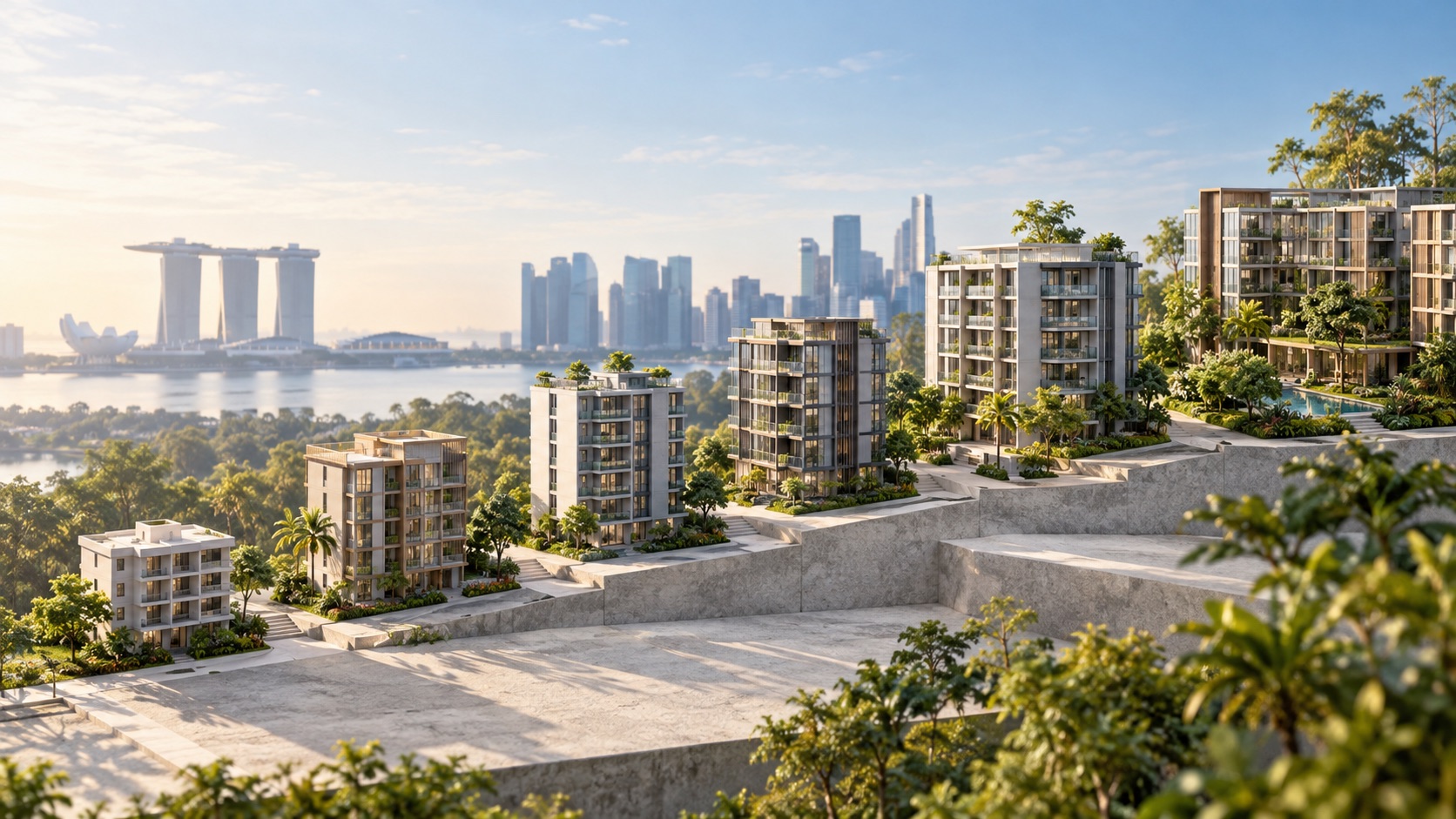
The EC Income Ceiling Goes to S$18,000 — But Canberra Drive Buyers Won't Feel It Until 2028
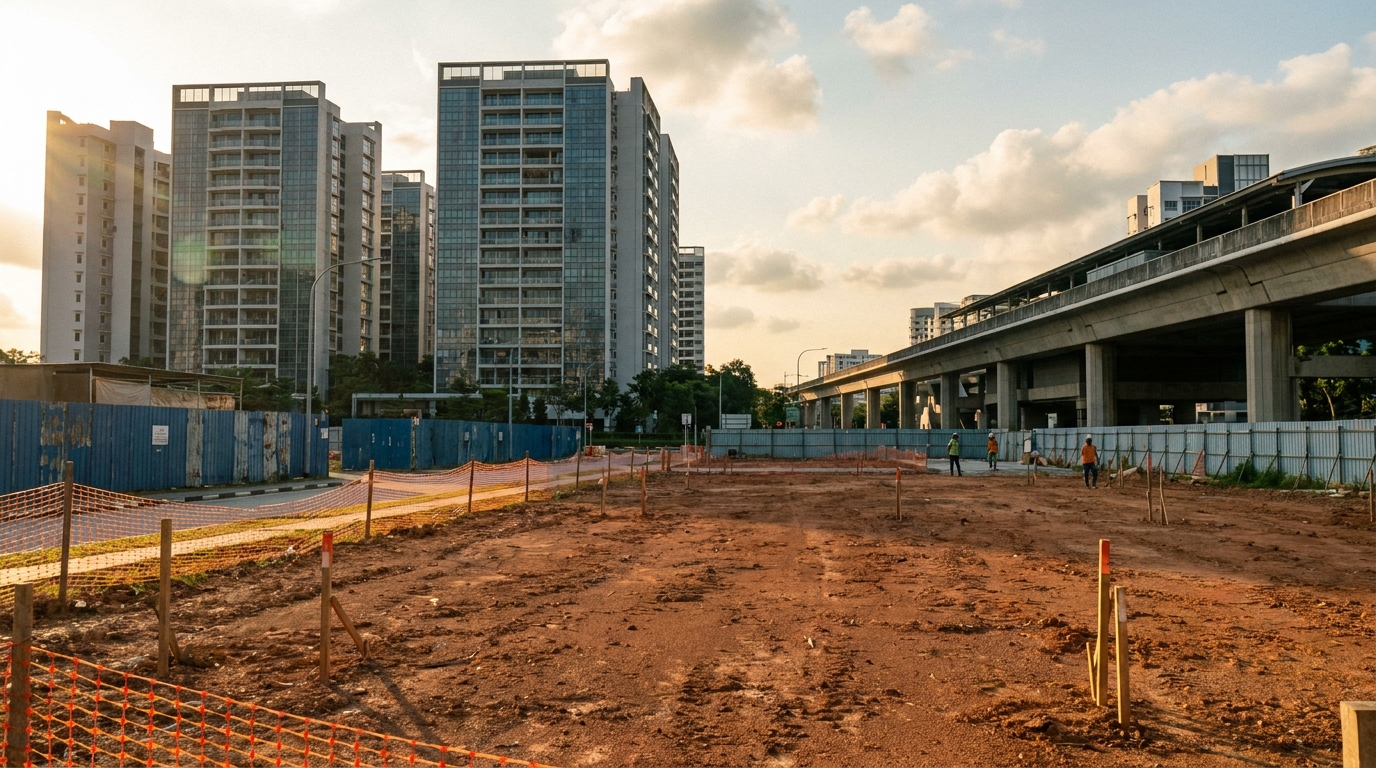
Raising the Executive Condo income ceiling widens the buyer pool for three land parcels that haven't even been tendered yet — and those same parcels carry the tightest EC rules ever written.
The gist
- EC income ceiling rises from S$16,000 to S$18,000, applying only to GLS tenders closing from 24 August 2026.
- Only three parcels qualify: Canberra Drive, Admiralty Walk and Jurong East, yielding roughly 1,370 units.
- Under the 30 per cent MSR, maximum loan rises from about S$1.0 million to S$1.13 million.
- Those same sites carry a 10-year MOP, no deferred payment, and 90 per cent first-timer allocation.
The Executive Condominium income ceiling has been raised from S$16,000 to S$18,000 a month — the first change since 2019. But nobody standing in a showflat this week qualifies under it, and nobody will for some time.
The ceiling moved. The queue did not.
Prime Minister Lawrence Wong announced the revision at the National Day Rally on 23 August 2026, alongside a lift in the BTO family income ceiling from S$14,000 to S$16,000. The EC change is narrower than the headline suggests.
The S$18,000 ceiling applies only to EC projects built on Government Land Sales sites where tenders close on or after 24 August 2026. It is not retrospective. Balance units in launched projects, and sites already awarded, stay under the S$16,000 cap.
That means three parcels: Canberra Drive (tender closing 1 October), Admiralty Walk (17 December), and a Jurong East site slated for launch by year-end. Together they could yield roughly 1,370 units. Award, design, launch, build — the households newly brought inside the gate are buying into a pipeline that arrives years from now.
So the immediate effect is not on buyers at all. It is on the developers deciding what to bid.
What S$2,000 a month actually buys
EC purchases are governed by the 30 per cent Mortgage Servicing Ratio, not the 55 per cent TDSR that applies to private condos. That single rule is why an income ceiling doubles as a financing ceiling.
Analyst estimates put the maximum bank loan at the old S$16,000 ceiling at around S$1.0 million, assuming a 30 per cent MSR, a 4 per cent medium-term interest rate floor and a 30-year tenure. At S$18,000, that rises to roughly S$1.13 million.
Set that against the median price of new EC units sold in 2026 to 15 August: S$1.83 million. At the old ceiling, a buyer needed a further S$366,750 in cash or CPF on top of the 25 per cent downpayment and booking fee. At the new one, that gap narrows to S$240,750.
The income ceiling hike does not make ECs cheaper. It moves about S$126,000 of the purchase from cash and CPF into a bigger mortgage — and a bigger monthly repayment for the next 30 years.
That is the honest framing. A household at the top of the new band is not better off by S$126,000; it is simply allowed to borrow more of the same price. Larger loans mean larger monthly obligations, at a stress-tested 4 per cent floor that most buyers will never actually pay but must always qualify against.

Seven years of wage drift, and 1,147 appeals
The revision was overdue on the arithmetic. Average monthly household employment income rose 22 per cent between 2019 and 2025, from S$11,250 to S$13,752. The median rose 27 per cent, from S$8,333 to S$10,591.
The ceiling, meanwhile, sat still for seven years. Previous revisions came in 2011 (to S$12,000), 2015 (to S$14,000) and 2019 (to S$16,000) — steady S$2,000 steps. This is the fourth step of the same size, arriving after the longest gap yet.
The pressure showed up in HDB's inbox. Appeals to waive the EC income ceiling jumped from 461 in 2024 to 1,147 in 2025. Between 2020 and 2025, HDB approved 845 out of 2,583 appeals — a reminder that for most households in that position, the cap was a wall, not a formality.
A dual-income couple who each got a promotion in 2023 did not become rich. They became ineligible.
That is the squeeze the change addresses: households earning S$16,001 to S$18,000, too well paid for subsidised housing, staring at Outside Central Region new launches at S$2,100 to S$2,400 psf when new ECs transact at a 20 to 30 per cent discount.
The same parcels carry the tightest EC rules ever written
Here is the part that gets lost in the demand story. The sites that qualify for the S$18,000 ceiling are the same sites that carry the tightening announced in May 2026.
For EC tenders from May onwards, the government doubled the Minimum Occupation Period to 10 years, removed the Deferred Payment Scheme, and reserved 90 per cent of units for first-timers in the first two years. Canberra Drive, Admiralty Walk and Jurong East all sit on that side of the line.
So the newly eligible household gains access to a product that is materially less liquid than the EC their neighbours bought. Add roughly three years of construction to a 10-year MOP and full privatisation further out still, and the commitment stretches well past a decade before the unit can be freely sold on the open market.
- Wider eligibility — households up to S$18,000 now qualify.
- Higher borrowing capacity — up to about S$1.13 million under the 30 per cent MSR.
- Longer lock-in — 10-year MOP on these parcels, no deferred payment.
- Tighter allocation — 90 per cent reserved for first-timers in the first two years.
Read together, the package is not a loosening. It is a swap: more buyers in, less flipping out. The HDB upgrader hoping to treat an EC as a five-year capital play on these sites has been quietly written out of the script.
The bid is where the money moves first
Developers price land off absorption risk. A wider eligible pool lowers that risk, and the tender calendar tests it almost immediately.
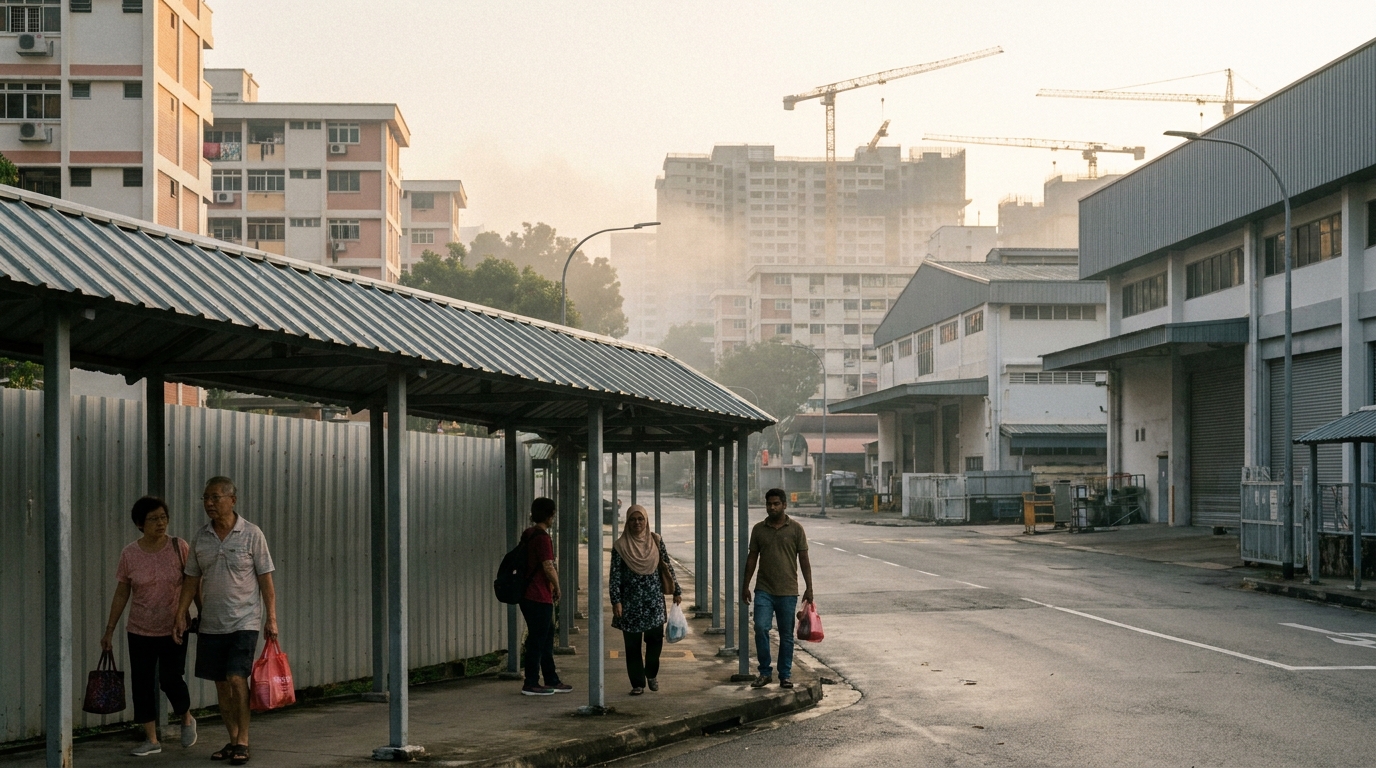
Canberra Drive closes on 1 October — the first EC site to face the market under both the new ceiling and the tightened rules. One analyst forecast puts bids in the range of S$630 to S$700 psf per plot ratio, with up to five bidders.
History suggests where that lands. Tenet in Tampines was secured at S$659 psf ppr in 2021 and launched in late 2022 at an average of S$1,384 psf. Aurelle of Tampines was bid at S$721 psf ppr in October 2023 and launched in the first quarter of 2025 at S$1,766 psf — 90 per cent sold on launch day, fully sold by April 2025. Novo Place in Tengah launched in late 2024 at S$1,656 psf.
Median new EC prices have moved accordingly: roughly S$800 psf in 2015, S$1,537 psf in 2024, S$1,754 psf in 2025. Land cost feeds through with a two-to-three-year lag, and it has fed through reliably every time.
If the ceiling hike firms up bids, the buyers who benefit from the wider eligibility will also be the ones paying for it at launch. That is not a contradiction — it is how a subsidised-supply market with competitive land tenders works.
Who gets squeezed at the ballot
Widening a queue does not shorten it. Every household in the S$16,001 to S$18,000 band that previously had no claim on an EC now has one, and they arrive with the largest loan capacity in the room.
The households most exposed are the ones in the middle — roughly S$12,000 to S$14,000 a month. They are still eligible, still competing, but now competing against buyers who can absorb a higher quantum without flinching. If developers tilt unit mixes toward three- and four-bedroom layouts priced for the top tier, the mid-band buyer gets pushed into smaller stacks or out entirely.
There is a counterweight. The BTO ceiling rising to S$16,000 pulls some first-timers back toward flats rather than a multi-million-dollar EC commitment, and the 90 per cent first-timer allocation protects the newest entrants at the expense of upgraders. Second-timers chasing these parcels face a 10 per cent quota — and will likely look instead at pipeline projects still governed by the old rules, or at private resale.
What to watch, and what not to expect
Do not expect a price event this quarter. The revision touches no existing inventory, and the units it does touch will not be sold for years. Anyone told otherwise is selling something.
Three things are worth tracking:
- The Canberra Drive tender result on 1 October — bid count and psf ppr will show whether developers actually price in the wider pool, or discount it against the 10-year MOP.
- The EC-to-OCR spread — the 20 to 30 per cent discount is the entire value proposition. If it narrows, the case for waiting out a decade-long lock-in weakens fast.
- The MSR itself — at 30 per cent, it remains the binding constraint on EC pricing. Any review of that limit, or of loan-to-value rules, would matter far more than another S$2,000 on the ceiling.
For a household earning between S$16,000 and S$18,000, the practical answer is straightforward: you are eligible for a specific, small set of future projects, you can borrow about S$130,000 more than before, you still need roughly a quarter of a million in cash and CPF against a 2026 median of S$1.83 million, and you should assume you cannot sell for a decade after collecting keys.
That is a real opening. It is also a long one.