 plan
planYishun 10’s 110-home replacement will intensify the MRT hub, not transform the whole estate
The confirmed mixed-use redevelopment puts private housing on an exceptionally connected parcel. Its larger consequence is a denser Yishun Central—not a town-wide property price reset.
The gist
- The confirmed mixed-use redevelopment puts private housing on an exceptionally connected parcel.
- Frasers Property has confirmed that Yishun 10 will cease operations on 2 March 2027, clearing the way for a mixed-use development with about 110 homes and street-level retail.
- The redevelopment will put new private housing beside Yishun MRT station, the bus interchange and Northpoint City.
Frasers Property has confirmed that Yishun 10 will cease operations on 2 March 2027, clearing the way for a mixed-use development with about 110 homes and street-level retail. The project is targeted for launch in mid-2027 and completion by mid-2031.
The redevelopment will put new private housing beside Yishun MRT station, the bus interchange and Northpoint City. Yet its significance lies less in the number of homes than in the continued intensification of Yishun Central: this is a highly connected but compact addition, not the start of a town-wide supply wave.
The gist
- Yishun 10 is set to become a mixed-use project with approximately 110 homes and a retail podium.
- The existing complex is expected to close on 2 March 2027, with the replacement targeted for completion by mid-2031.
- The site is beside Yishun MRT and the integrated transport hub, with an existing underground pedestrian connection to Northpoint City.
- Nearby owners may gain from a more active town centre, but the project is too small on its own to establish a new price level across Yishun.
Confirmation changes the status of the site
Yishun 10’s future is no longer simply a planning possibility. Frasers Property has set out a preliminary development programme, an expected closure date and a target launch window for the replacement project.
That follows the consolidation of ownership required to redevelop the strata-titled property. Frasers Property completed its acquisition of the remaining ten strata lots from Frasers Centrepoint Trust on 23 September 2025; its annual report records that the cinema portion had already been acquired on 8 August 2025.
The sequence matters because a permissible land use does not compel an owner to build. Here, ownership has been assembled and the owner has publicly committed to redevelopment, even though the final design and regulatory approvals have not been disclosed.
The announced project remains modest in residential terms. Approximately 110 units can create a distinctive private development at a transport node, but the number is not large enough to amount to a broad housing-supply shock for an established town.
“This is a town-centre intensification story, not a Yishun-wide supply shock.”
The redevelopment instead changes how one of Yishun Central’s most prominent low-rise parcels is used. A cinema-and-retail building will give way to homes, shops and potentially more activity throughout the day, placing additional residential density directly beside existing transport and commercial infrastructure.
Why these 110 homes will be unusually positioned
The site’s principal advantage is specific and difficult to reproduce elsewhere in Yishun. It stands beside Yishun MRT station and Yishun Integrated Transport Hub, while the existing underground pedestrian network links it to Northpoint City.
For residents, that could mean short, sheltered journeys to trains, buses, shops and services. Such connectivity generally has practical value for households that commute frequently, do not drive or want daily needs within a compact walking catchment.
But location should not be confused with product quality. Frasers Property’s announcement does not establish the unit mix, internal floor areas, layouts, block arrangement, maintenance charges, parking provision, tenure or launch prices. Those details will determine whether the eventual homes use the site efficiently and how they compare with surrounding resale options.
The retail component is similarly preliminary. Street-level shops may animate pedestrian routes and improve convenience, but Yishun Central already has a substantial retail offer at Northpoint City. A new podium will add the most value if its tenants and circulation complement the adjoining mall rather than simply duplicate it.
There is a plausible operational advantage. Northpoint City is part of Frasers Centrepoint Trust’s portfolio, while Frasers Property is undertaking the Yishun 10 redevelopment. Common group links may create scope for coordinated pedestrian movement and retail positioning, although no detailed integration plan has been publicly committed.
That distinction is important for buyers considering an assumed “integrated development” premium. The physical underground connection is reported; the eventual architecture, ease of access and commercial relationship between the properties remain matters to assess when approved plans are available.
What nearby owners can reasonably expect
The immediate effect for nearby households will not be a paper gain in home values. It will be the loss of the existing cinema complex, followed by demolition and construction activity near a busy transport hub after operations cease.
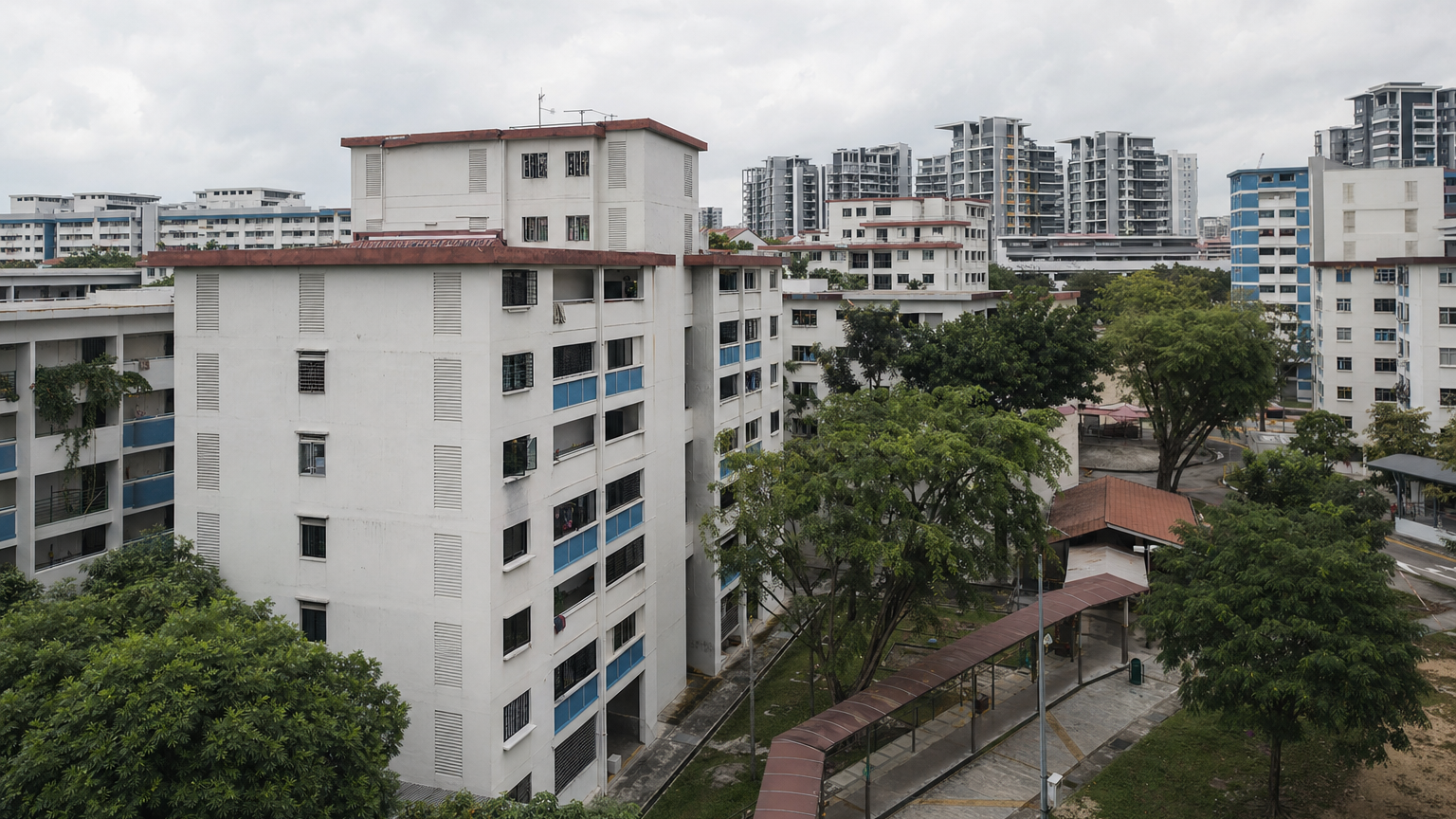
Residents in the closest HDB blocks may experience changes in pedestrian routes, traffic, noise and outlook. The scale and duration of these effects cannot yet be judged without construction plans, but proximity cuts both ways: the homes with the easiest access to a renewed town centre may also be the most exposed to building works.
Once completed, the project could strengthen Yishun Central as an active mixed-use node. More residents living directly beside shops and transport can support footfall beyond office and commuting peaks, while a rebuilt street edge may improve the experience of moving between the station, interchange and surrounding amenities.
This interpretation is consistent with the broader planning direction, but it should not be overstated. Singapore’s statutory Master Plan 2025 provides the medium-term land-use framework, and plans for the north include the rejuvenation of Yishun with new homes and amenities. That does not prescribe a timetable for every parcel or guarantee redevelopment across the surrounding estate.
For HDB owners elsewhere in Yishun, approximately 110 new private homes are unlikely to alter resale demand materially by themselves. Any eventual benefit will vary by walking distance, route quality, lease profile, noise exposure and access to the town centre—not merely by sharing the Yishun name.
Private owners should be equally careful with comparisons. A new home beside an MRT station and interchange may carry premiums for age, design and convenience that an older apartment cannot replicate. Its future launch prices would therefore be evidence of what buyers will pay for that particular product, not an automatic valuation benchmark for every nearby condominium.
Buyers face a trade-off, not a one-way convenience premium
The strongest owner-occupier case is straightforward. The project is expected to combine housing and retail beside rail and bus connections, with sheltered access to a major mall. Established facilities in the wider area reduce the wait for a neighbourhood to mature.
The counterargument is just as concrete. Transport interchanges bring crowds, vehicle movement and activity, while central sites may offer less quiet and fewer open views than homes farther inside an estate. Buyers who work from home, value privacy or are sensitive to traffic may prefer a longer walk to the station.
A mixed-use building also presents design questions that cannot be answered from the announcement. Buyers will need to see how residential entrances are separated from retail activity, where servicing and refuse operations sit, how vehicles enter the development and whether lower-floor homes face busy public spaces.
The mid-2031 completion date is a target, not a present-day promise of handover. The four-year interval between the expected closure and targeted completion leaves room for demolition, construction and normal development risks. Purchasers should ultimately rely on the contractual completion terms in the sales documents rather than treating the initial announcement as binding delivery language.
The mid-2027 launch target also means there is no sound basis yet for estimating a price premium or rental yield. Interest rates, competing launches, resale supply and buyer demand can all change before sales begin. Any current claim about the project’s affordability or investment performance would therefore be speculation.
A landmark will disappear, even if some memories remain
Yishun 10 carries social significance beyond its real estate. Opened in 1992, it was Singapore’s first multiplex cinema, with ten halls and 1,477 seats.
Frasers Property has begun a “Yishun 10 Memories” initiative and said preliminary ideas include upcycling selected artefacts and incorporating community stories, artworks or interpretive murals into the future development. This acknowledges the building’s place in local memory, especially for residents who knew it as a defining part of the town centre.
It is not, however, a conservation commitment. Reusing artefacts or telling stories in a new building differs fundamentally from retaining the original structure. Until final plans are published, the extent and form of any heritage interpretation remain uncertain.
That loss should form part of the assessment of the redevelopment. The site will gain homes and a more intensive mix of uses, but Yishun will lose a longstanding entertainment venue whose historical importance cannot be measured through unit count or land efficiency alone.
The next evidence will come with the product
Yishun 10’s redevelopment confirms a broader direction for mature town centres: well-connected, comparatively low-rise sites can be intensified by combining housing with commercial uses. In this case, Frasers Property’s assembled ownership and relationship with adjoining assets make the parcel especially logical for redevelopment.
For owners, the sensible conclusion is measured. The project may improve the town-centre environment and draw attention to central Yishun, but neither an immediate valuation uplift nor a wider price reset follows automatically from 110 proposed homes.
For buyers, the postcode and MRT proximity are only the opening facts. The decisive evidence will be the tenure, layouts, residential access, traffic treatment, maintenance costs, retail planning and price gap against suitable resale alternatives.
The development to watch is therefore not another announcement about Yishun’s potential. It is the expected mid-2027 launch disclosure, when a compelling transport-node story must become a workable residential product.