 plan
planHigh Point’s unchanged S$580 million price puts Orchard redevelopment risk back on trial
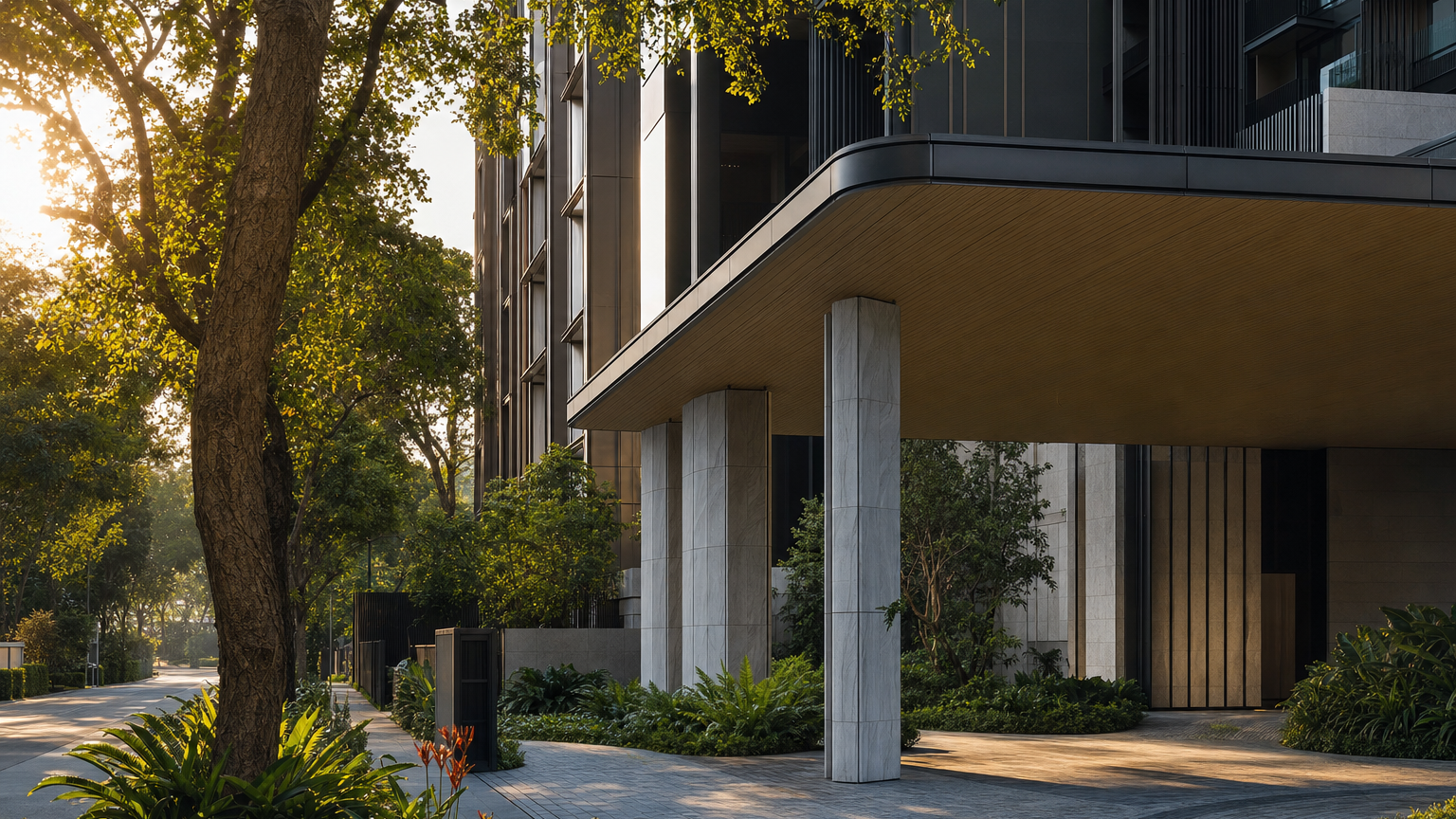
The sixth collective-sale attempt preserves owners’ expectations for the Mount Elizabeth site. It also exposes the harder question left by the previous failed campaign: whether a developer can make the numbers work.
The gist
- The sixth collective-sale attempt preserves owners’ expectations for the Mount Elizabeth site.
- High Point at 30 Mount Elizabeth has returned for a sixth collective-sale attempt with a S$580 million guide price—the same figure used in its previous unsuccessful campaign.
- The relaunch keeps a rare District 9 redevelopment opportunity in play.
High Point at 30 Mount Elizabeth has returned for a sixth collective-sale attempt with a S$580 million guide price—the same figure used in its previous unsuccessful campaign. The new tender for the 59-unit freehold development closes at 3pm on 12 October 2026.
The relaunch keeps a rare District 9 redevelopment opportunity in play. But the unchanged asking price is also a test of whether owners’ expectations can meet developers’ increasingly detailed assessment of cost, sales risk and the returns required from a large luxury project.
The gist
- High Point occupies a 47,607 sq ft freehold site at 30 Mount Elizabeth and has a S$580 million collective-sale guide price.
- The guide works out to approximately S$2,645 per sq ft per plot ratio, including a stated 7% bonus floor area.
- Its preceding tender closed on 9 June 2026 without an award, after which a 10-week private-treaty period reportedly ran until 17 August.
- A relaunch is not a completed transaction. Until a buyer commits, High Point provides neither confirmed proceeds for its owners nor a new land-price benchmark for surrounding homes.
The price has not moved, but the evidence has
High Point’s fifth attempt began in April 2026 with the same S$580 million guide. That tender closed without an award, and the subsequent private-treaty window did not produce a disclosed sale.
The sixth attempt therefore begins with more market information than the fifth. Owners now know that the previous process did not deliver an acceptable transaction at the stated terms. Prospective bidders know that too.
This does not prove the guide price is unattainable. Tender outcomes can change with financing conditions, internal approvals, competing land opportunities and developers’ views of future demand. A bidder may also enter during one campaign after declining to do so in another.
Still, a guide price is an invitation and an expression of sellers’ expectations—not a valuation validated by a completed deal. Keeping it unchanged preserves the owners’ position, but it also leaves the central disagreement unresolved.
“The sixth attempt is not a fresh valuation of High Point; it is another test of the same redevelopment proposition.”
That distinction matters beyond this estate. En-bloc headlines often foreground the size of an asking price, even though the more consequential figure is the price and conditions that a buyer will actually accept.
Scarcity helps the case, but does not complete the maths
High Point’s marketing proposition has genuine strengths. It is a freehold residential site near Orchard Road, on elevated ground in Mount Elizabeth, with a stated plot ratio of 4.45 and height control of up to 36 storeys under the applicable planning parameters.
The selling agent says no land betterment charge is payable for intensification up to the baseline plot ratio. It places the guide at about S$2,645 psf per plot ratio, after including the specified bonus floor area.
Those attributes can support a premium redevelopment concept. Freehold tenure removes lease-decay concerns, while the location gives a future project access to the Orchard area’s retail, medical and transport amenities.
But developers do not purchase scarcity in isolation. They purchase land, demolition obligations and the right to undertake a project whose revenue may arrive years after the acquisition.
The land rate is only the start of that feasibility exercise. A bidder must account for construction, financing, professional services, marketing, taxes, contingencies and the profit margin needed to compensate for development and sales risk. It must then estimate the prices achievable for the replacement homes and how quickly the market could absorb them.
This is especially significant at a headline land cost of S$580 million. Even if the site carries no land betterment charge within the stated assumptions, that does not eliminate the other costs or the risk of committing substantial capital to a luxury residential cycle.
The strongest case for the owners is that suitable freehold redevelopment parcels in this part of District 9 are difficult to assemble. A developer seeking a sizeable Orchard-area site cannot simply manufacture an equivalent plot.
The counterargument is that rarity creates value only up to the point at which the future project remains commercially workable. The unsuccessful previous campaign indicates that High Point’s qualities had not, during that process, produced an offer the sellers were prepared to accept.
For owners, the tender is an option—not an exit date
High Point’s relaunch may revive expectations of a collective-sale premium, but owners should separate a live marketing exercise from an agreed disposal.
For developments more than 10 years old, Singapore’s statutory collective-sale process generally requires support from owners holding at least 80% of both share value and strata area before an application for a sale order can proceed. Meeting that threshold enables the process; it does not itself create a buyer or guarantee completion.
An actual sale would still depend on an acceptable bid, contractual terms and completion of the applicable collective-sale process. The gross sale price would not automatically equal an owner’s net proceeds.
Individual outcomes depend on the agreed method of apportionment and relevant deductions. Timing also matters to owners deciding whether to renovate, renew a tenancy, buy another property or sell their unit individually.
The sixth tender therefore creates uncertainty as well as possibility. An owner who behaves as though completion is assured could make decisions around a date or payout that does not materialise. Conversely, ignoring the exercise entirely could leave an owner poorly prepared if a credible bid emerges.
The clearest near-term evidence will be a named purchaser, an agreed price and disclosed conditions. Until then, the S$580 million figure remains a collective asking price rather than realised value.
Buyers should not treat the guide as a neighbourhood comparable
For buyers examining completed homes around Mount Elizabeth and Orchard, the relaunch does not establish a new transaction benchmark. Neither the sixth tender’s guide nor its implied land rate is a completed land sale.
That limits what can reasonably be inferred about nearby resale values. An individual apartment and a redevelopment site are priced through different mechanisms: one provides an existing home or rental asset, while the other carries the cost and risk of creating an entirely new project.
A successful acquisition could eventually influence expectations for new luxury supply, particularly if it reveals how much a developer is willing to pay for freehold District 9 land. Even then, the acquisition price would not translate mechanically into the value of every nearby apartment.
Nor does the stated 36-storey height control amount to approval for a particular building. High Point currently has no disclosed replacement unit count, project configuration, launch date or future selling price in the collective-sale announcement.
Buyers should therefore read the tender as evidence of potential long-term change, not present supply. Any redevelopment would follow acquisition, approvals, vacant possession, demolition and construction before homes could reach the market.
For nearby owners, the exercise may support the broader observation that sizeable freehold sites in the Orchard area remain strategically interesting. Yet the repeated attempts also demonstrate that developers distinguish between an attractive location and an acceptable entry price.
The earlier benchmark has limits
The marketing case references the September 2021 sale of 21 Anderson for S$213 million, equivalent to S$2,490 psf per plot ratio, as a relevant freehold luxury-residential land transaction.
It is useful context, but not a direct valuation formula for High Point. The two sites differ in scale and physical characteristics, while their sale campaigns sit in different financing, construction-cost and housing-market environments.
The comparison shows why the High Point guide can be presented as plausible in a scarce segment. It does not demonstrate that S$580 million is the price a developer should pay today.
That is the broader lesson for owners considering collective sales elsewhere. A nearby land rate can frame negotiations, but developers model the prospective scheme parcel by parcel. Time, site efficiency, planning constraints, total capital exposure and expected demand can matter as much as tenure or postal district.
High Point’s repeated campaigns illustrate this gap particularly clearly. The site can be rare, well located and potentially valuable while still requiring a price that clears a buyer’s feasibility threshold.
What the October deadline can reveal
The tender is scheduled to close at 3pm on 12 October 2026. Three broad outcomes are possible: an award that produces a genuine transaction benchmark; bids that lead to further negotiation; or another close without a sale.
An award near the guide would indicate that at least one developer is prepared to underwrite High Point’s redevelopment proposition at roughly the owners’ present expectation. A materially different agreed price would reveal where buyer and seller assessments finally converged.
Another unsuccessful exercise would not prove the site lacks redevelopment potential. It would, however, add weight to the view that price, terms or timing must change before its scarcity can be converted into a transaction.
For both owners and buyers, that is what the headline misses. The important development is not simply that High Point is back on the market. It is that the same S$580 million proposition is returning after an unsuccessful test—and the next tender will show whether anything in developers’ calculations has changed.