 plan
planGilstead Court’s $198m En Bloc Bid Runs Into a Small-Site Problem
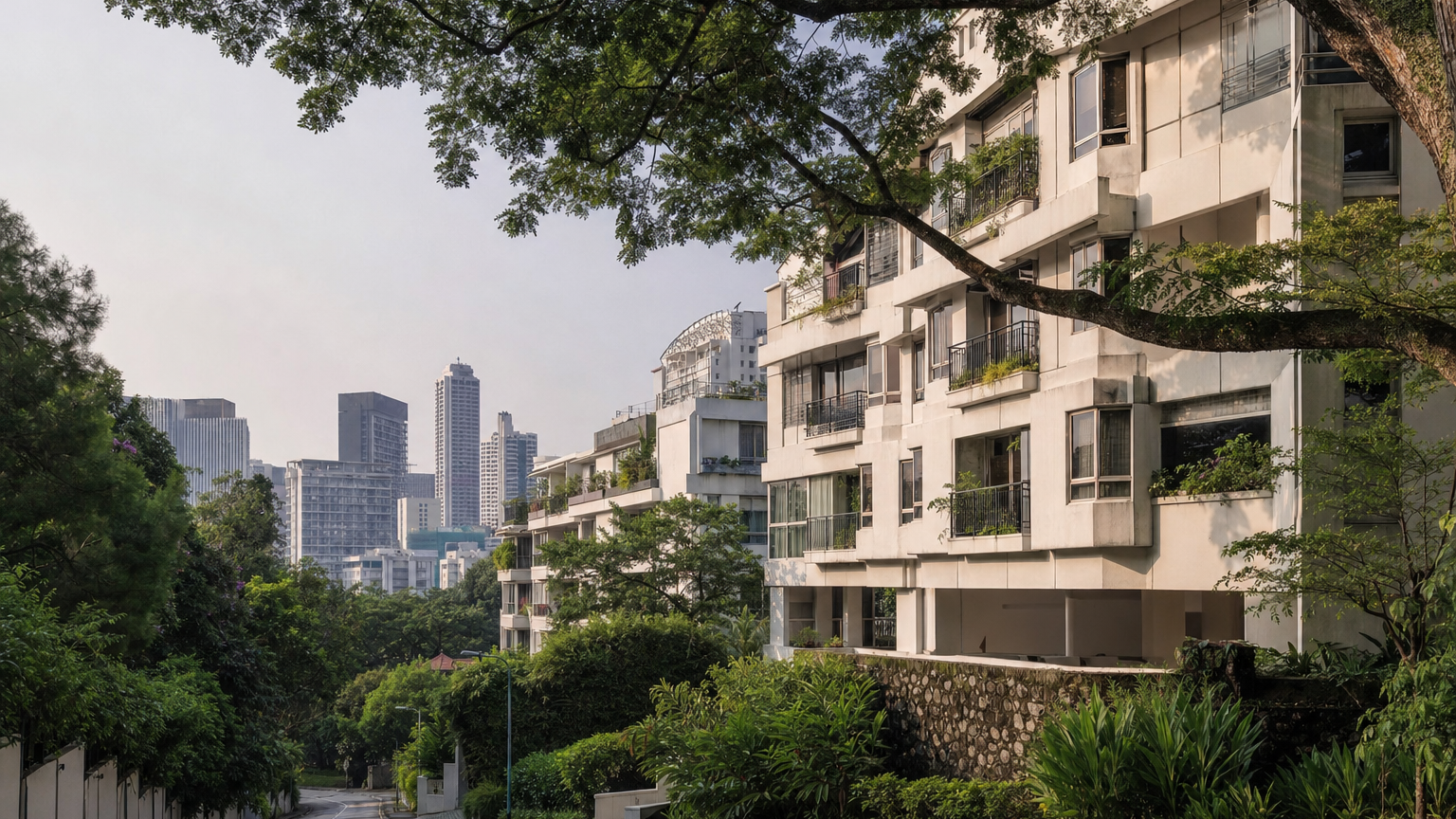
The freehold site’s land rate looks competitive beside nearby government plots. Its estimated 98-home redevelopment yield makes the economics considerably less straightforward.
The gist
- The freehold site’s land rate looks competitive beside nearby government plots.
- Gilstead Court has returned to the collective-sale market with a $198 million reserve price.
- The obvious attraction is scarce freehold land near Novena and Newton.
Gilstead Court has returned to the collective-sale market with a $198 million reserve price. The 48-unit freehold condominium at 52 Gilstead Road was launched on 31 August 2026, and its tender is scheduled to close on 13 October 2026.
The obvious attraction is scarce freehold land near Novena and Newton. The less obvious constraint is scale: the site’s proposed redevelopment would yield only about 98 apartments, leaving a buyer with far fewer homes over which to spread construction, compliance, financing and marketing costs.
That makes this more than another test of owners’ price expectations. It is a test of whether a seemingly competitive land rate can compensate for a relatively small development programme.
The gist
- Gilstead Court is seeking $198 million for a roughly 75,479 sq ft freehold site, with the tender due to close on 13 October 2026.
- Its quoted land rate sits near recent state-land benchmarks in the area, but those larger sites have much higher development intensity and can support more than 300 homes.
- The property’s previous campaigns encountered different obstacles: insufficient consent, a transaction found not to have been conducted in good faith, and finally the absence of a buyer.
- Proposed lower consent thresholds for older developments were not in force when this tender launched—and Gilstead Court had already secured support above the existing threshold.
A central freehold site with a limited unit yield
Gilstead Court occupies about 75,479 sq ft and is zoned residential at a gross plot ratio of 1.4. Subject to planning approval, the marketing proposal envisages a five-storey development containing as many as 98 apartments averaging roughly 1,076 sq ft.
The reserve price translates to approximately $1,874 per sq ft per plot ratio, or about $1,751 psf ppr if a 7% bonus balcony area is included. No land betterment charge is expected because of the site’s development baseline, according to the sale materials reported at launch.
Those figures make the site look competitive at first glance. But a land rate is only one component of a developer’s feasibility model, and the stated development capacity is not an entitlement.
Official planning guidance makes clear that a Master Plan plot ratio is an upper bound. The intensity actually achievable can be affected by building height, setbacks, site configuration and other planning or technical requirements.
Even if the full proposed yield is approved, the redevelopment remains small by current private-housing standards. That matters because some project costs do not fall proportionately with the number of homes.
Design work, consultants, statutory submissions, site mobilisation, show-flat operations and the sales campaign all have fixed or semi-fixed components. A developer with 98 saleable units has a narrower base over which to recover them than one building several hundred homes.
The fourth attempt is not evidence that a sale is now inevitable; it is evidence that owner consent and developer feasibility are separate tests.
Why the nearby land bids are imperfect comparisons
The strongest case for the reserve price comes from two nearby government land sales. The Bukit Timah Road and Peck Hay Road sites were awarded at about $1,820 psf ppr and $1,865 psf ppr respectively.
Gilstead Court’s adjusted rate of about $1,751 psf ppr therefore appears lower. Its freehold tenure also compares favourably with the leasehold tenure normally attached to state residential sites.
But the comparison stops being clean when development form enters the picture. Both government sites carry a 4.9 plot ratio and can accommodate more than 300 homes, against the estimated 98 at Gilstead Court.
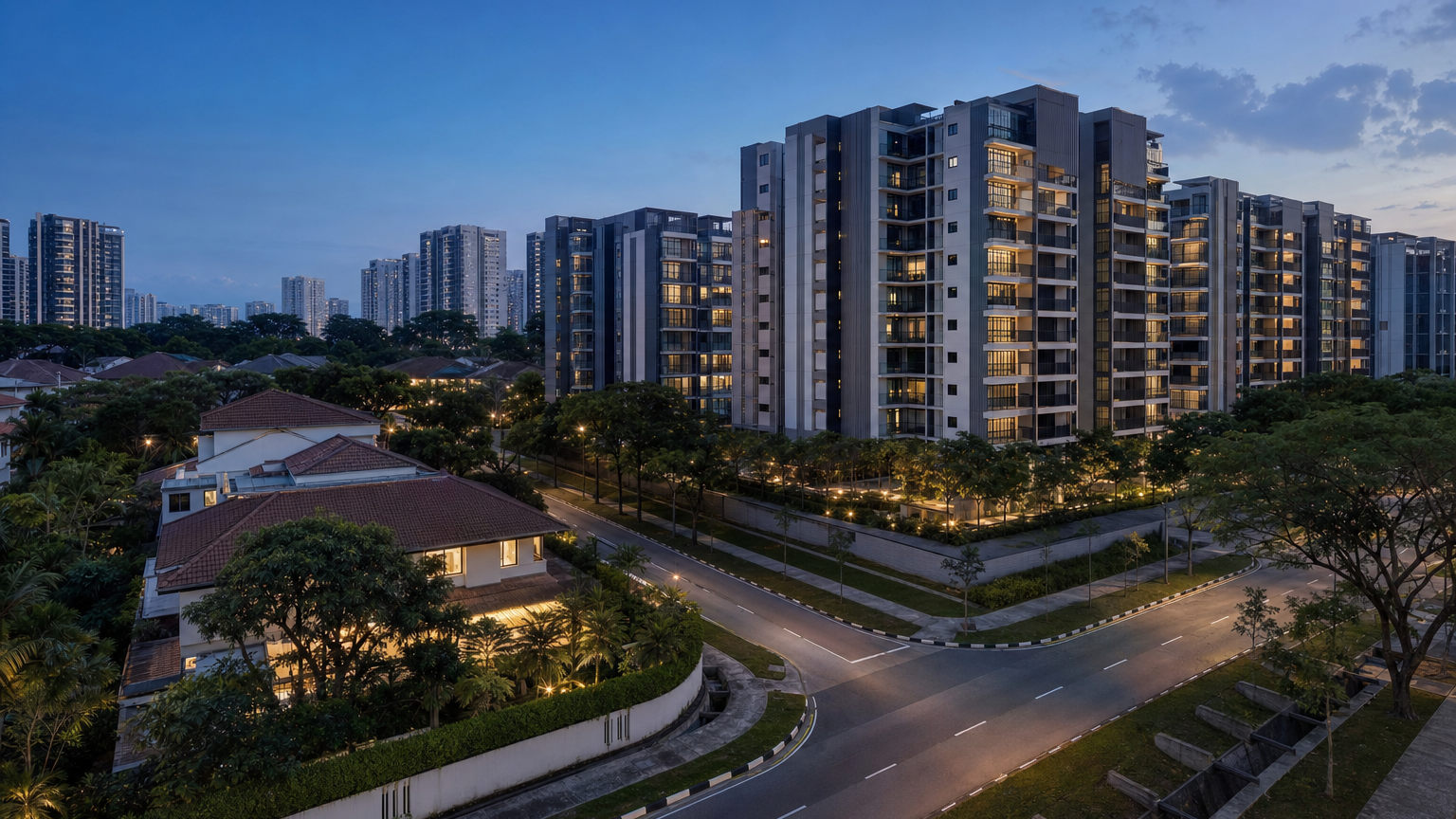
| Site measure | Gilstead Court | Nearby state sites | |---|---:|---:| | Quoted land rate | $1,874 psf ppr; about $1,751 with bonus balcony area | About $1,820 and $1,865 psf ppr | | Plot ratio | 1.4 | 4.9 | | Indicative scale | Up to 98 homes | More than 300 homes each | | Tenure | Freehold | Leasehold |
The table does not establish that one acquisition is better than another. It shows why headline land rates cannot be read in isolation.
A smaller, lower-rise project may command a boutique premium and could face less direct competition within its immediate setting. Freehold tenure may also support buyer demand. Those are the strongest counterarguments to the scale concern.
Yet a premium selling proposition does not automatically produce a wider profit margin. The buyer must still pay the collective-sale price, finance the acquisition, obtain approvals, build the project and sell enough homes at prices the market will accept.
The relevant question is thus not whether $1,751 psf ppr looks attractive beside $1,820 psf ppr. It is whether the total development cost and achievable revenue work for this particular 98-home scheme.
Three previous campaigns, three distinct lessons
The latest launch is commonly described as Gilstead Court’s fourth attempt. The documented chronology begins in 2008, not 2005: an effort that year failed to obtain the required owner support.
In 2013, a buyer offered $150.168 million, but minority owners challenged provisions that imposed additional liabilities on owners who had not signed the collective-sale agreement.
The Court of Appeal ultimately held that the transaction was not conducted in good faith. It also found that an objectionable distribution arrangement could not simply be repaired by deleting provisions after the finding of bad faith had arisen.
That episode remains relevant because collective sales are not merely votes on price. The process, sale method and treatment of owners matter alongside the level of consent.
A further campaign began in 2018 with a $168 million reserve. The property was relaunched in 2019 at $153 million, but did not secure a buyer.
For clarity, the 2018 tender and 2019 relaunch are best treated as one campaign unless primary documentation establishes that they were legally separate attempts. On that basis, the current exercise follows three unsuccessful campaigns since 2008—not three failures since 2005.
The new reserve is $45 million above the reduced 2019 figure. That is an editorial calculation of approximately 29.4%, not evidence that every owner’s expected proceeds have increased by the same proportion.
Each campaign highlights a different hurdle. Owners must first align, the process must withstand legal scrutiny, and a developer must still accept the commercial terms. Progress on one does not remove the others.
The payout is gross, not a replacement budget
More than 80% of owners by both share value and strata area supported the current attempt after an estimated six months of signature collection. That clears the applicable consent hurdle for launching the sale, but it does not guarantee a bid or completed transaction.
The launch material indicates proceeds of around $4 million per apartment. That figure should be read as indicative: actual allocations depend on the apportionment method in the collective-sale agreement, which has not been provided in the evidence reviewed here.
Nor is gross sale consideration the same as deployable cash. An owner’s eventual position can be affected by an outstanding mortgage, transaction costs, taxes, the timing of payment and the cost of securing another home.

Replacement housing is particularly important in a rising reserve-price environment. An owner may compare the collective-sale payout with the present resale value of the existing unit, but the practical comparison is with the housing that household needs after completion—including its preferred tenure, location and size.
There is also a timing distinction. A tender closing date is not a moving date. The tender may attract no acceptable bid; if a buyer emerges, the transaction may still be subject to contractual, statutory or planning steps.
Owners therefore have an opportunity, not a confirmed exit. The meaningful outcome will depend on the bids received and, if a sale proceeds, the agreement’s distribution and completion mechanics.
Buyers should not capitalise an uncertain en bloc exit
The story carries a separate lesson for buyers considering older freehold condominiums. Collective-sale potential can be real, but it should not be treated as a predictable return or a substitute for the home’s underlying value.
A buyer entering a development during an active campaign would need to understand the sale status and the obligations attached to the unit. Financing and tax outcomes can also depend on when the property is acquired and disposed of.
For residential properties bought on or after 4 July 2025, Seller’s Stamp Duty generally applies when they are sold or disposed of within four years. Rates range from 16% in the first year to 4% in the fourth, subject to the detailed acquisition, disposal and exemption rules.
That does not mean every collective sale creates the same SSD bill. The legally relevant dates and any applicable exemption must be assessed under the official rules.
The wider point is simpler: a buyer paying extra for “en bloc potential” is purchasing an uncertain outcome controlled partly by other owners, legal procedure and developer demand. If the sale fails, that buyer may have to hold the property through another campaign—or indefinitely.
A sound price must therefore work for the home as it stands. Any future collective-sale proceeds are a possibility, not a reliable valuation input.
A proposed law may ease voting, but not the economics
Gilstead Court was completed around 1978, placing it in the 40-to-59-year age band addressed by proposed changes to Singapore’s collective-sale regime.
The Land Titles (Strata) (Amendment) Bill 2026 was introduced for First Reading on 4 August 2026. It proposes reducing the consent threshold for developments aged 40 to 59 years from 80% to 70%, alongside additional safeguards for minority owners.
The distinction between proposal and operative law matters. At the time of Gilstead Court’s launch, the amendment was not the rule governing its tender; the development had in any event already obtained support exceeding 80% by share value and strata area.
Lower thresholds could allow more ageing estates to reach the market. That may help owners who have struggled to secure consensus, especially where maintenance and renewal needs are increasing.
But easier consent could also expand the supply of potential collective-sale sites competing for a finite pool of developers. It changes who can offer land; it does not ensure that developers will buy every site at the owners’ preferred price.
That is why Gilstead Court is a useful early test. Its freehold tenure, central location and nearby land benchmarks strengthen its case. Its low plot ratio and 98-home scale keep the feasibility question open.
The development to watch is not another round of owner signatures. It is whether the tender draws credible bids by 13 October—and whether any bidder values freehold scarcity enough to absorb the costs of building at this comparatively small scale.