 plan
planCuppage Terrace gives Frasers control of a bigger Orchard Road puzzle
The S$175 million acquisition joins a strategic cluster around The Centrepoint and 51 Cuppage Road. It creates scope for coordinated renewal—but confirms neither redevelopment nor new homes.
The gist
- The S$175 million acquisition joins a strategic cluster around The Centrepoint and 51 Cuppage Road.
- Frasers Property completed its purchase of 17 conserved Cuppage Terrace shophouses for an agreed property value of S$175 million on 31 August 2026.
- The important change is not simply that a prime Orchard Road property has traded.
Frasers Property completed its purchase of 17 conserved Cuppage Terrace shophouses for an agreed property value of S$175 million on 31 August 2026. The row occupies about 28,986 sq ft of land, has 34,678 sq ft of gross floor area excluding outdoor refreshment areas, and sits on a 99-year lease with roughly 62 years remaining.
The important change is not simply that a prime Orchard Road property has traded. Frasers now controls another adjoining part of a wider group of assets that includes The Centrepoint and 51 Cuppage Road, giving it more scope to coordinate access, circulation and future enhancement across the precinct.
That is strategic control, not an approved development. Frasers has not announced a redevelopment, a residential component or additional floor area, while conservation controls and planning approval remain substantial boundaries.
The gist
- Frasers paid S$175 million for 17 conserved shophouses at Cuppage Terrace, with business due to continue as usual after completion.
- The acquisition adjoins The Centrepoint and adds to Frasers’ existing ownership of 51 Cuppage Road.
- Frasers had already won the collective-sale tender for The Centrepoint’s leasehold rear plot for S$391.9 million in February 2026.
- Consolidated ownership may make coordinated renewal more practical, but no planning application or redevelopment approval for the cluster has been confirmed.
One parcel has more value in the hands of its neighbour
A standalone purchaser would have acquired a conserved, income-producing dining enclave in a prime location. Frasers gets that operating property plus something more specific: a site beside buildings it already controls.
This adjacency changes the economics. One owner can examine links between buildings, pedestrian routes, servicing arrangements and public spaces without first negotiating every intervention across unrelated landlords. Frasers itself identified connectivity, footfall circulation and the overall visitor experience among the reasons for the acquisition.
That helps explain why the transaction should not become an automatic valuation benchmark for unrelated shophouses, strata shops or homes. Part of Cuppage Terrace’s value to Frasers may arise from its fit with the surrounding portfolio, a benefit another bidder might not be able to capture to the same degree.
The S$175 million purchase buys Frasers greater control over an Orchard Road cluster, not a ready-approved redevelopment.
The sale campaign had previously attached an indicative valuation of S$250 million to the property. The completed consideration is 30% below that figure by simple calculation, but the comparison is with a marketing expectation—not proof that the property’s market value fell by 30%.
Similarly, dividing the consideration by the published areas produces about S$5,046 per sq ft of stated GFA or S$6,037 per sq ft of site area. These are editorial calculations, not development land rates: they do not account for rental income, outdoor refreshment areas, lease decay, conservation costs, transaction expenses, planning charges or any potential lease treatment.
The Centrepoint deals complete the strategic picture
Cuppage Terrace matters because it is one piece of a larger ownership pattern. Frasers owns 51 Cuppage Road and approximately 96% by strata area of the retail units in The Centrepoint’s freehold front plot.
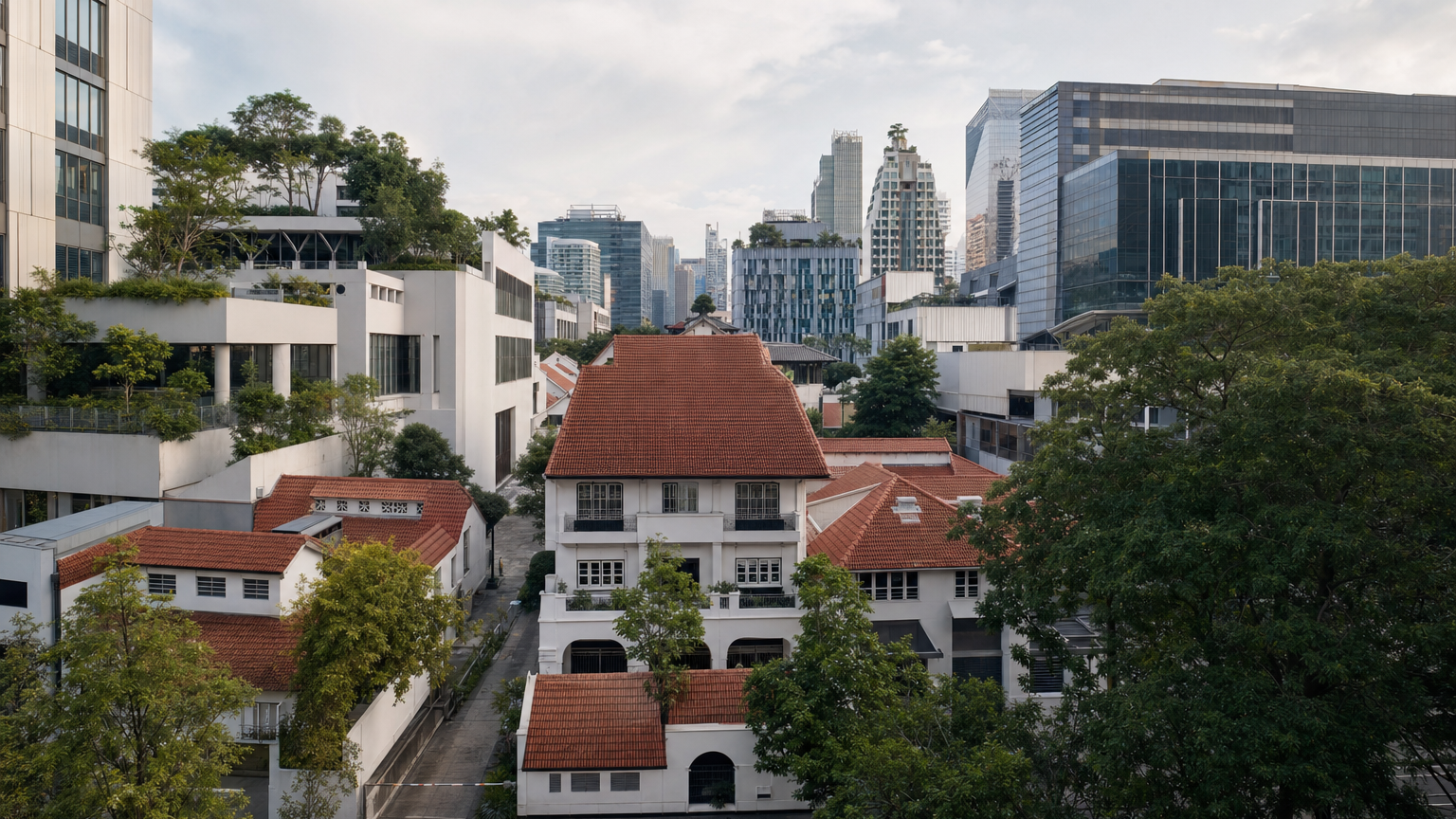
In February 2026, it was also awarded the collective-sale tender for The Centrepoint’s leasehold rear plot at S$391.9 million. That property contains 132 strata units and complements the group’s ownership position in the mall’s front section.
The transactions reduce a central difficulty in renewing mature commercial areas: fragmented ownership. A concept spanning several buildings is harder to execute when numerous owners have different financial expectations, time horizons and operational needs.
Consolidation does not erase the cluster’s different titles or land tenures. Nor does it settle what can be built. It does, however, shift Frasers’ position from operating several neighbouring assets towards being able to consider their connections as one precinct.
The immediate commercial case may be modest rather than dramatic. Better wayfinding, more coherent programming and improved routes between the shophouses, mall and office building could enhance footfall without requiring wholesale redevelopment. That interpretation fits Frasers’ statement that Cuppage Terrace will continue operating while it examines longer-term opportunities.
Conservation is a constraint—and part of the appeal
The Cuppage Terrace shophouses are conserved, so this is not equivalent to acquiring an empty development site. URA’s rules require proposed works to conserved buildings to follow the relevant conservation guidelines, and conservation permission is needed before additions, alterations or a new use can begin.
URA’s Orchard guidance also says that specific preservation and conservation controls take precedence over general urban-design guidelines. Consolidated ownership therefore does not confer a right to demolish the row or replace it with the most commercially intensive form that might fit the site.
Yet the constraint may strengthen the wider proposition. The low-rise shophouses supply heritage character and a human-scale street edge beside larger commercial buildings. In an Orchard Road precinct seeking more varied experiences, that contrast can be an asset rather than dead space.
A plausible enhancement could use the conserved row as the precinct’s social and architectural anchor while improving its relationship with the neighbouring mall and office building. This is editorial interpretation, not a disclosed Frasers design.
The practical tension will be between retaining the row’s character and making connections commercially useful. New access points, covered routes, building services and changes of use can all affect conserved fabric or the setting around it; any eventual proposal will need to show how those interventions comply with URA requirements.
Planning incentives are not planning permission
Orchard Road is among the strategic areas where sufficiently transformative proposals may be considered under URA’s Strategic Development Incentive scheme. The scheme can allow consideration of deviations involving gross plot ratio or GFA, land use, use quantum and building height where a proposal delivers the required planning and public benefits.
The operative idea is consideration, not entitlement. Ownership consolidation may make a coordinated proposal more credible, but it does not guarantee bonus floor area, a change of use or approval.
No reviewed announcement confirms that Frasers has submitted an SDI proposal for the Cuppage cluster, obtained provisional permission or secured approval for homes, a hotel or another redevelopment use. Scenarios discussed during a sale process should not be confused with a developer commitment or a planning decision.
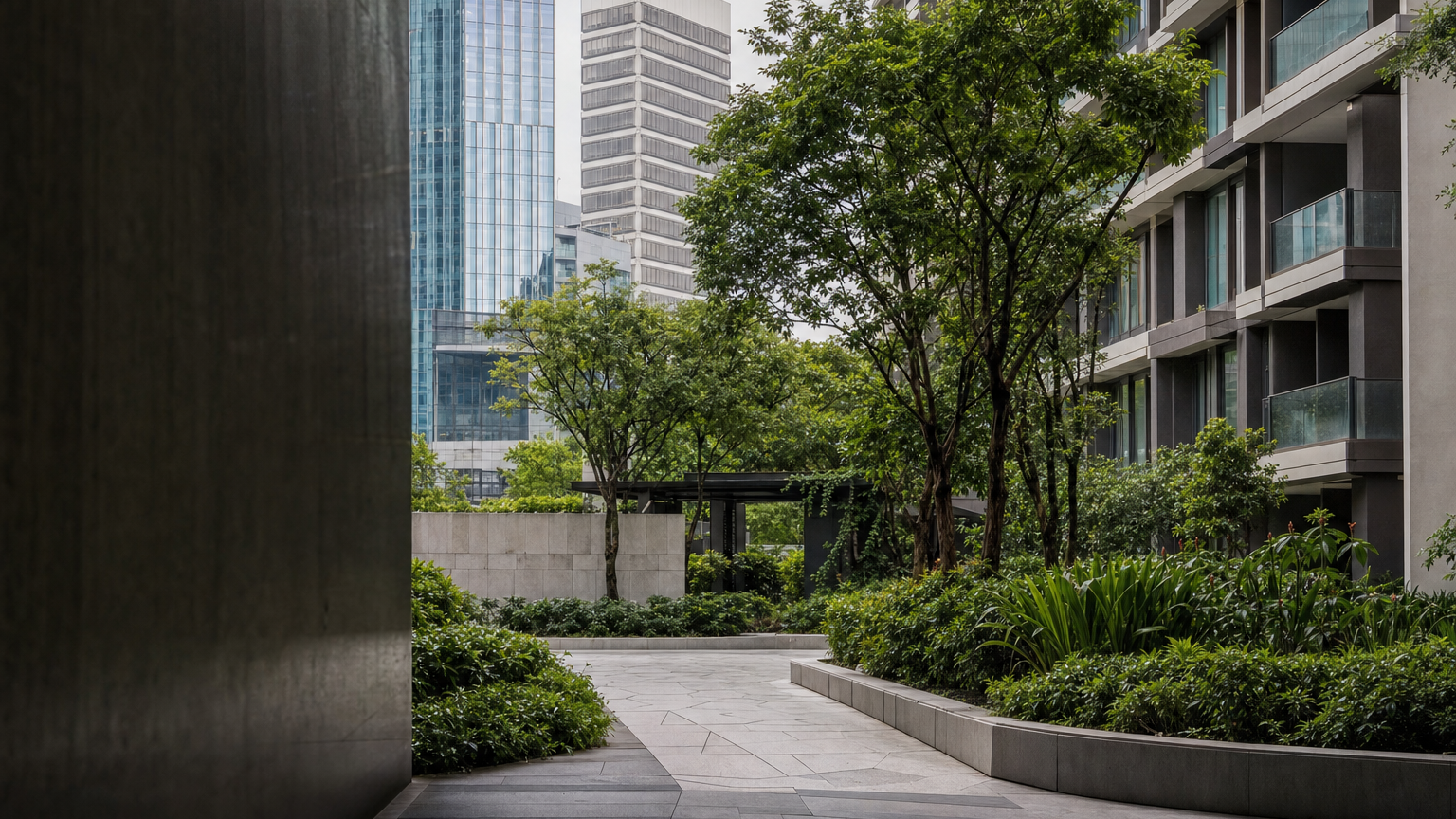
This distinction matters to residential buyers. A possible mixed-use transformation could eventually affect the precinct’s amenities and pedestrian environment, but there is no evidential basis yet for assuming that a new private-housing project will emerge from the purchase.
There is also no disclosed timetable. Planning, conservation design, tenure questions and the economics of disrupting operating assets could all influence whether Frasers pursues incremental improvements or a broader scheme.
What owners and buyers can reasonably infer
The first signal is institutional commitment. Frasers has allocated substantial capital to Cuppage Terrace after securing The Centrepoint’s rear plot, reinforcing its exposure to an established but ageing part of Orchard Road.
The second is site-specific strategic value. Cuppage Terrace is particularly useful because it adjoins Frasers’ other holdings. That does not establish a comparable price for a condominium in Somerset, a shophouse elsewhere or even another Orchard retail asset.
The third is long-run optionality. With fewer ownership interests standing between the assets, Frasers can investigate precinct-wide changes more readily. But the form, cost and timing of any physical intervention remain unknown.
Nearby homeowners may ultimately benefit if a coherent scheme improves walking routes, street activity and amenities. The strongest counterargument is that the purchase may lead only to careful asset enhancement around an existing income-producing cluster, rather than comprehensive redevelopment. Frasers’ decision to keep operations running and refer only to exploring longer-term opportunities supports that more conservative reading.
Either path could be rational. Incremental improvements preserve income and reduce execution risk; a larger redevelopment might unlock more substantial change but would face planning, conservation, construction and market uncertainties.
For buyers, the acquisition is therefore evidence of a committed owner assembling a strategic precinct—not evidence that surrounding home prices should immediately rise. Residential values respond to many factors, and the benefits of a commercial renewal cannot be measured until its scope and delivery become clearer.
The headline price leaves important blanks
Frasers described S$175 million as the agreed property value, but its announcement did not disclose the seller, acquisition yield, occupancy, rent, funding structure, valuation method or expected earnings contribution. Those omissions prevent a full assessment of whether the price primarily reflects current income, strategic adjacency or longer-term redevelopment potential.
Published area figures also require care. The completed acquisition announcement gives 34,678 sq ft of GFA excluding outdoor refreshment areas, while the earlier sale campaign cited about 50,891 sq ft of total floor area, including more than 12,000 sq ft of outdoor refreshment areas. Because the definitions differ, the figures should not be combined casually when deriving unit prices.
The next meaningful evidence will not be another speculative rendering or asking-price comparison. It will be a formal planning application, an SDI proposal or a detailed asset-enhancement plan showing how Frasers intends to connect Cuppage Terrace, The Centrepoint and 51 Cuppage Road.
Until then, the measured conclusion is narrow but consequential: Frasers has improved its ability to shape this Orchard Road cluster, while the scale and form of that change remain unconfirmed.