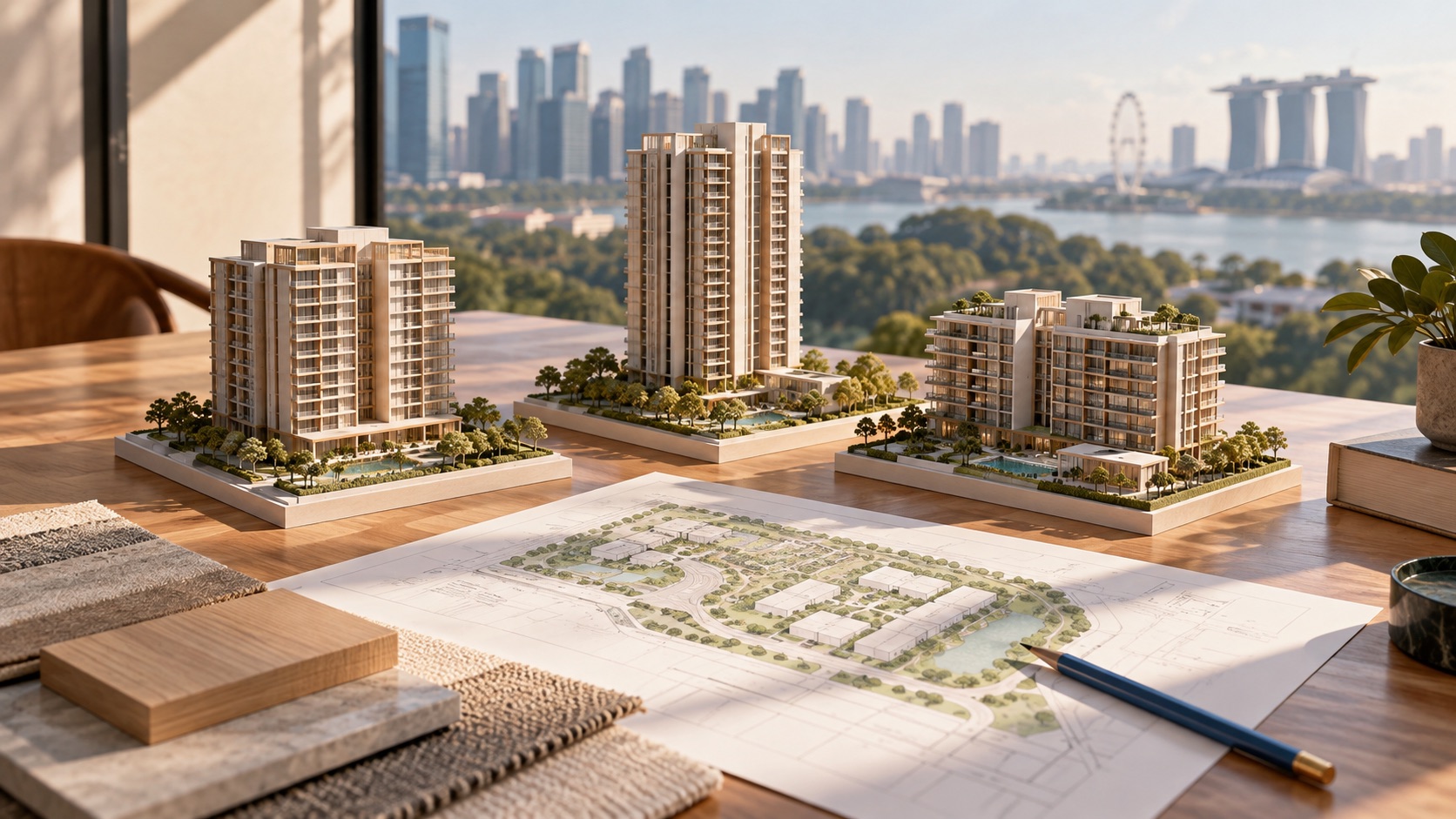
Lentor Gardens Residences and the Problem With Being the Neighbour
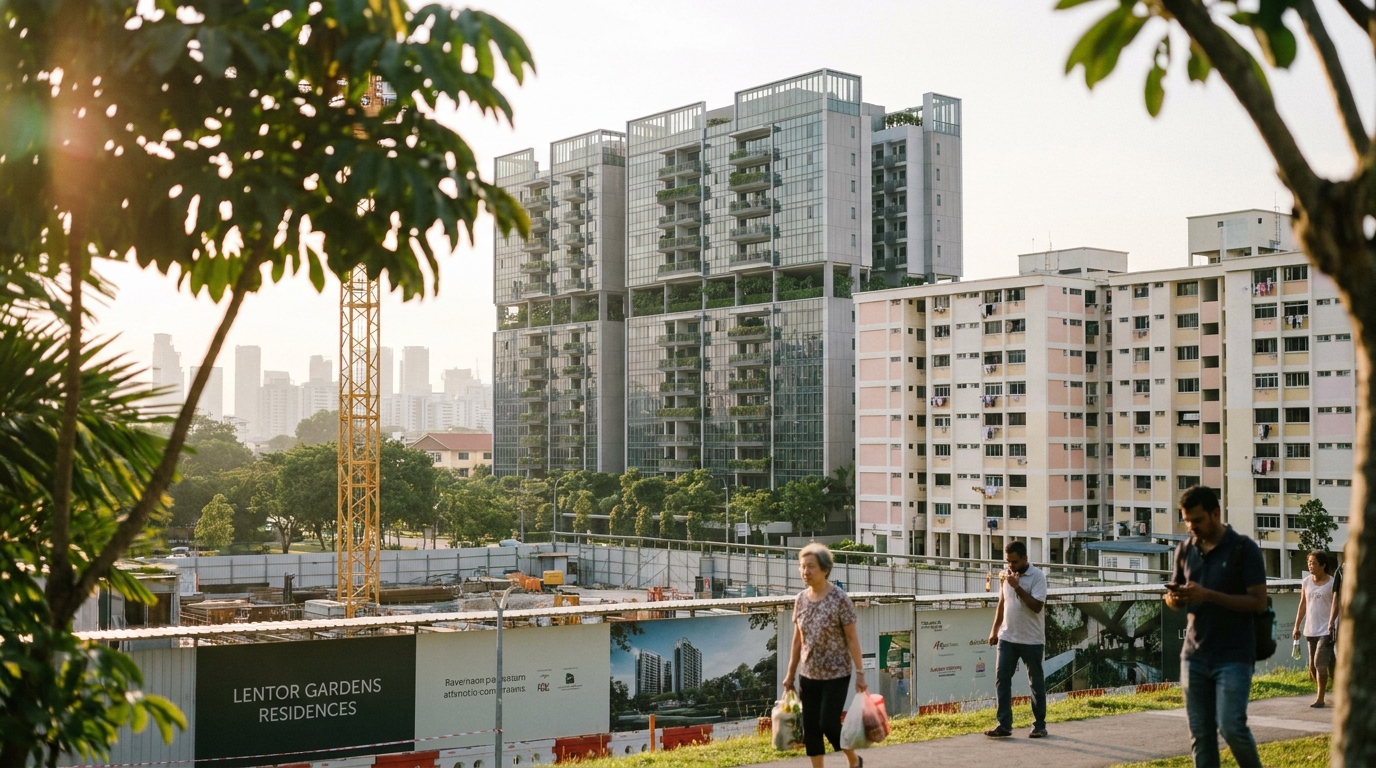
In an estate built almost entirely in one go, the toughest competition for a Lentor plot isn't another district — it's the block across the road.
Most Singapore neighbourhoods grow in layers, decade by decade. The Lentor Hills estate did not — it arrived as a programme, plot by plot, out of a concentrated run of URA Government Land Sales tenders. Lentor Gardens Residences enters that estate, and the arithmetic of being a late arrival deserves more scrutiny than the marketing usually allows.
An estate built in one go
Lentor was, for years, a quiet fringe of District 26 — landed enclaves, low-rise flats along Yio Chu Kang, and not much reason to stop. The Thomson–East Coast Line changed the calculation. A station at Lentor gave the state a rationale to release a sequence of residential sites, and developers a rationale to bid for them.
What followed was unusual in its compression. Lentor Modern, Lentor Hills Residences, Hillock Green, Lentoria, Lentor Mansion and Lentor Central Residences all belong to roughly the same planning moment. They share a road network, a station, and — crucially — a completion window measured in a handful of years, not decades.
That produces a genuinely new district very quickly. It also produces something buyers rarely price properly: a single-vintage housing stock with almost no internal variation in age, finish or specification.
Your competition lives across the road
Here is the uncomfortable part. When a Lentor owner eventually sells or leases, the comparable is not a 15-year-old condo in Bishan or a leasehold block in Ang Mo Kio. It is the near-identical project two hundred metres away, built by a different developer to a broadly similar brief, and probably listing at the same time.

Differentiation in a mature estate comes from age gaps. A 2010 project and a 2024 project are not really competing — they serve different budgets and different buyers. An estate where everything completes within a narrow band collapses that spread.
In Lentor, the pricing pressure doesn't come from the next district. It comes from the next driveway.
None of this makes Lentor a bad bet. Concentrated development delivers amenity faster than piecemeal growth ever does — the retail component anchored at the station exists precisely because the residential mass was planned alongside it. But it does mean the "new estate" story is already in the price, paid for by everyone who bought a Lentor unit before this one.
If every project in an estate shares the same story, the story stops being a differentiator. What's left is siting, layout and the specific plot — and that is where a Lentor Gardens Residences buyer should be spending their attention.
What actually separates one Lentor plot from another
Within a masterplanned estate, the variables that survive resale scrutiny are physical and permanent. They are also the ones least discussed at a viewing.
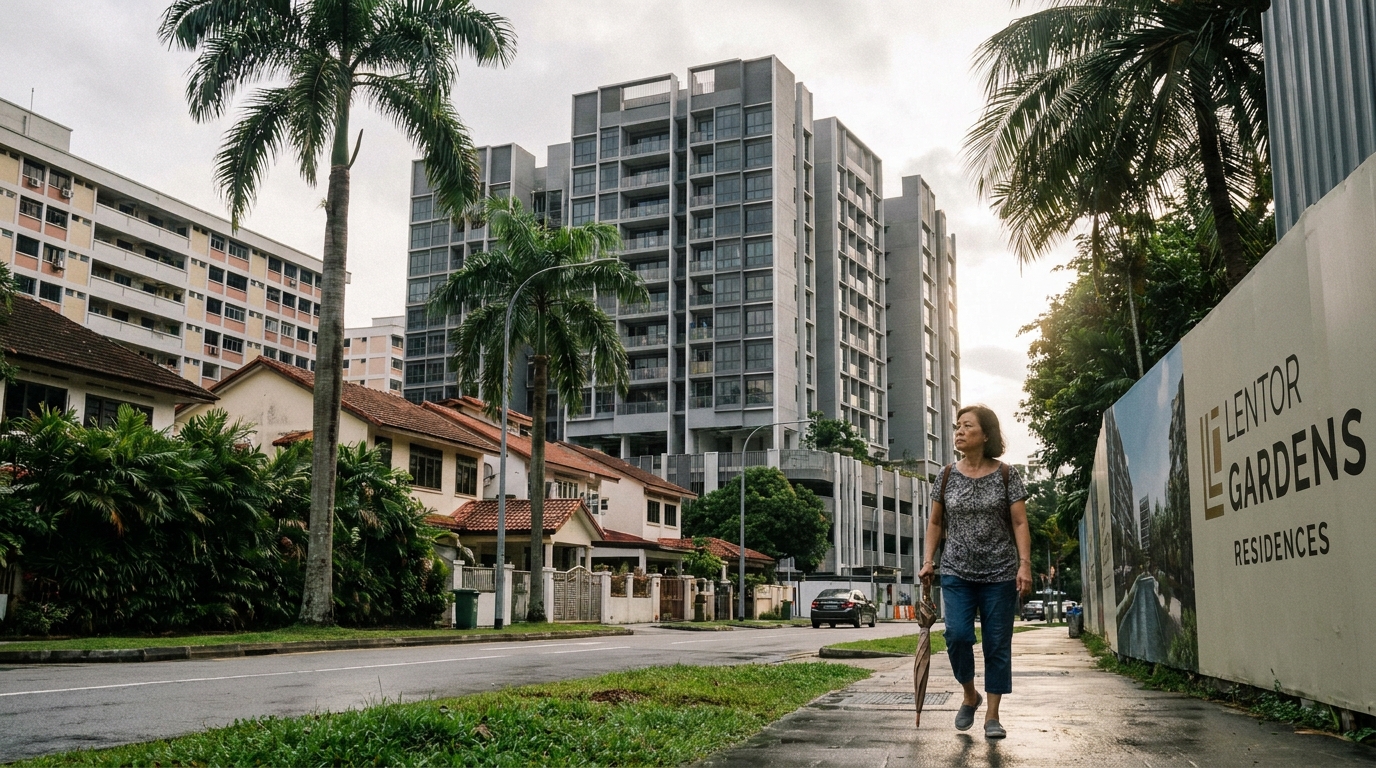
- Walking distance and walking quality to Lentor MRT — not the straight-line figure, but the actual route, its gradient, sheltering and road crossings.
- Position within the estate: interior plots that face other new blocks versus edges that back onto the surrounding landed housing or greenery.
- Orientation and block spacing, which in a densely built estate determine whether a unit has a view in ten years or a wall.
- Which frontages are permanent — a green buffer or existing low-rise neighbour is a durable asset; a vacant parcel is not.
These sound like small things. In an estate where the finishes, the station and the school catchment are effectively common property, they are the only things that will still be true in 2040.
The questions worth asking before signing
Ask what the unit faces, and what could be built there later. Ask where the plot sits relative to the estate's internal roads and the arterial approach to the Central Expressway. Ask how the layout compares with the equivalent stack in the project next door — because that is the unit your future buyer will be cross-shopping.
And treat pricing, tenure, unit mix and timing as things to verify from the developer's own official material, not from secondhand summaries. In a fast-moving launch environment, the figures circulating in conversation are frequently stale, approximate, or attached to the wrong project entirely.
Lentor has been one of the more deliberate pieces of estate-building the planners have attempted this decade. It will likely work. But a well-planned estate is a floor, not an edge — and a buyer at Lentor Gardens Residences is paying for the estate whether or not they choose the right plot within it. Only one of those is a decision.