Fifty Shophouses, 61 Years Left: The S$500 Million Tanjong Pagar Deal Is a Bet on Operators, Not Landlords
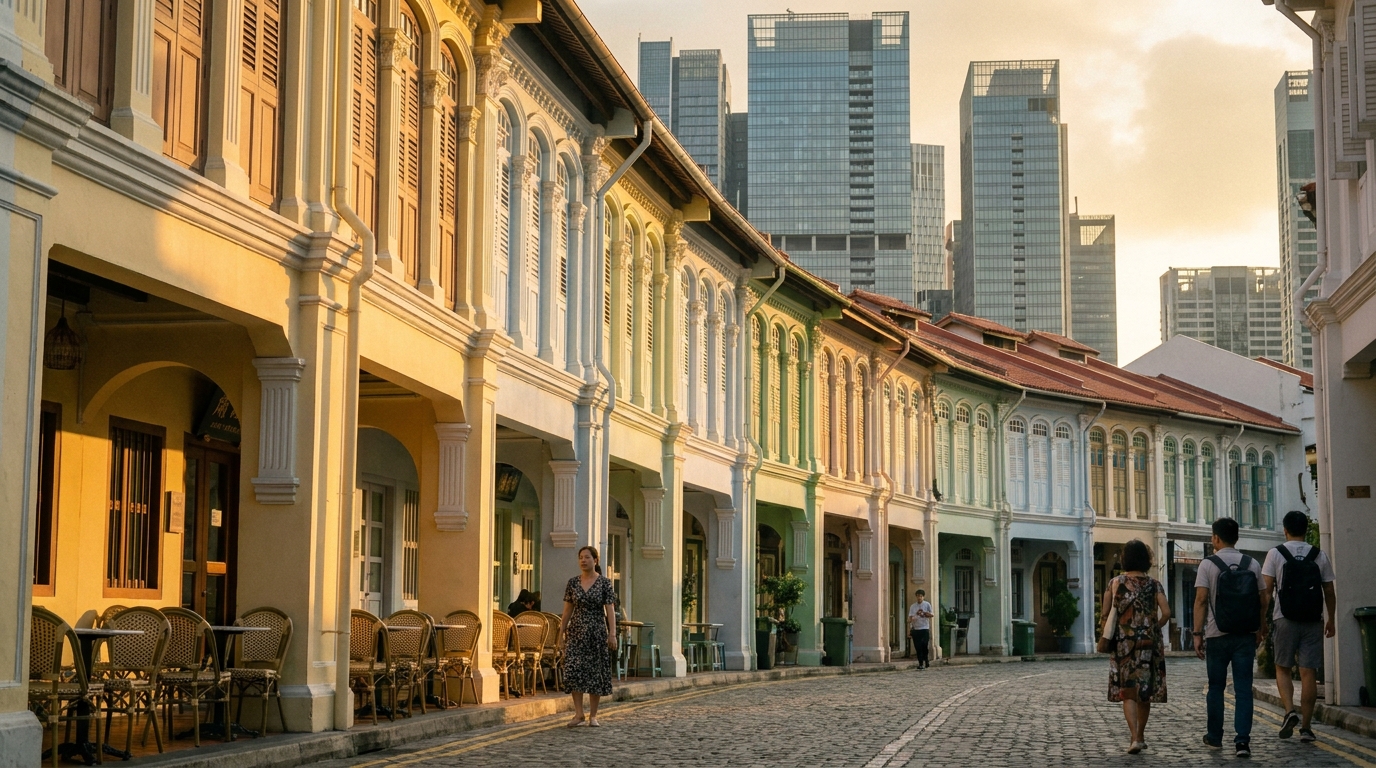
A portfolio of about 50 conservation shophouses across Duxton Road, Duxton Hill, Tras Street, Craig Road and Neil Road is in talks at roughly S$500 million — and the short leases mean the buyer has to run them, not just own them.
The gist
- About 50 conservation shophouses across Duxton, Tras, Craig and Neil are in talks near S$500 million.
- Most sit on 99-year leases with roughly 61-62 years left; Tras Street runs about 67 years.
- Conventional tenancies yield 2-3 per cent gross, so returns depend on operating adaptive-reuse formats.
- Over S$1.4 billion was transacted in Singapore's co-living sector between 2022 and 2025.
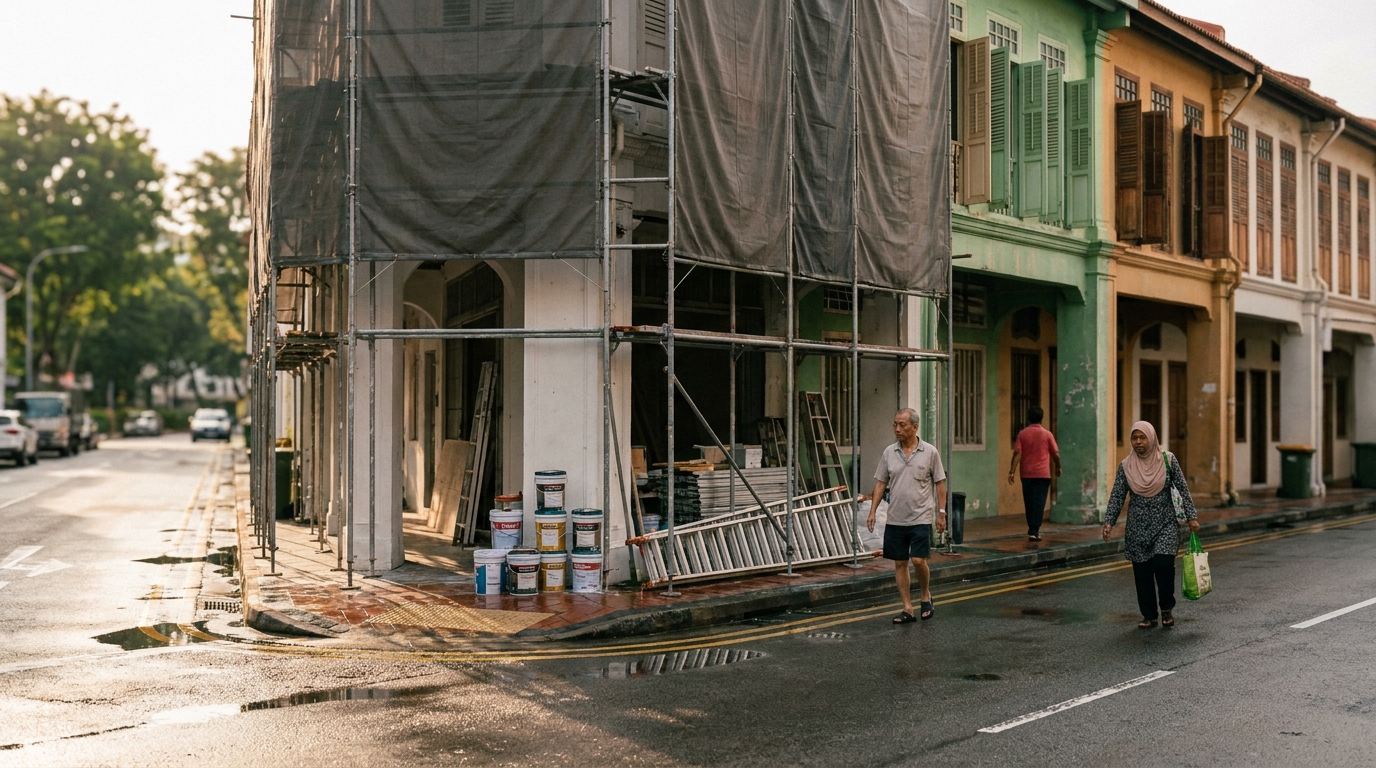
A portfolio of about 50 conservation shophouses is in talks at roughly S$500 million, spread across Duxton Road, Duxton Hill, Tras Street, Craig Road and Neil Road — the heart of the Tanjong Pagar Conservation Area. 8M Real Estate is said to be the party in discussions. The number that matters most isn't the price. It's the lease.
What is actually on the table
The properties are predominantly on 99-year leasehold land, not freehold. Most are understood to have about 61 or 62 years of land tenure remaining. The Tras Street units run slightly longer, at roughly 67 years.
The portfolio is said to include a row of seven shophouses on Duxton Road, next to the Duxton Reserve hotel. Fifty units at about S$500 million implies an average of roughly S$10 million a shophouse — a blunt average across a row that will vary widely by frontage, depth and condition.
Scale is the point. Assembling fifty conservation units one at a time, in one contiguous precinct, is close to impossible in a market with a fixed stock of roughly 6,500 gazetted conservation shophouses. A portfolio like this is the only way to buy a neighbourhood in a single signature.
Why the lease changes the entire calculation
Buyers treat conservation shophouses as heirloom assets — scarce, gazetted, impossible to replicate. That instinct is built on freehold stock. It does not transfer cleanly to a 99-year site with six decades left.
A 61-year lease is a depreciating asset with a fixed end date. Every dollar of restoration capital expenditure, fire safety upgrading and fit-out has to be amortised inside that window. The longer the approval and works timeline, the shorter the earning runway.
Freehold shophouses can be bought and left alone. A 61-year leasehold row has to earn its price back on a clock.
That is why the remaining land tenure — 61 to 62 years across most of the portfolio, about 67 on Tras Street — belongs at the top of any due diligence list, not in a footnote. It sets the maximum amortisation period for every conversion dollar spent.
Passive rent doesn't get you there. Operating income might.
Baseline commercial shophouse gross rental yields under standard office or retail tenancies typically sit at 2 to 3 per cent. On a S$500 million book with a finite lease and restoration capex ahead, that is a thin return for illiquid, management-heavy stock.
The gap is closed by changing what the building does. Adaptive reuse into flexible multi-tenanted living — co-living, serviced apartments, hospitality-led formats — has been shown to lift gross revenue yields by 30 to 50 per cent versus single-tenancy leases, while spreading vacancy risk across many rooms instead of one tenant.
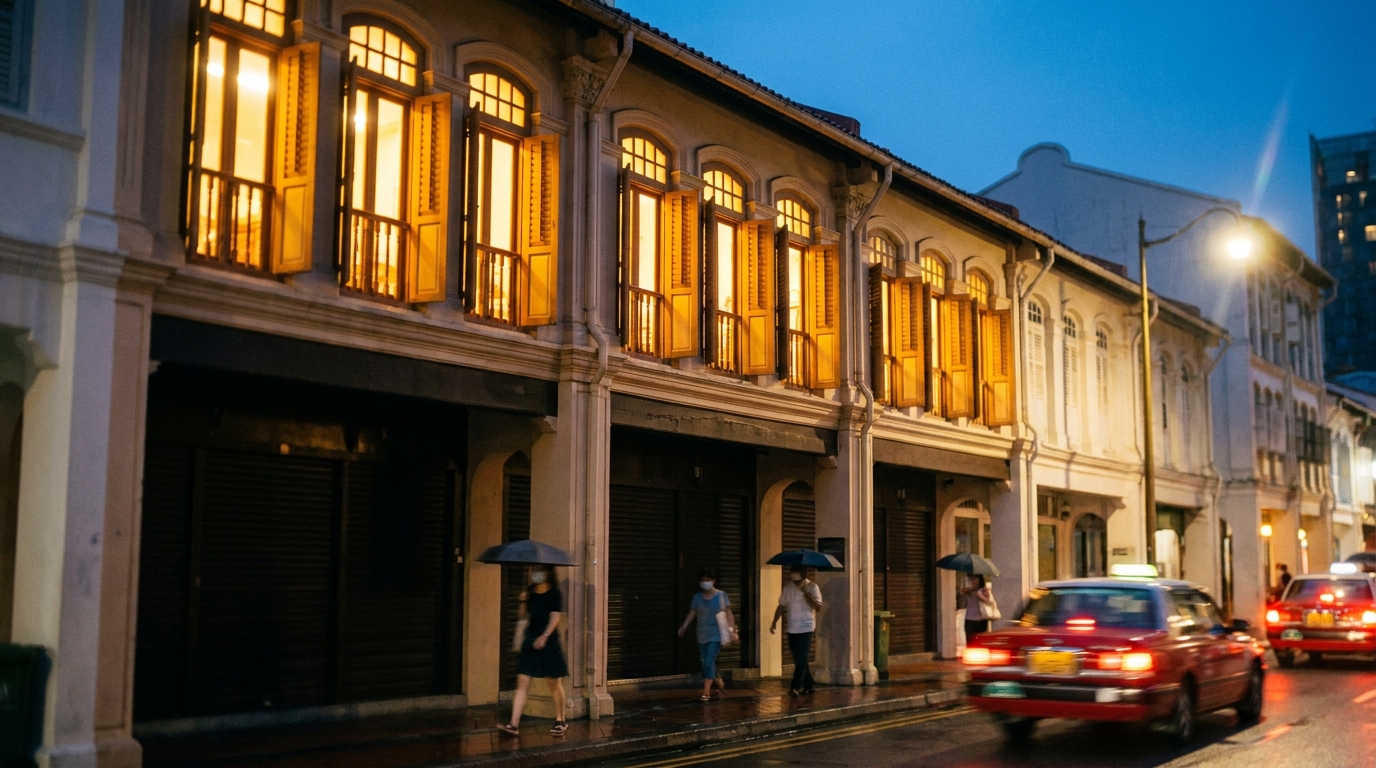
At 2–3 per cent gross on conventional tenancies, a 61-year leasehold shophouse portfolio at S$500 million doesn't work as a landlord's asset. It works as an operating business — or it doesn't work at all.
The demand side supports that shift. Market-wide flexible-living and co-living occupancy in Singapore has held between 85 and 95 per cent, comfortably above the sector's typical breakeven threshold of 70 to 75 per cent — and it held even as roughly 30,000 private homes completed across 2022 and 2023 pushed rents into a correction.
The institutional money already voted
More than S$1.4 billion was transacted in Singapore's co-living sector between 2022 and 2025. That is no longer experimental capital. Weave Living entered a S$188 million joint venture with BlackRock and, backed by Warburg Pincus, lifted its Asia target to US$3.5 billion in assets under management, focused on serviced apartments and adaptive reuse.
CapitaLand Ascott Trust bought Coliwoo Midtown, 212 keys, for S$134 million under a 10-year master leaseback — an institutional vehicle underwriting a co-living operating model at scale. Mitsubishi Estate took over Habyt's Asia-Pacific platform; Keppel-backed Cove acquired Casa Mia.
The operators have the numbers to justify it. Coliwoo, under LHN Group, reported portfolio occupancy of 96.1 to 97.0 per cent across 3,568 keys in 28 properties in 1H FY2026. The Assembly Place posted 94.4 per cent occupancy across 3,422 keys in FY2025, up from 91.0 per cent, on revenue of S$27.0 million.
Concentration is rising fast: the top five operators now control about 65.3 per cent of Singapore's co-living inventory. Yet co-living still accounts for only around 6 per cent of total rental housing stock — which is the argument for more conversions, not fewer.
Tanjong Pagar versus the fringe: two different bets
Here's the awkward part. Prime commercial shophouse deals in Districts 1 and 2 have seen price correction and thinner deal flow. The resilience has been in the city fringe.
In 2025, District 8 alone — Jalan Besar and Little India — recorded 24 shophouse transactions worth S$183 million, more than a quarter of all shophouse sales value. Benchmarks in that corridor have ranged from about S$2,660 to S$3,735 psf on gross floor area; a three-unit Jalan Besar portfolio traded at S$36.5 million. In Geylang, 223–227 Geylang Road went for S$18.68 million and became commercial ground floors above which sit 15 self-contained micro-residences.
Those fringe conversions work on quantum. Micro-studios of around 200 sq ft in fringe heritage assets fetch S$2,300 to S$2,700 a month — an effective S$11.50 to S$13.50 psf per month on usable space. Upmarket conserved shophouse rooms in Districts 8, 14 and 15 run S$2,200 to S$4,700 a month.
A Tanjong Pagar portfolio can't rely on cheap entry. It has to rely on address, precinct control and the ability to run fifty properties as one integrated estate — hospitality, F&B, and living formats reinforcing each other along Duxton Hill and Neil Road. That is a harder trick, and a more valuable one if it lands.
The gates: URA approvals, minimum stays, and a new competitor
Conversion is not a design decision. Shophouses on commercial or mixed zoning require formal URA change of use approval — to serviced apartment, hotel or residential — plus heritage conservation compliance, fire safety upgrading and substantial capex, all with long lead times.
Operating rules bite too. Private residential units cannot be let for less than three consecutive months, and occupancy is capped at six unrelated occupants per unit. Anything resembling unlicensed short-stay turnover invites URA enforcement.
Then there's state-sponsored competition. The Ministry of National Development's Long-Stay Serviced Apartment (SA2) category, with its three-month minimum, is designed to inject purpose-built institutional rental supply through Government Land Sales. Under the SG Youth Plan, government tie-ups with operators including Coliwoo have already put more than 100 subsidised units in front of professionals aged 21 to 35.
Finally, transaction friction. Tighter anti-money-laundering checks and heightened regulatory scrutiny on high-quantum shophouse deals have lengthened timelines and stiffened KYC on private capital. A S$500 million portfolio in talks is exactly the kind of deal that moves slowly.
Why commercial shophouses keep attracting the money anyway
The 60 per cent Additional Buyer's Stamp Duty on foreign residential purchases remains in force. Commercial-zoned conservation shophouses sit outside it. That single line in the tax code has done more to redirect foreign and institutional capital into shophouses, hotels and master-leased living platforms than any marketing campaign ever could.
Financing has also eased. Three-month compounded SORA tracked global rate cuts into the 1.0 to 1.5 per cent range in 2026, improving debt service coverage and reviving selective momentum in yield-bearing commercial assets. Meanwhile institutional return thresholds have drifted from above 15 per cent IRR to sub-15 — a reclassification of city-fringe living and shophouse assets as defensive income, not speculation.
The counterweight is real. Private residential rents have normalised — the URA rental index moved just +0.3 per cent in Q1 2026 and +0.7 per cent in Q2, with islandwide vacancy around 6.4 per cent. Completions fell to 1,611 units in 1H 2026, but roughly 5,000 more land in 2H. Cheaper condo rentals narrow the premium a co-living room can command.
What to watch from here
For anyone weighing a shophouse — one unit or fifty — the Tanjong Pagar talks set out the checklist plainly:
- Remaining lease against capex runway. Sixty-one years sounds long until you subtract approval time, works and stabilisation.
- Change of use before price. A shophouse that cannot legally become what your model assumes is not the asset you underwrote.
- Operating structure. Owners and operators are shifting away from fixed master leases toward profit-sharing and management contracts — which moves occupancy risk back onto the landlord.
- SA2 pipeline. Watch where the state puts long-stay serviced apartment sites. Adjacency dilutes boutique conversions.
- Employment Pass issuance. EP and S-Pass holders make up 70 to 90 per cent of standard flexible-living demand; students another 25 to 40 per cent for some operators.
Nothing has been signed. Talks at about S$500 million are talks. But the structure of the deal already tells you where this market has moved: the buyers with conviction are not buying rent rolls. They are buying platforms, on leases that force them to perform.