80 Forfeited Homes in Nine Months: The S$3 Billion Auction Will Reset Sentosa Cove and District 9 Prices
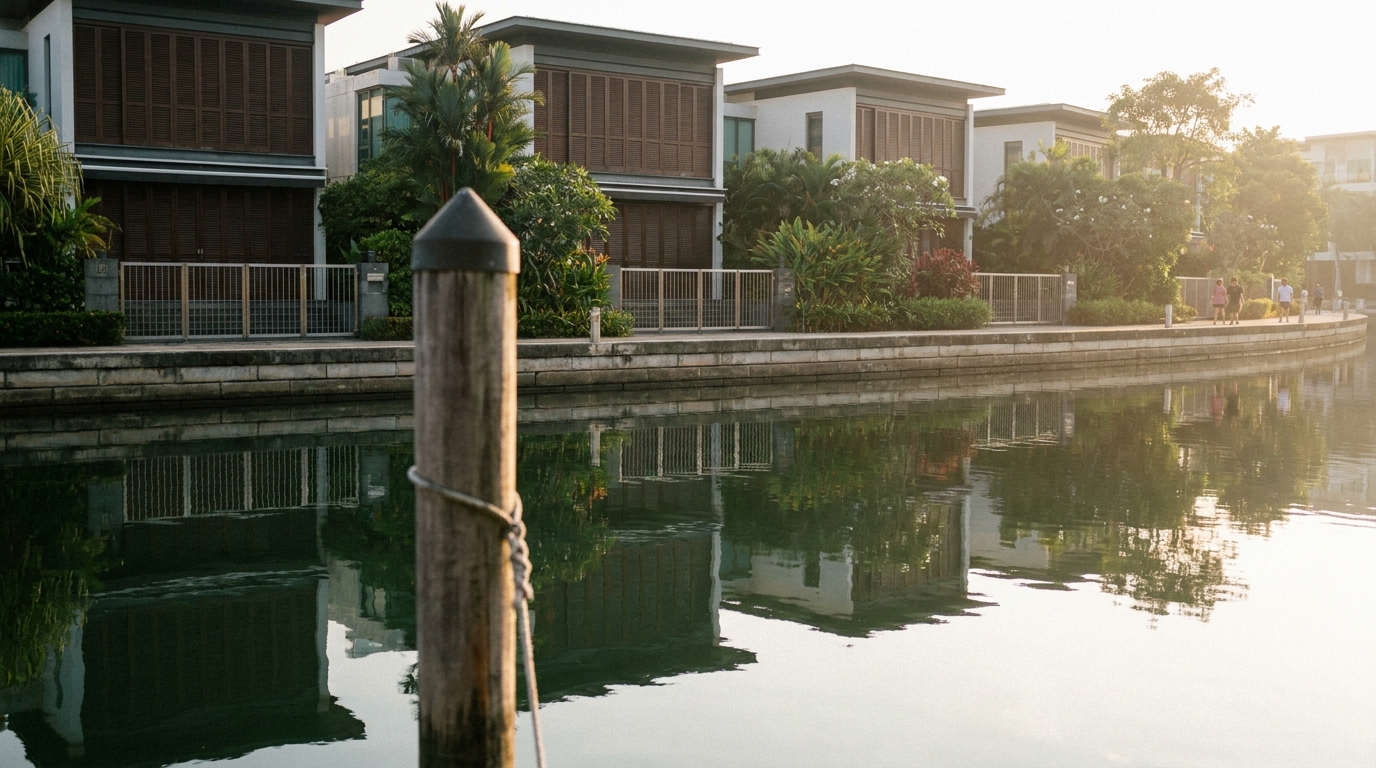
From 7 September, the state begins selling more than 80 properties seized in Singapore's S$3 billion money laundering case — and in thin luxury sub-markets, that is enough to rewrite the comparables.
The gist
- From 7 September, over 80 forfeited properties and 1,000-plus luxury items sell in phases through mid-2027.
- Stock concentrates in Districts 9, 10, Sentosa Cove and prime leasehold towers with thin liquidity.
- Earlier mortgagee sales cleared 15-30% below asking; 69 Ocean Drive fell 44% from its 2021 price.
- Foreign buyers face 60% ABSD and entities 65%, leaving the bidder pool largely domestic.
From 7 September, the Singapore state starts selling the property portfolio of a criminal syndicate. More than 80 forfeited real estate properties and over 1,000 luxury items from the S$3 billion money laundering case will be released in phases through mid-2027, with every dollar of net proceeds flowing into the Consolidated Fund.
What is actually being sold, and by whom
The Singapore Police Force appointed Deloitte in July 2025 to take custody of and realise the non-cash forfeited assets. The firm confirmed the auction start date on 29 August.
Three real estate consultancies will run the public auctions. A fourth firm handles selected prime assets through an expression-of-interest process outside the auction room — which tells you the state is not treating all 80-plus assets as commodity stock.
Deloitte has been explicit that the schedule is not fixed: the composition and number of items in each phase are still being finalised as authentication and preparatory work continue. Anyone hunting for a definitive list of forfeited luxury properties for auction is early. The catalogue is being built in public.
One more number frames the scale. The forfeited 80-plus are drawn from more than 200 properties originally seized or frozen in 2023. Roughly 54 collateralised properties have already been offloaded separately through mortgagee sales initiated by the lending banks. This is the second wave, not the first.
Eighty units is nothing. In these postcodes, it is everything
Eighty homes against a national market is a rounding error. That framing is wrong, and it is the reason this matters.
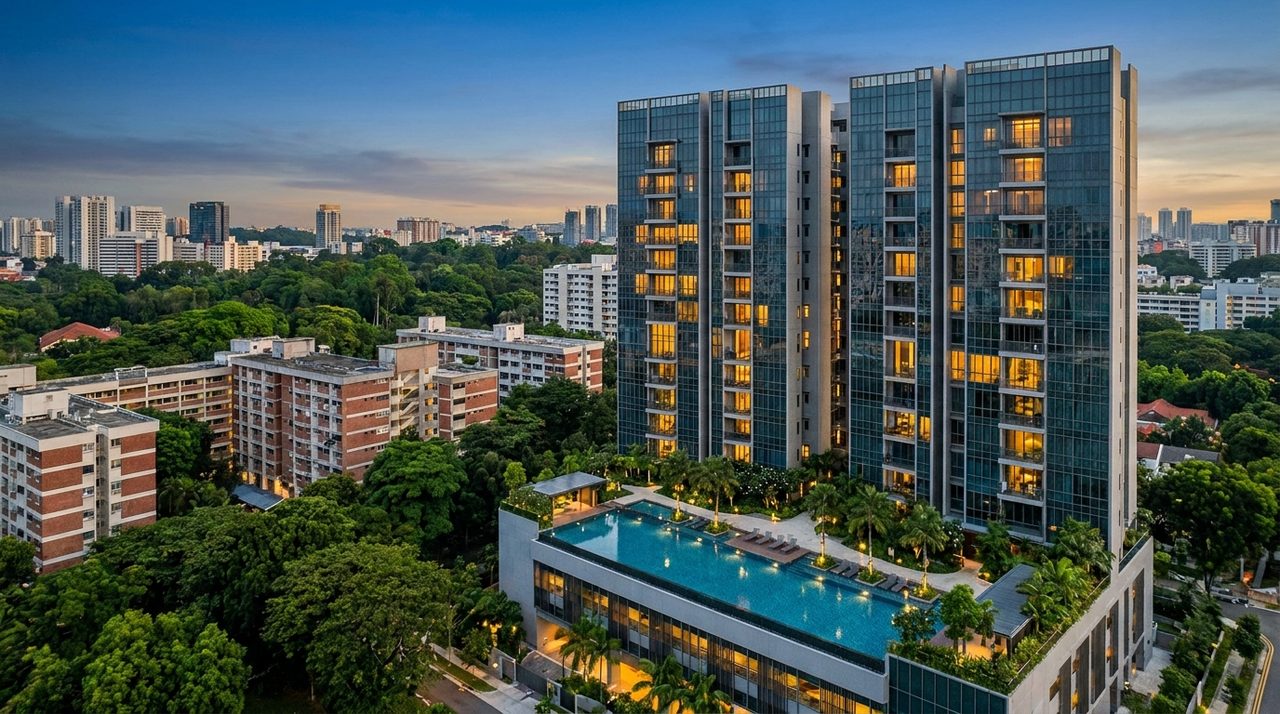
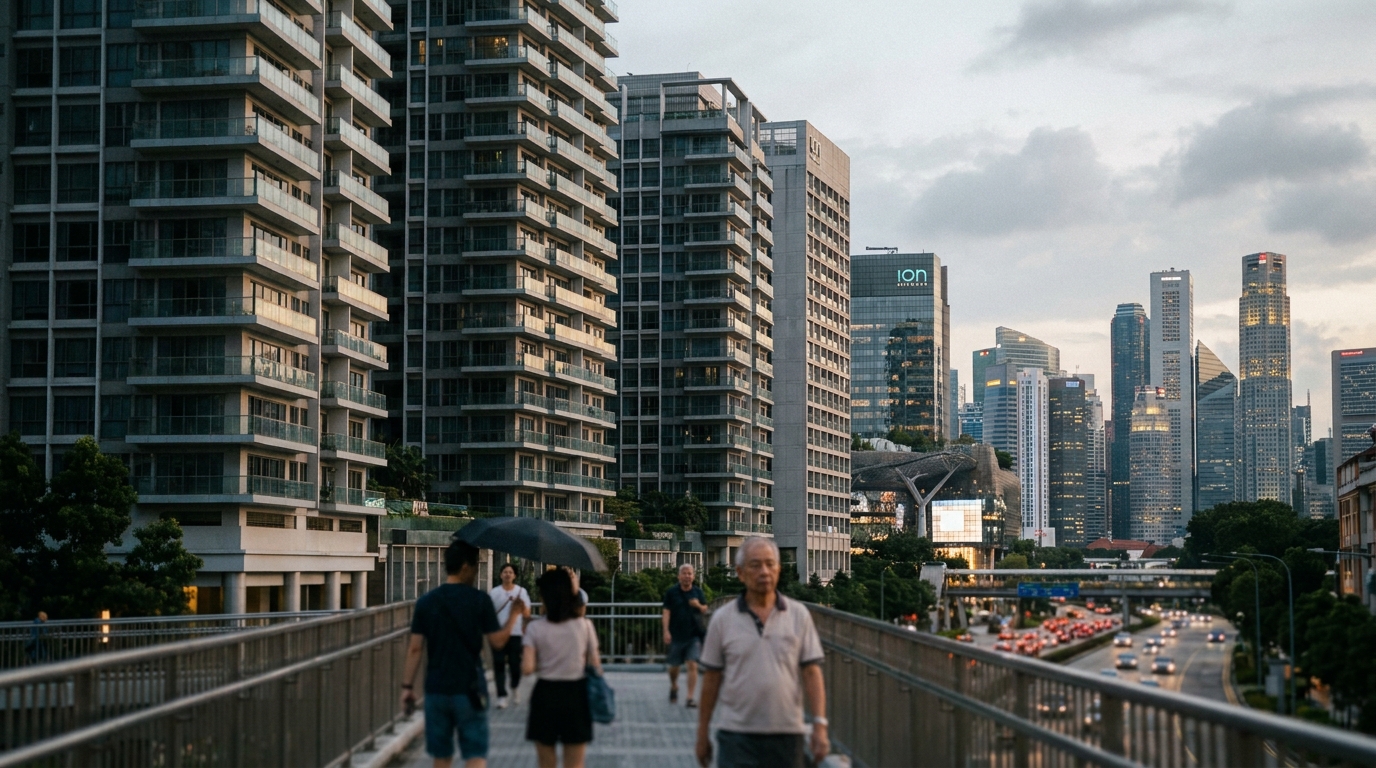
The forfeited stock is concentrated in District 9 and District 10 — Orchard, Paterson, Grange, Tanglin, River Valley — plus Sentosa Cove in District 4 and prime leasehold towers in Districts 1 and 7. These are among the thinnest liquidity pools in Singapore residential. A large-format four-bedder in a trophy District 9 project may transact a handful of times a year. Sentosa Cove waterfront land trades even less often.
In a sub-market where three or four caveats set the annual benchmark, dropping a batch of forced-clearance transactions into the record is not noise. It is the new record.
In a segment where three caveats a year set the benchmark, a state-run disposal programme does not influence the price. It becomes the price.
That is the real function of this exercise, whatever the intent. Auctions produce dated, public, arm's-length evidence of what someone will actually pay. Valuers, mortgage desks and every private seller in the same building will be reading the same caveats by Q4.
The receipts already exist — and they are brutal
We do not have to speculate about the size of the reset, because the earlier bank-driven sales already ran the experiment.
Take the sea-facing plot at 69 Ocean Drive in Sentosa Cove. Bought in March 2021 for S$39.334 million, about S$2,012 psf across a 19,550 sq ft site. It went to mortgagee auction in April 2024 with a guide of S$27.1 million (S$1,386 psf), was cut to S$26.5 million (S$1,355 psf) in May, and still did not clear. It finally transacted privately in late 2024 at S$22.0 million — roughly S$1,125 psf, a 44 per cent decline on the 2021 price.
Read that sequence carefully. Two guide prices failed. The clearing price sat 17 per cent below the second, already-reduced guide. Guide prices in this segment are an opening position, not a valuation.
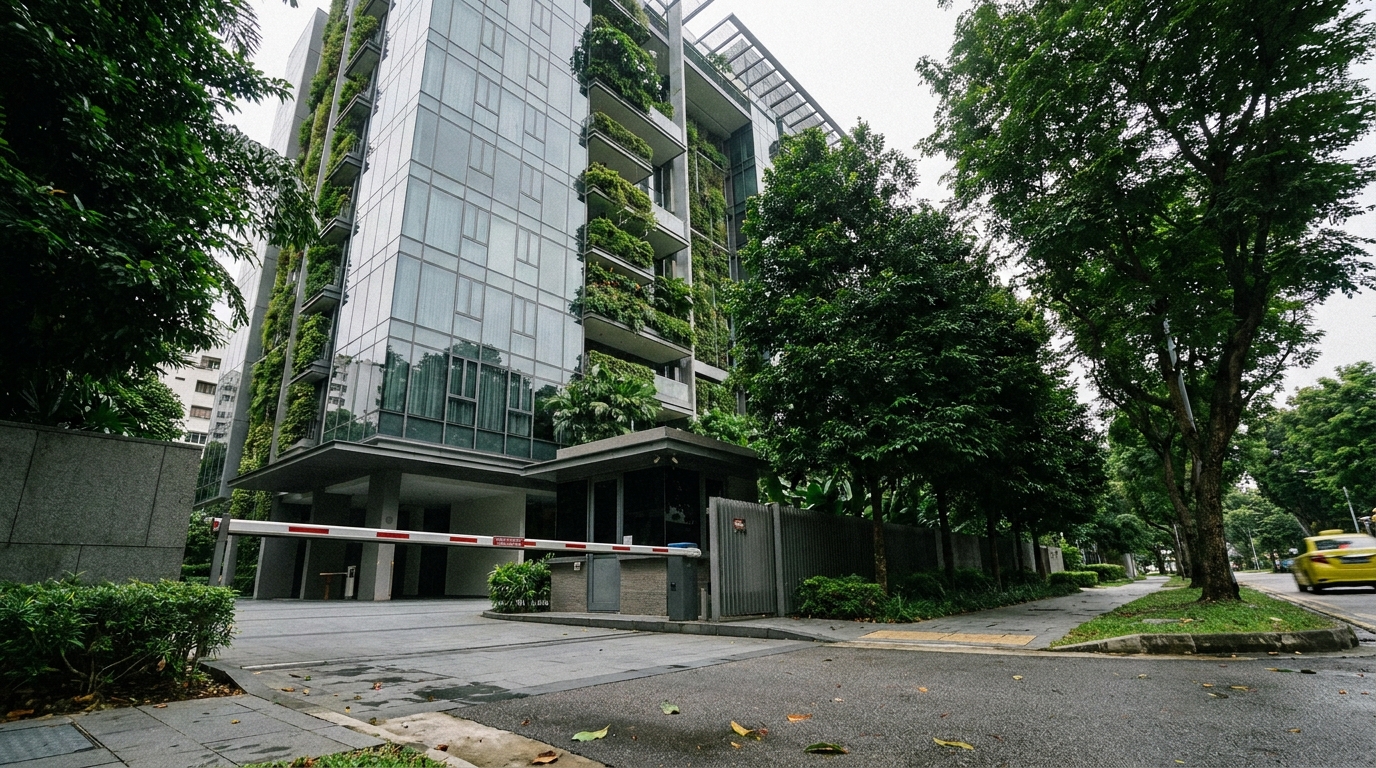
At Gramercy Park on Grange Road, four units tied to the syndicate were floated at a combined asking benchmark of S$32.0 million. A 2,691 sq ft four-bedder on the 13th floor cleared at S$7.50 million (about S$2,787 psf) — 19.4 per cent under its S$9.30 million guide. The 14th-floor unit of 2,680 sq ft, bought in April 2022 for S$9.05 million, also cleared at S$7.50 million: a S$1.55 million gross loss, down 17.1 per cent.
Elsewhere the pattern holds. A 2,055 sq ft unit at Marina Bay Suites changed hands at S$4.08 million (S$1,985 psf), a S$2.06 million loss. Auction desk data across the CCR has consistently put forced-sale clearance at 15 to 30 per cent below owner asking, with trophy and super-penthouse assets bought at heavy premiums needing 20 to 40 per cent to find a bid.
The lesson from the first wave is not that prime Singapore property fell 44 per cent. It is that prices paid with laundered money were never real comparables — and the auctions are deleting them from the record.
The bidder pool is domestic by law
Here is the constraint that will govern clearance rates: foreign individuals still face 60 per cent Additional Buyer's Stamp Duty, and entities and trusts 65 per cent, both unchanged since April 2023.
So the answer to whether foreigners can buy these seized properties is technically yes, practically almost never. Direct foreign non-PR buying has been running at well under 10 per cent of CCR transactions. Absorbing 80-plus prime assets therefore falls to Singapore citizens, permanent residents, and nationals covered by free trade agreements such as US citizens who are treated as locals for stamp duty.
That pool is deep — local high-net-worth capital and family office money remain liquid, and softer SORA benchmarks since the 2024 peak have cut the cost of carrying a large mortgage. But it is a value-disciplined pool. Domestic buyers know exactly what the last caveat was. They are not paying a safe-haven premium to a distressed seller with a court-mandated timetable.
There is also a hard screen at the door. Every buyer faces source-of-wealth checks from MAS-regulated banks and CEA-supervised agency due diligence. The irony is heavy: assets seized in a laundering case will be sold only to buyers who can document where their money came from.
Why the phasing is the most important design choice
Releasing 80-plus prime homes in one quarter would manufacture a fire sale and destroy the value the state is trying to recover. Spreading them across September 2026 to mid-2027 — nine to ten months — does two things.
First, it lets a thin market absorb stock without a visible supply cliff in any single enclave. Second, it separates the assets. The genuinely rare items — Good Class Bungalow land, top-floor trophy units — go through private EOI or limited tender, away from the public theatre of an auction room where a passed-in lot becomes a headline.
That split is deliberate and buyers should read it as a signal. Assets routed to open auction are being priced for clearance. Assets routed to EOI are being protected from price discovery.
What to watch between now and mid-2027
Three metrics will tell you more than any commentary.
- Reserve prices versus URA Realis benchmarks. Compare each published guide against the project's last clean transaction. That gap is the state's opening discount.
- Clearance at the fall of the hammer versus lots passed in. The 69 Ocean Drive precedent — two failed guides, then a private deal 17 per cent lower — is what a high pass-in rate looks like before the discount shows up in the caveat data.
- Repeat pricing within the same project. Two Gramercy Park units clearing at the identical S$7.50 million is not coincidence. It is a floor being established, and it will follow every other owner in that block.
For context on where the resets are landing: Sentosa Cove land baselines have been dragged toward the S$1,100 to S$1,800 psf range by forced sales, against comparables such as 258 Ocean Drive at S$1,844 psf in February 2024 and a Coral Island plot at S$2,717 psf in 2023. Prime D9/D10 large-format condos are re-anchoring around S$2,700 to S$4,200 psf.
The honest risk list
Discount is not the same as value. Several of these units sat empty through multi-year proceedings, and refurbishment capital expenditure on a vacant luxury home is not trivial. Buyers should price the renovation before they price the bid.
Sentosa Cove and prime CCR also carry structurally weaker secondary liquidity and higher holding costs than suburban stock. Entering 25 per cent below the last peak means nothing if the exit takes 18 months and the buyer pool is still capped by the same 60 per cent ABSD.
What buyers do get is unusually clean: court-sanctioned title, state-managed disposal, proceeds to the Consolidated Fund. No lurking claim from a previous owner. In distressed property, that is worth something.
The bottom line
The narrowing gap between CCR and suburban pricing has been the quiet story of the past few years. This auction programme accelerates it. When prime District 9 stock clears at levels that are competitive per square foot against non-prime new launches, the calculus for an upgrader changes — selectively, and only for those who can carry the quantum.
For CCR sellers, the message is blunter. Between September and mid-2027, you are competing with a vendor who has a deadline, no emotional attachment and no mortgage to clear. Asking prices anchored to 2021 and 2022 comparables — some of which were set by the syndicate itself — are about to be tested against transactions the whole market can see.
That is not a crash. It is the removal of fake data points from the price record, which is a healthier outcome than it sounds.