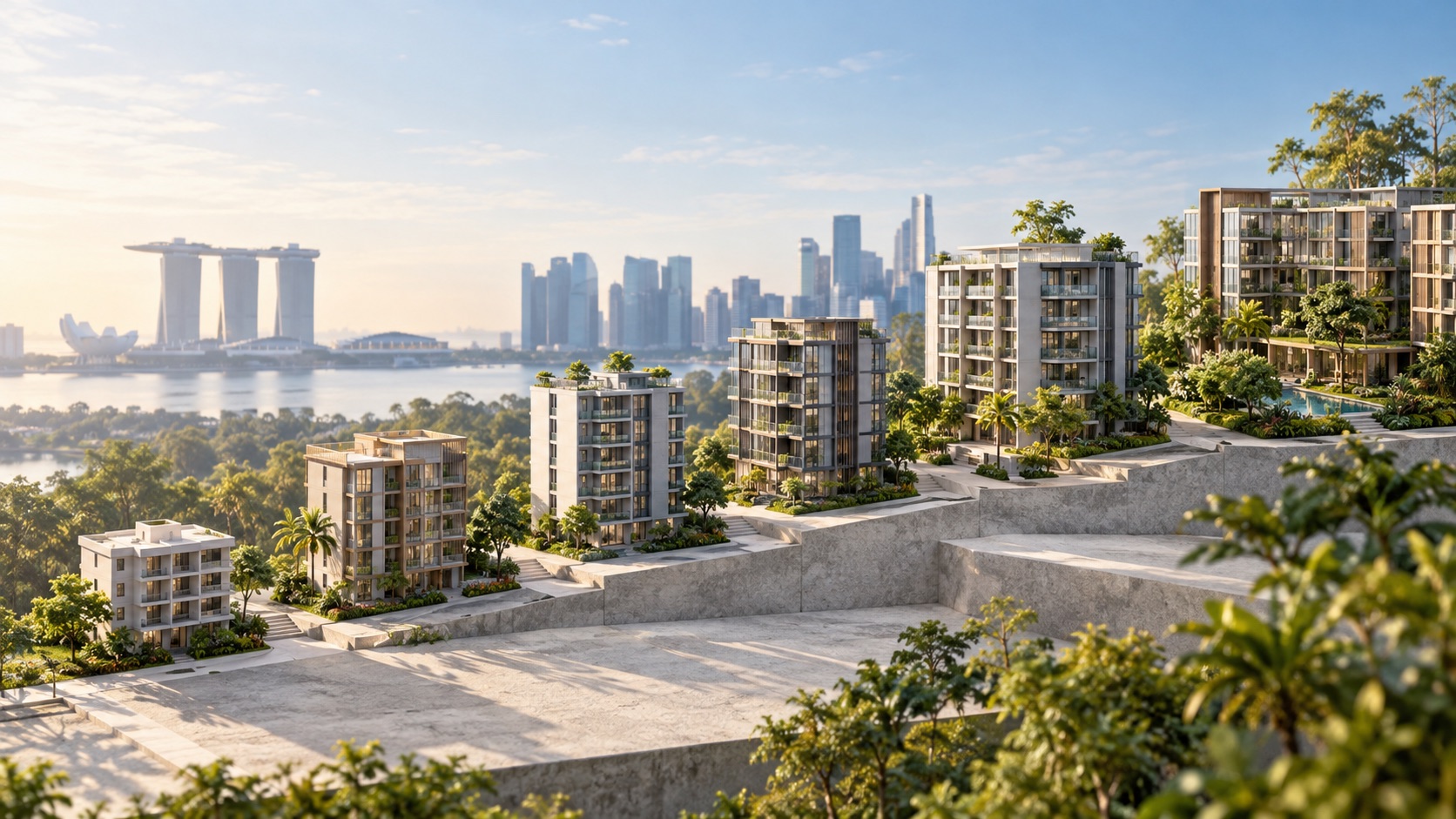
Orchard Boulevard and Marina Gardens Lane: The State Just Set the Price Every En Bloc Seller Has to Beat
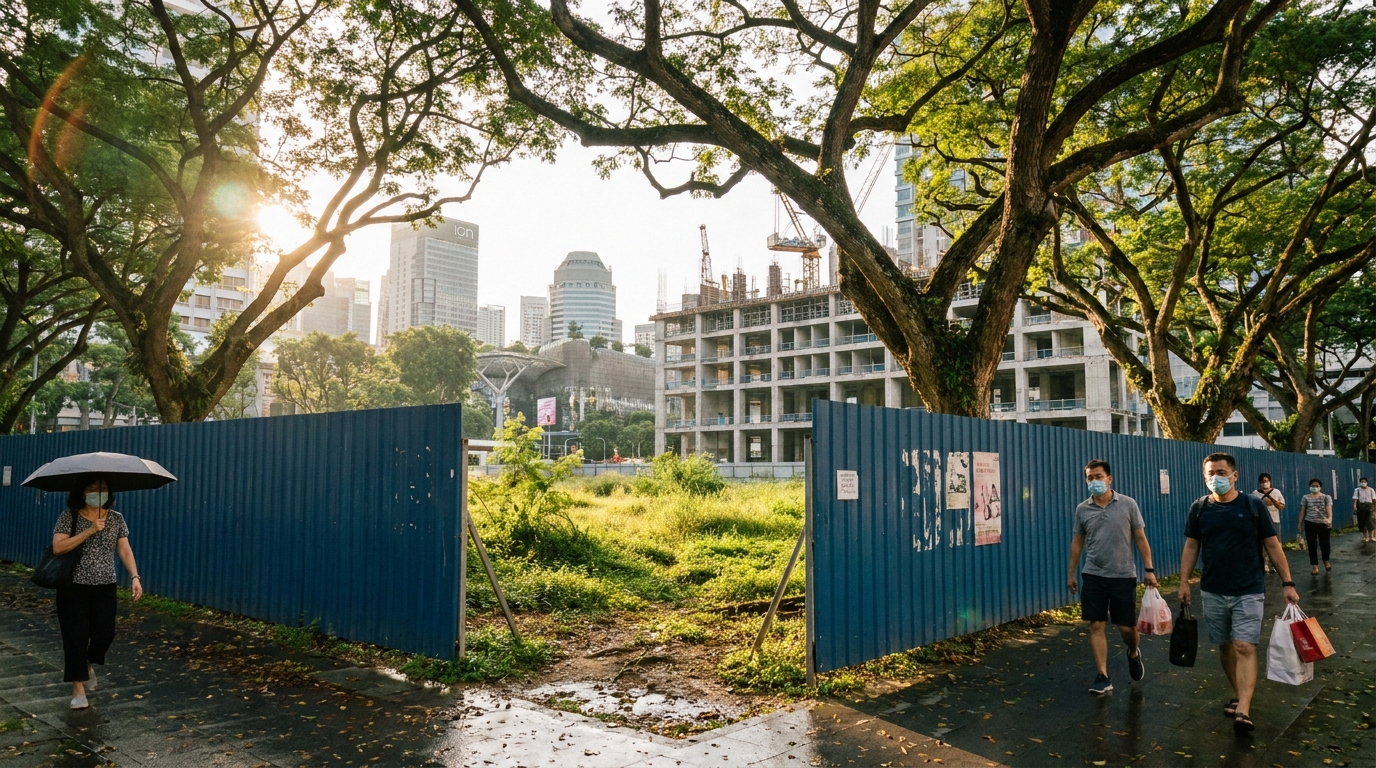
URA has put two prime 99-year plots on the market with tenders closing in October — and their bids, not the new en bloc consent thresholds, will decide which ageing estates actually sell.
The gist
- URA launched two 99-year plots at Orchard Boulevard and Marina Gardens Lane, tenders closing October, yielding about 500 homes.
- Orchard Boulevard's 110-unit plot follows a neighbouring 2024 sale at S$1,617 psf ppr; bids expected S$1,650-S$1,750.
- Marina South results split: one site drew four bids at S$1,402 psf ppr, another rejected at S$984.
- En bloc consent thresholds drop to 70 per cent for 40-59-year-old estates, 65 per cent for older ones.
On 13 August 2026, the Urban Redevelopment Authority put two 99-year leasehold plots on the market — one at Orchard Boulevard, one at Marina Gardens Lane — with tenders closing in October. Together they can yield about 500 private homes. The more consequential number, though, is the one nobody has seen yet: the top bid on each site, which will quietly reprice every collective sale attempt in the prime districts.
Two plots, eight sites, one signal
Both parcels sit on the Confirmed List of the second-half 2026 Government Land Sales programme. Under URA's indicative schedule, they are the first two of eight residential sites on that list to be offered — the opening act of a heavy release calendar, not a one-off.
The scale matters. The 2026 Confirmed List carries 9,320 private housing units, more than 50 per cent above the ten-year annual average, with the near-term pipeline including executive condominiums running to roughly 58,000 to 61,000 units. This is not a supply-starved market.
What makes this particular pair interesting is location. Five of the 14 residential Confirmed List sites launched in 2026 sit in the Core Central Region — about 36 per cent. The state has decided that prime land will no longer be scarce by default.
Orchard Boulevard: a small plot with a live comparable
The Orchard Boulevard parcel is deliberately bite-sized: 3,438 sq m of land, a maximum gross floor area of 9,627 sq m, a gross plot ratio of 2.8, and a yield of roughly 110 homes. It is the second plot offered in the area since 2023.
The first tells you almost everything you need to know about pricing. UOL Group and Singapore Land Group took it in February 2024 for S$428.3 million, about S$1,617 psf ppr, and are building the 301-unit Upperhouse at Orchard Boulevard. At its July 2025 launch it moved about half its units at an average of S$3,350 psf, and is roughly 80 per cent sold today.
Analysts expect top bids on the new plot at S$1,650 to S$1,750 psf ppr. That range is not a guess pulled from the air — it is anchored by a site next door that has already been bid, launched, priced and largely absorbed. Small size, proximity to the main Orchard Road retail strip and popular schools nearby all argue for competitive interest.
For an owner in an ageing freehold block anywhere near District 9 or 10, that is the problem in a sentence. A developer weighing an Orchard new condo site can now choose between a clean state tender with a known price band and a decades-old estate with owners, objectors and a reserve price built on hope.
Marina Gardens Lane: the precinct that has already tested appetite
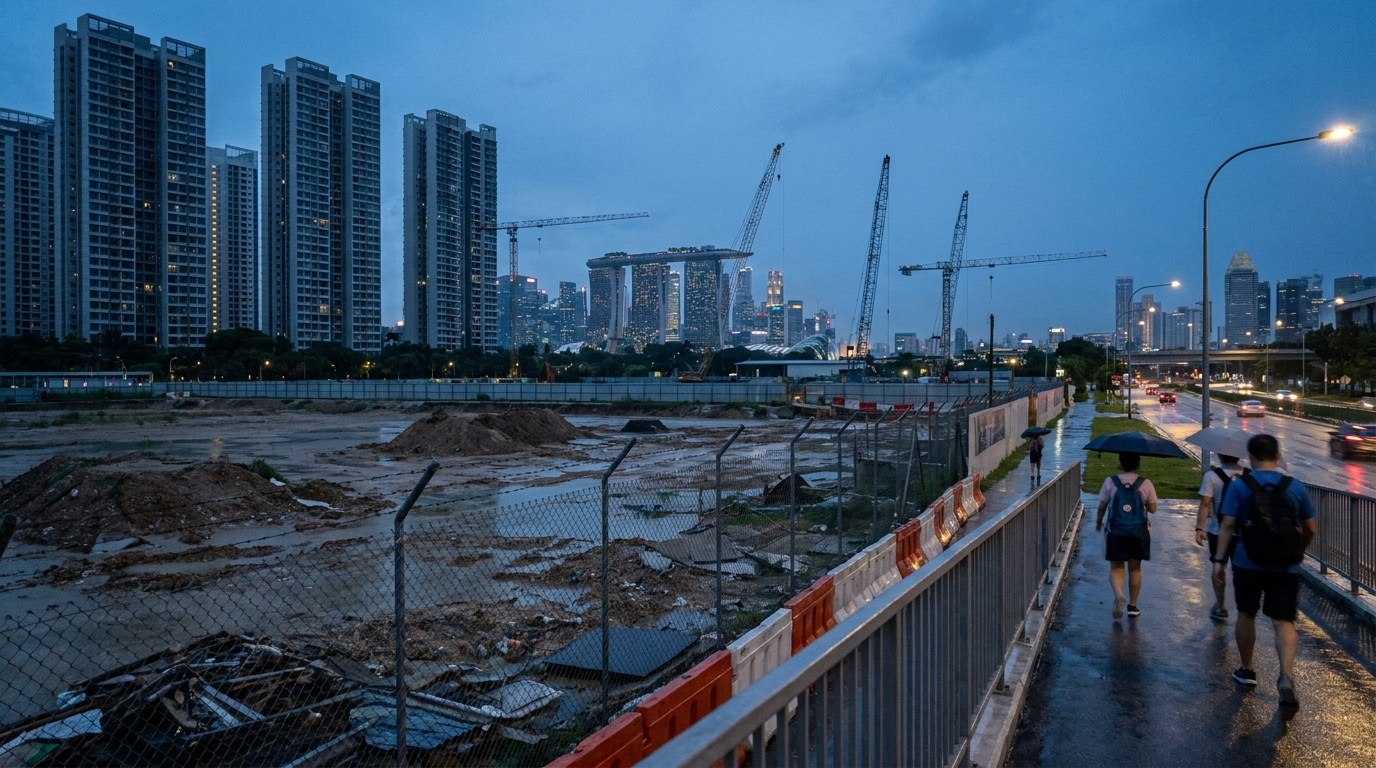
The Marina Gardens Lane plot is bigger and busier: 6,007.4 sq m of land, a maximum GFA of 33,642 sq m, a gross plot ratio of 5.6, zoned residential with commercial space on the first storey, including 150 sq m of retail. Estimated yield is about 390 units. It previously sat on the reserve list. It is near Marina South MRT station on the Thomson-East Coast Line, inside the 45-hectare Marina South precinct planned under the Master Plan as a mixed-use neighbourhood of retail, office, hotel and homes.
Marina South has a track record, and it is a split one. The first Marina Gardens Lane site drew four bids and went to Kingsford in July 2023 for S$1.034 billion, or S$1,402 psf ppr. That became the 937-unit One Marina Gardens, which has reached a 70.5 per cent take-up since launching in April 2025.
The counter-example is sharper. A Marina Gardens Crescent white site drew a single bid — S$770.5 million, or S$984 psf ppr, from a GuocoLand and Hong Leong Group joint venture — and was not awarded because the price was deemed too low.
One bid at S$984 psf ppr, rejected. In the same precinct, four bids at S$1,402 psf ppr, and a 937-unit project that is now 70 per cent sold. Prime address is not the variable. Site-by-site arithmetic is.
That is the discipline the market now runs on. Developers are not bidding on postcodes; they are bidding on absorbable unit counts, achievable launch prices and how long capital sits exposed.
The reform lowered the vote. It did not lower the price.
On 4 August 2026, the Ministry of Law introduced the Land Titles (Strata) (Amendment) Bill 2026 for First Reading. Consent thresholds fall from 80 per cent to 70 per cent for developments aged 40 to 59 years, and to 65 per cent for those 60 years and older. Estates aged 10 to 39 stay at 80 per cent; those under 10 remain at 90 per cent.
The Bill also tightens process. Signature collection compresses from 12 months to six months. A general meeting to form a Collective Sale Committee now requires 35 per cent owner support first. The cooling-off period after a failed attempt stretches from two years to three. Compensation to dissenting owners rises to 0.5 per cent of sale proceeds per lot, or S$2,000, whichever is higher. The regime also extends to older non-strata long-lease estates such as Neptune Court, Paterson Court, One Tree Hill Mansions, Orchard Court and Townhouse Apartments.
The eligible pool is narrower than the headlines suggest. Government records count roughly 20,000 private non-landed units aged 40 or more, against more than 360,000 units below 40. Industry estimates put around 150 non-landed projects in the 40-to-59 bracket and fewer than ten at 60-plus.
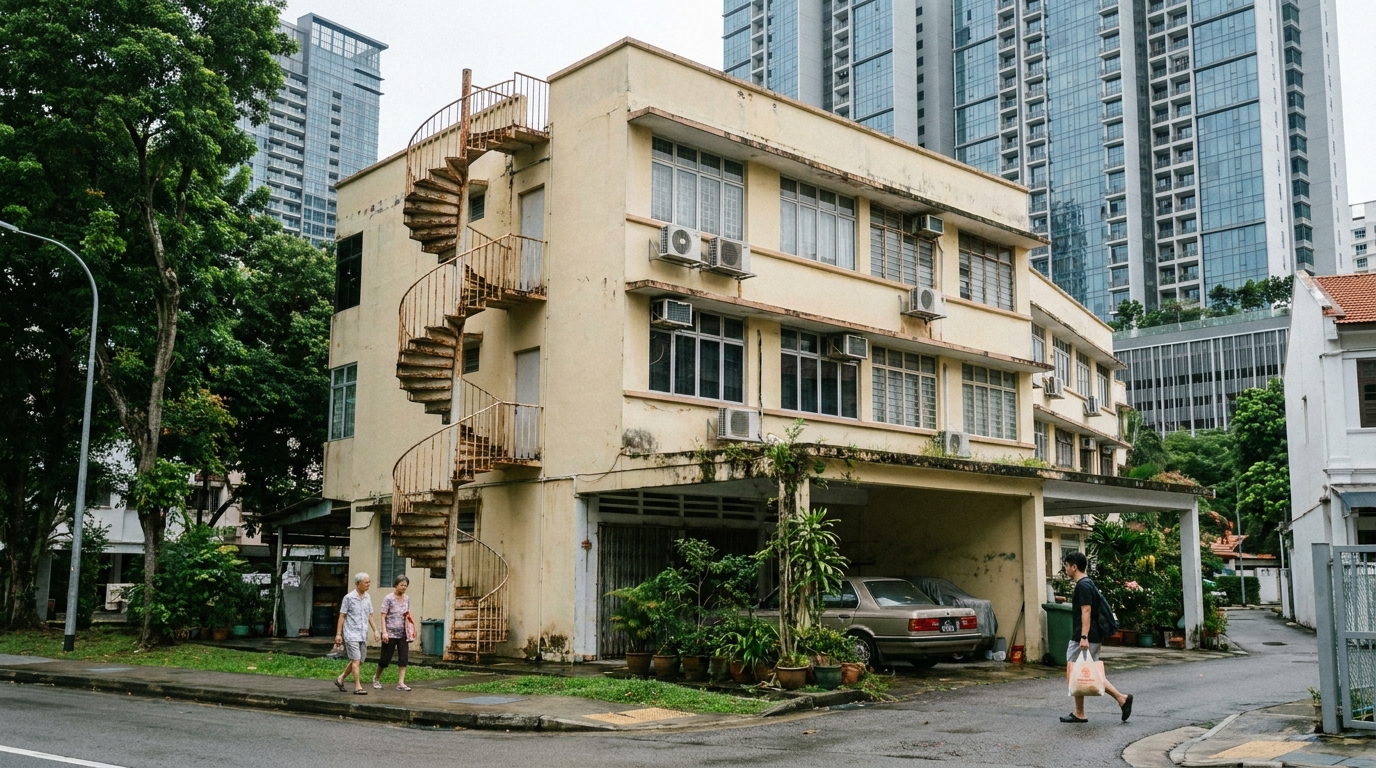
Lower consent thresholds solve a voting problem. They do not solve a valuation problem — and with prime plots landing on the Confirmed List, the valuation problem is the binding one.
Why the October tenders are the real reform
Consultants tracking the market make two points that fit together uncomfortably for sellers. First, developers still have a very good choice of attractive GLS sites, and those tenders remain their primary focus because execution friction is far lower — no minority objections, no Strata Titles Board litigation, no vacant possession risk. Second, injecting prime CCR plots into the Confirmed List strips out the rarity premium that older central estates have long priced into their reserves.
Put those together and the October closings become a public reference price. If the Orchard Boulevard site lands inside the S$1,650 to S$1,750 psf ppr band, that becomes the number every collective sale committee in the prime districts gets measured against — adjusted for tenure, plot ratio and the cost of buying out neighbours.
The reforms do help at the margin. Extended developer ABSD remission timelines — six years for sites of 700 to 1,399 units, seven years for 1,400-plus with at least half sold by year six — reduce abort risk on very large redevelopments. Financing is friendlier too, with three-month compounded SORA drifting toward the 1.0 to 1.5 per cent range in 2026. Developers say the changes give more flexibility in executing large, older estate and former HUDC redevelopments, while land pricing discipline stays intact.
But flexibility is not appetite. The 60 per cent ABSD on foreign buyers introduced in April 2023 still caps prime demand, which is why URA data shows private home prices growing 3.3 to 3.4 per cent in 2025, down from 3.9 per cent in 2024 and 6.8 per cent in 2023, and continuing at roughly 0.8 to 0.9 per cent a quarter into 2026. Land bids can be aggressive on individual sites. Exit prices cannot be.
What owners of ageing estates should actually do
Freehold remains the one thing GLS cannot manufacture. Every state plot is 99-year leasehold, so collective sales stay the only route to rare freehold and 999-year central land — and Kingsford's S$950 million purchase of the freehold Tan Boon Liat Building at Outram Road in July 2026, slated for residential-led redevelopment, shows the appetite is real where the arithmetic works.
The practical takeaway for owners is unglamorous:
- Price against the tender, not against the neighbours. Recent prime GLS benchmarks — S$1,865 psf ppr at Peck Hay Road, S$1,730 psf ppr at River Valley Green Parcel C, S$1,625 psf ppr at Dunearn Road, S$1,617 psf ppr at the first Orchard Boulevard plot — define the ceiling of developer willingness.
- Treat the six-month window as the binding constraint. A large estate that has not built consensus before the clock starts will not build it during.
- Assume one attempt, not several. A failed exercise now carries a three-year lock-out.
- Do not buy an old condo for its en bloc potential. With supply this heavy and thresholds this contested, that is a bet on other people's votes.
Watch three things next: the final shape of the Strata Bill as it moves through Parliament, the October closing bids on Orchard Boulevard and Marina Gardens Lane, and whether legacy mega-sites test the new 70 per cent threshold with lower reserves rather than higher hopes.
The Bill made en bloc easier to vote for. URA just made it harder to sell. Both things happened in the same month, and the second one will matter more.