Orchard Boulevard and Marina Gardens Lane: The Analysts Disagree by 24%, and That Gap Is the Real Story
URA's two prime Government Land Sales tenders close two weeks apart in October — and the published bid forecasts are so far apart that the tenders themselves, not the commentary, will set the price of central Singapore land.
The gist
- Two prime GLS plots close in October 2026: Marina Gardens Lane on 15th, Orchard Boulevard on 29th.
- Analyst top-bid forecasts for Orchard Boulevard span S$1,650 to S$2,050 psf ppr — a 24% gap.
- Precedents Upperhouse and One Marina Gardens both launched at roughly 2.1 times their land rate.
- URA rejected a S$984 psf ppr Marina Gardens Crescent bid in 2024, showing it withdraws rather than sells cheap.
On 13 August 2026, the Urban Redevelopment Authority put two of the most closely watched residential plots in years on the market. What the market cannot agree on is what they are worth — and the published estimates for one of them span nearly 24 per cent.
Two tenders, two weeks apart
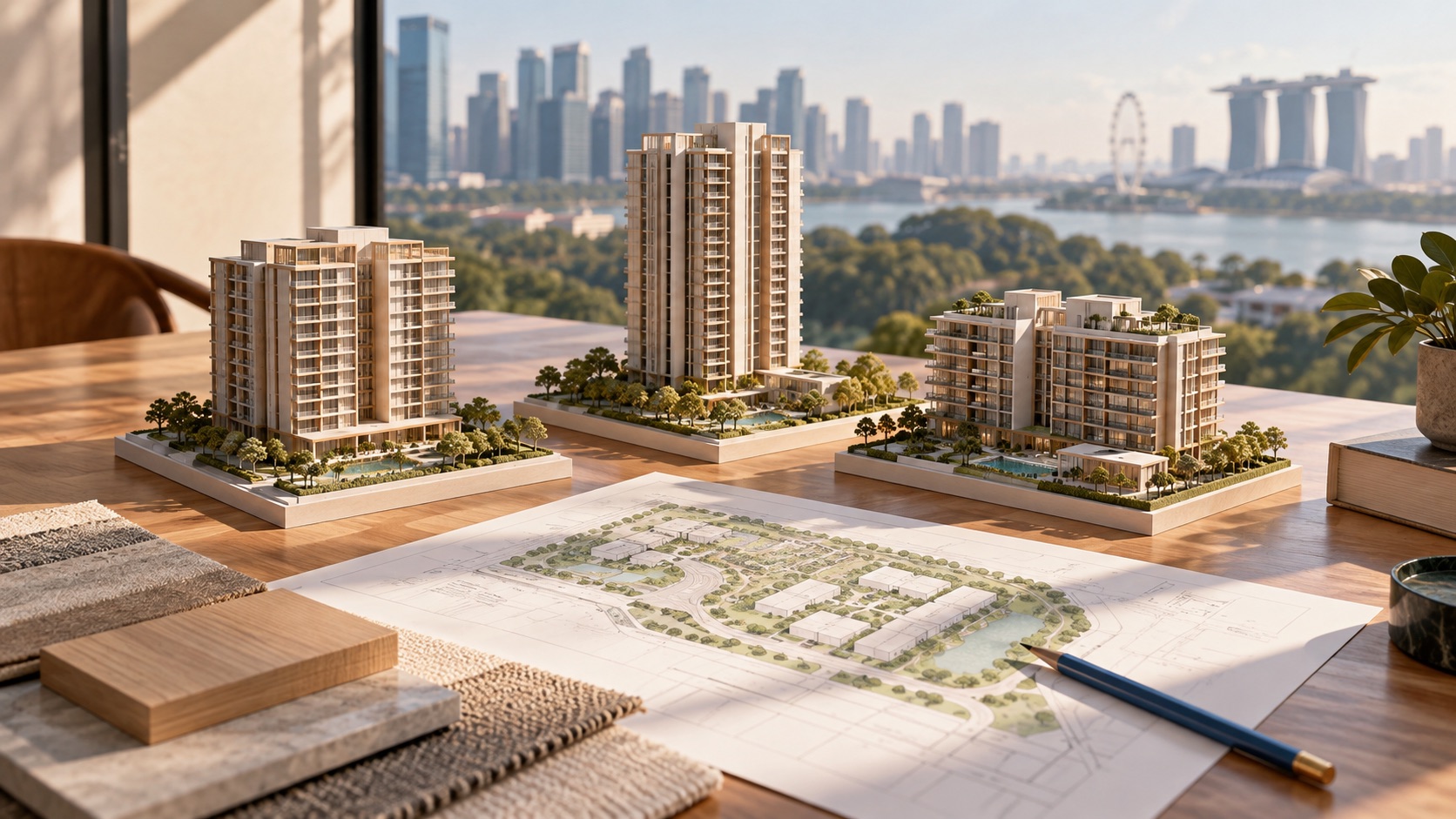
The Orchard Boulevard site is small by any measure: 3,438.0 sq m of land, a gross plot ratio of 2.8, and a maximum gross floor area of 9,627 sq m. That works out to roughly 110 homes on a 99-year lease. Tender closes 29 October 2026 at noon.
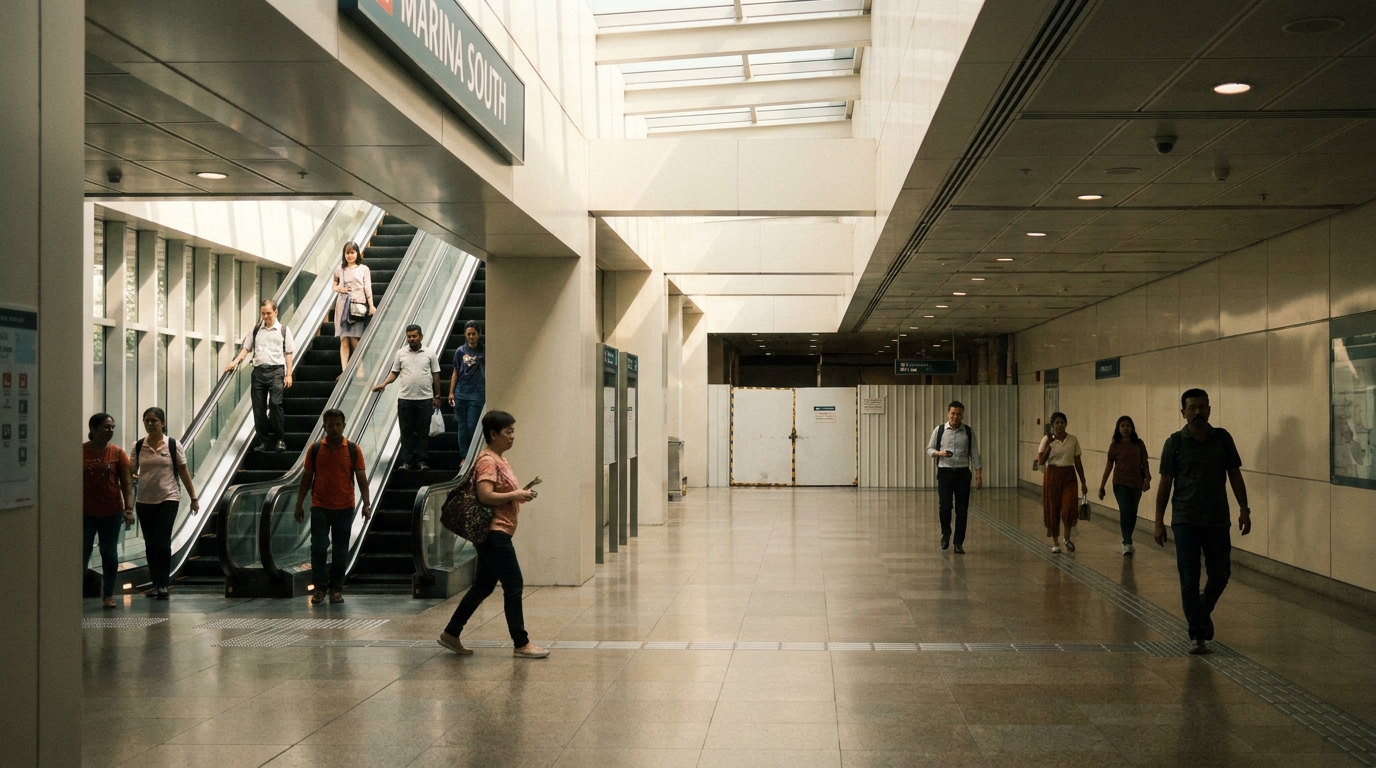
The Marina Gardens Lane parcel in District 1 is the larger of the two — 6,007.4 sq m, maximum GFA of 33,642 sq m, zoned residential with commercial on the first storey. Expected yield is about 390 units plus 150 sq m of retail, with direct underground connectivity to Marina South MRT station. Tender closes 15 October 2026.
Together the two sites carry an estimated 500 private homes — a modest slice of the 4,745 units on the 2H2026 Confirmed List, and the first two of eight Confirmed List sites released in this half. Small parcels, outsized signalling value.
The forecast spread is the story
For Orchard Boulevard, published analyst forecasts for the top bid run from S$1,650 psf ppr at the low end to S$2,050 psf ppr at the top — a gap of roughly S$400 psf ppr on a plot that could fit inside a single city block. In quantum terms that is a range of about S$171 million to S$212.4 million.
Marina Gardens Lane draws a similar split: S$1,350 to S$1,650 psf ppr, or roughly S$489 million to S$598 million. Even the expected number of bidders is contested — some forecasts say no more than three, others four to six.
When the professional estimates on a single 3,438 sq m plot span 24 per cent, the honest reading is that nobody knows what prime leasehold land is worth in 2026. The tender is the price discovery, not the confirmation of it.
That matters because buyers are routinely told to read land bids as a forward indicator of launch prices. They are — but only after the envelopes are opened. Before that, the range is wide enough to imply two very different markets.
What the two precedents already proved
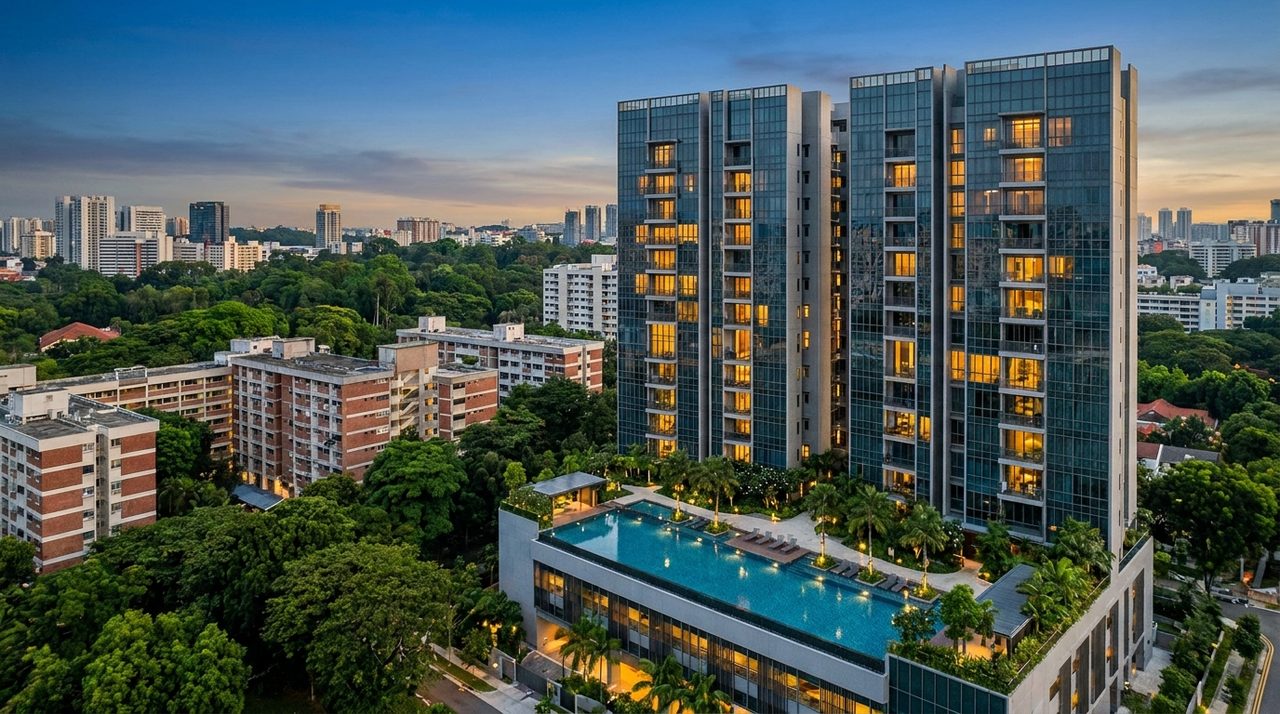
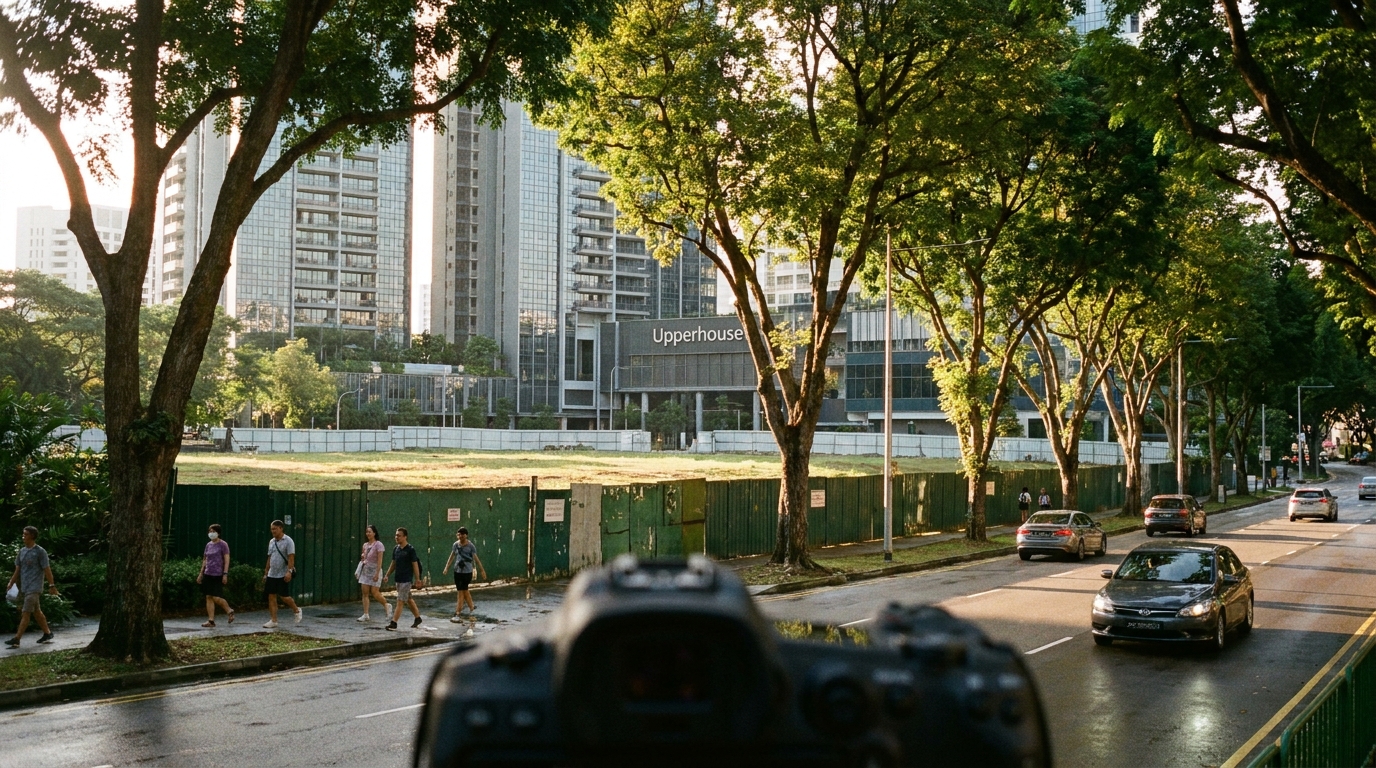
Neither site is a leap into the dark. The neighbouring Orchard Boulevard parcel was awarded in February 2024 to UOL Group and Singapore Land Group for S$428.28 million, or S$1,617 psf ppr, against four bids. It became the 301-unit Upperhouse at Orchard Boulevard, launched in July 2025 at an average of around S$3,350 to S$3,400 psf, and is now over 80 per cent sold.
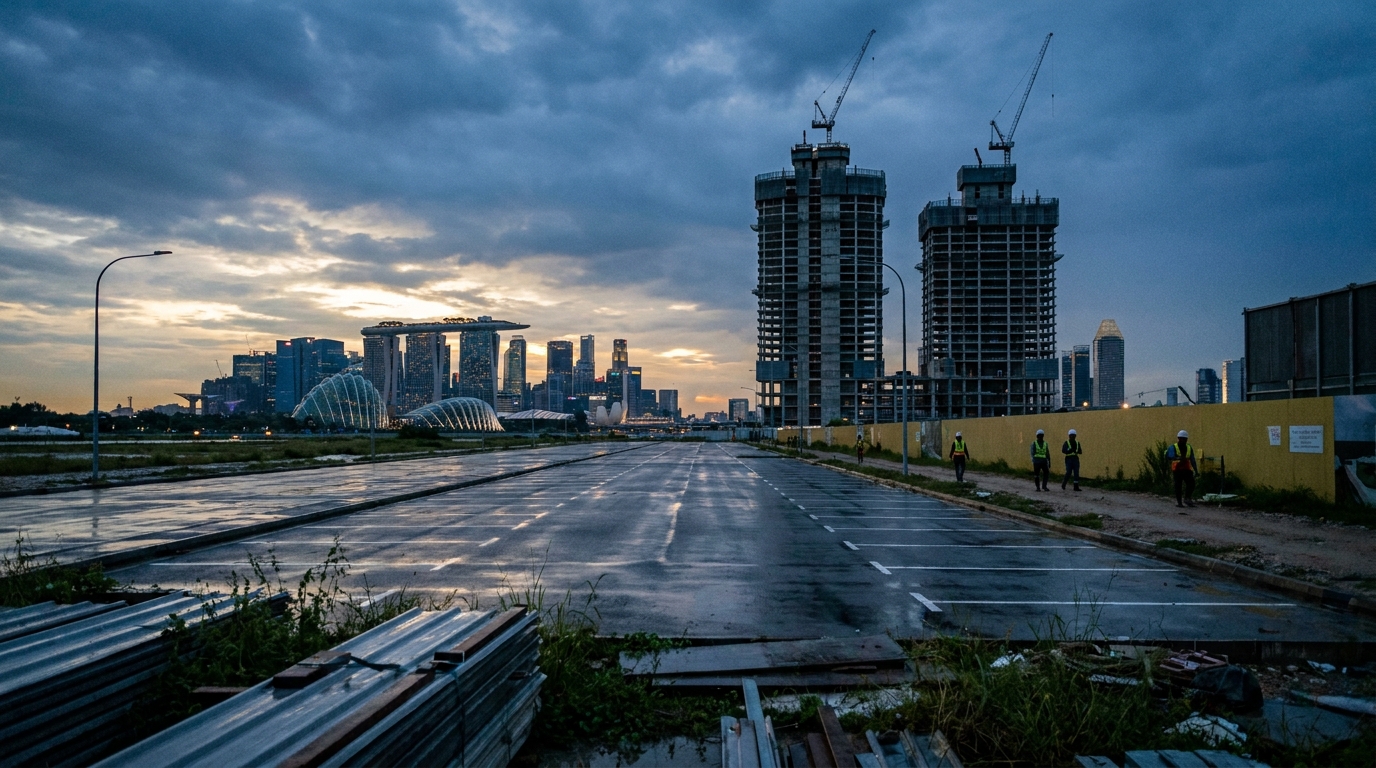
In Marina South, the first Marina Gardens Lane plot went to a Kingsford-led consortium in July 2023 for S$1.034 billion, or S$1,402 psf ppr. That became One Marina Gardens, 937 units, launched April 2025 and now at a 70.5 per cent take-up at an average transacted price of S$2,969 psf.
Run the arithmetic and both projects landed at roughly 2.1 times their land rate when they hit the market. That ratio is not a law of nature — construction costs, financing and timing all move it — but it is the only observed relationship the market has for these two specific precincts.
The rejected bid nobody quotes
There is a third Marina South data point, and it is the most instructive. In January 2024, a GuocoLand-Hong Leong consortium submitted a sole bid of S$770.46 million, or S$984 psf ppr, for a plot at Marina Gardens Crescent. URA rejected it in February 2024 as too low — 29.8 per cent below the first site's rate — and moved the parcel to the Reserve List.
That single decision changes how the 15 October result should be read. The downside on a Confirmed List tender is not an underpriced award; it is no award at all. The state has already demonstrated it will withdraw rather than sell cheap.
So a thin tender in Marina South would not deliver bargain land to a developer, and it would not, in time, deliver a cheaper new launch to a buyer. It would simply delay supply — which in a precinct still building out its critical mass, is arguably the worse outcome for early residents.
Why both plots were deliberately kept small
The sizing is not accidental. A 110-unit Orchard site at an estimated quantum under S$215 million is one of the lowest capital outlays for a Core Central Region state parcel in recent years. Marina Gardens Lane, at under S$600 million, is a fraction of the S$1.034 billion the first Marina South plot commanded.
Behind that sits the ABSD remission rule: developers must sell 100 per cent of units within five years to claw back the duty in full. A 110-unit boutique project is a materially easier promise to keep than a 900-unit tower, and the smaller cheque opens the field to mid-tier and boutique players who cannot underwrite a mega-site.
The demand side has also tightened. Unsold private housing stock in the CCR fell to 5,504 units in Q2 2026, down from 8,419 units in Q1 2025. Fewer unsold prime homes means more pricing confidence — and more reason to replenish the land bank now.
What this means for the buyer, and where the logic breaks
Land typically accounts for 55 to 65 per cent of total development cost. On the forecast bid ranges, breakeven lands at roughly S$2,500 to S$2,700 psf for the Orchard site and S$2,200 to S$2,450 psf for Marina South. Implied future launch floors: S$3,000 to S$3,500+ psf in District 10 and S$2,950 to S$3,200 psf in Marina South.
October's tender results will not set launch prices. They will set the floor beneath them — and once a land rate is paid, no developer prices below its own breakeven to make a buyer comfortable.
Two caveats deserve equal weight. First, the 60 per cent ABSD on foreign buyers has structurally narrowed the CCR buyer pool to citizens, PRs and qualifying nationalities. High land bids in that environment can compress developer margins rather than flow through to headline psf.
Second, an exclusive 110-unit Orchard plot serves a buyer profile that does not resemble the mass-affluent upgrader driving city-fringe volume. Extrapolating one to the other is a category error. Note too that most established Orchard and Tanglin stock is freehold — Park Nova at a median of around S$5,073 psf, Boulevard 88 at roughly S$4,061 psf — while these parcels are 99-year leasehold.
The supply argument on the other side
Nothing above happens in a vacuum. Full-year 2026 Confirmed List supply totals 9,320 homes, more than 50 per cent above the 10-year historical average. That is a deliberate cap on how fast prices can run.
The evidence is already in the index. Private residential prices rose 3.4 per cent in 2025, down from 3.9 per cent in 2024 and 6.8 per cent in 2023 — the slowest annual growth since 2020. Supply is doing its job.
Financing conditions cut the other way. Global benchmark rates eased through 2025 into 2026, pulling SORA-pegged mortgages down from their 4 per cent-plus peaks. Contrast that with the United States, where the 30-year fixed rate averaged 6.69 per cent last week — the highest since July 2025 — and existing home sales fell for a second straight month, to an annualised 4.06 million units. Singapore developers are bidding into a materially friendlier cost of capital than their American counterparts face.
What to watch on 15 and 29 October
Two closings, two weeks apart, under identical policy and rate conditions. That is as close to a controlled experiment as this market offers. Three things are worth tracking:
- Bid count, not just top bid. Four or more bidders on either site signals broad conviction. A sole bid — as at Marina Gardens Crescent — signals a portfolio gap at one company, not a market view.
- Whether Marina Gardens Lane clears S$1,550 psf ppr on 15 October, and whether Orchard Boulevard breaches S$1,750 to S$1,950 psf ppr on 29 October. Those are the lines separating the low and high forecast camps.
- Who bids. Solo mid-tier players versus blue-chip consortia tells you whether bite-sized prime land has genuinely widened the field, or whether the usual names still set the price.
For anyone weighing balance units at existing CCR or Marina South projects, October is a decision point rather than a deadline. Strong results confirm that today's inventory was priced before the next benchmark. Weak results — or a withdrawn tender — mean the pipeline thins and the wait lengthens. Neither outcome argues for paying more than a project is worth on its own merits.