Kallang Distripark: 2,000-Plus Homes on Private Land, and Nobody Has to Bid for It
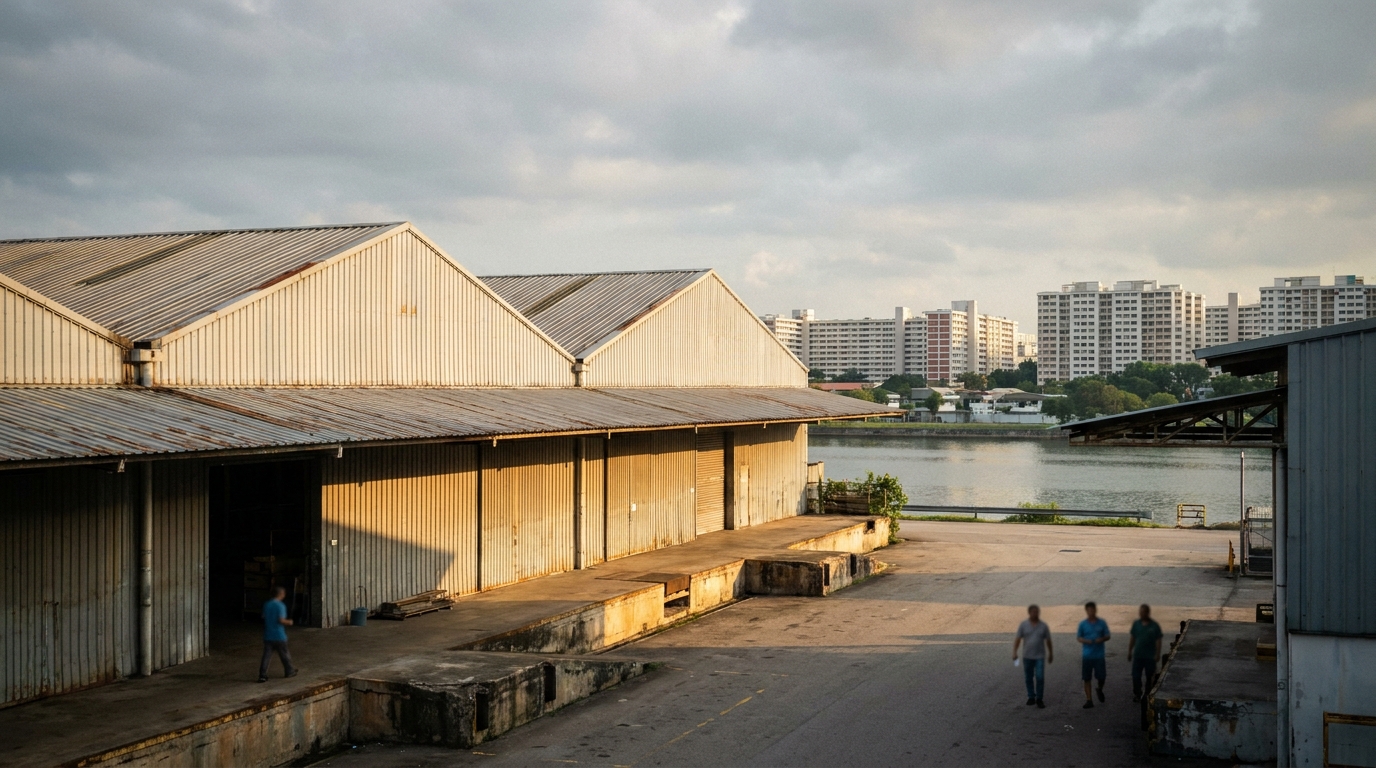
URA's proposed Master Plan amendment turns a 13ha rubber warehouse site into three housing plots and a park — but because the land is privately held, the usual state price signal never arrives.
The gist
- URA's 14 August 2026 proposed amendment splits a 13ha Kallang Distripark warehouse site into three housing plots.
- Analyst estimates total over 2,000 private homes, plus a 2ha park, roads and 1.8ha reserve site.
- Land is privately held by Lee Rubber-linked entities, partly freehold, partly on a lease expiring 2067.
- No tender means no land-price benchmark; nearest proxy is Kallang Close at S$1,415 psf ppr.
On 14 August 2026, the Urban Redevelopment Authority published a proposed amendment to the Master Plan that carves a 13ha warehouse estate on the Kallang River into three housing plots, a 2ha park, new roads and a reserve site. The land has been zoned for housing since as early as 2003. What changed is not the zoning. What changed is that an owner finally asked.
A 23-year-old zoning line finally gets a proposal behind it
Kallang Distripark is a disused rubber factory turned warehouse site, bounded loosely by Kallang Bahru, Upper Boon Keng Road and Geylang Bahru. A URA spokesperson confirmed that the proposed amendments are meant to facilitate a private development proposal the agency had received.
That single sentence is the story. This is not a Government Land Sales parcel being teed up for tender. It is a private landowner moving on land it already holds, with the planning authority adjusting the Master Plan around the request.
The site is owned by entities associated with Lee Rubber Company, founded by the entrepreneur and philanthropist Lee Kong Chian. A portion is freehold; the rest sits on a 99-year lease expiring in 2067. Attempts to reach the company for comment were unsuccessful.
What the three plots actually are
The proposed carve-up is specific, and the specificity matters more than the headline unit count. Under the plans:
- A 3.6ha plot adjacent to Kallang Bahru, largely freehold, zoned purely residential. Analysts estimate roughly 1,200 condominium units.
- A 1.6ha plot abutting Pelton Canal, also largely freehold and purely residential. Analyst estimates run to at least 450 to 550 units.
- A 2.4ha leasehold plot, zoned to include commercial use on the first storey. Estimates put it at 600 to 800 units.
The balance of the site comprises a 2ha park, new roads to serve the housing, and a 1.8ha reserve site whose use has not been determined. Add the residential estimates and you land north of 2,000 private homes on a single city-fringe waterfront address.
Two of the three housing plots are described as largely freehold. On the city fringe, where almost everything new arrives on a 99-year lease from the state, that is the most consequential detail in the entire amendment.
No tender means no price signal
Here is the structural difference between Kallang Distripark and everything else in the Kallang pipeline. A GLS site produces a public number on a public date. Bidders show their hand, the top bid becomes the land cost, and the market back-solves an expected launch price within hours.
Privately held land produces none of that. There is no tender, no closing date, no field of bidders and no psf ppr to anchor to. The owner decides when — and whether — to build, and in what order.
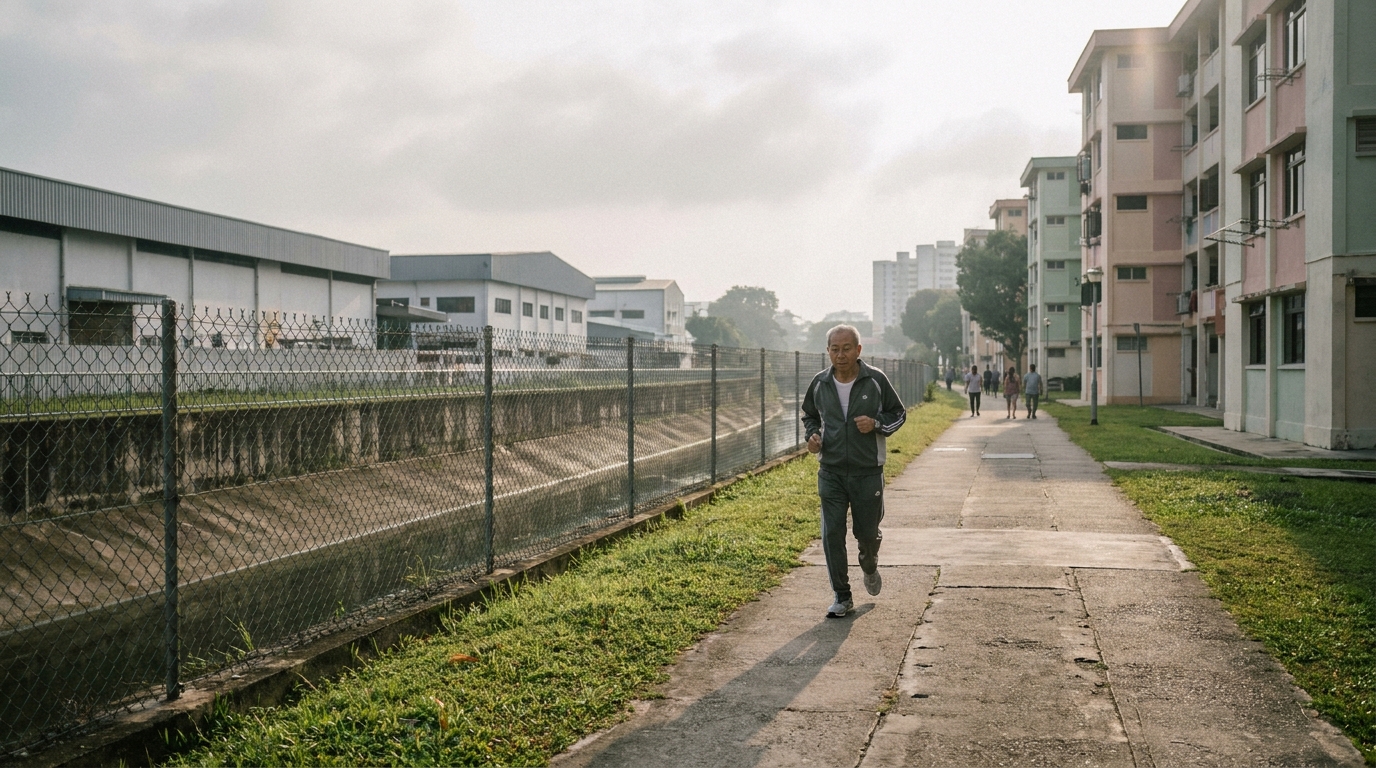
When the state sells land, the market gets a number and a date. When a family company redevelops its own land, the market gets a zoning map and a wait.
The nearest proxy is the 1.14ha Kallang Close GLS site, awarded in April 2026 to a Frasers Property–Mitsubishi Estate joint venture for S$610.75 million, or S$1,415 psf per plot ratio, for roughly 470 private homes. It was the first private residential GLS tender on this stretch of the river in over a decade.
That bid tells you what a disciplined developer would pay for leasehold riverfront here. It does not tell you what a landowner sitting on partly freehold ground, acquired generations ago, needs to achieve. Those are different arithmetic problems, and they can produce very different pricing behaviour.
The corridor is filling up faster than the demand pool is being counted
Kallang Distripark does not arrive alone. Downstream, the 17.4ha Kampong Bugis precinct has been restructured under the Draft Master Plan 2025 into phased plots for an estimated 4,000 waterfront homes. Tanjong Rhu is planned for around 2,000. Kallang Close adds roughly 470.
Next door, the 6ha Geylang Bahru Industrial Estate — sitting on a lease that runs to the mid-2070s — is likewise master-planned for eventual housing. Stack it all up and the Kallang River corridor is carrying a multi-thousand-unit pipeline in a sub-market that has seen almost no large private launches for over a decade.
Scarcity is the pitch every riverfront project in this precinct will make. The Master Plan says the opposite over a ten-year horizon. Both can be true — scarce today, crowded later — and the buyer's job is to work out which side of that curve they are buying on.
Phasing is the saving grace. URA redrew Kampong Bugis into staged parcels rather than one mega-tender, and a private owner at Kallang Distripark has every commercial reason to release its three plots sequentially rather than compete with itself. Supply that arrives in tranches is absorbable. Supply that arrives at once is not.
The park is on the best land, and that is deliberate
The 2ha park is not a leftover. Analysts have flagged that the parcel earmarked for public open space sits where two waterways converge — the position with the strongest direct waterfront frontage on the whole site.
Read that as planning doing its job. The most valuable views are being converted into a public amenity that lifts all three housing plots rather than one premium stack. It is the same logic that made Robertson Quay and the Kallang Park Connector network work: the water is worth more shared than fenced.
Heritage is the open question. The site holds three octagonal warehouses known as the Lee Rubber Godowns, designed by the late pioneer architect Victor Chew of Kumpulan Akitek. URA said it has engaged the owner on retaining one of them as a heritage marker within the proposed park, and that studies are ongoing.
The agency was careful to leave itself an exit. "Where physical retention is not possible, agencies will work with the owner and relevant stakeholders to document and commemorate the history of the place through heritage interpretation initiatives, such as digital documentation or storyboards," the URA spokesperson said. Storyboards are not a godown. Veteran architects have argued the modular structures could be adapted into sheltered community or sporting facilities — a far better outcome for the future precinct than a plaque.
Who this is actually for
The demand case is local and it is credible. Boon Keng, Upper Boon Keng, Geylang Bahru, Bendemeer and Kallang are mature estates thick with million-dollar HDB resale flats and a steady flow of units clearing their Minimum Occupation Period. That is an equity-rich upgrader pool looking for a replacement home in the same postcode, not a different one.
Connectivity supports it. The site sits within walking distance of Geylang Bahru and Bendemeer on the Downtown Line and Kallang on the East–West Line, plugs into the Kallang Park Connector Network, and stands to benefit from the Bishan-to-City active mobility link, whose cycling bridge over the PIE is targeted for around 2027.
Affordability is a tailwind for once. SORA-pegged mortgage rates have eased from peaks above 4 per cent toward roughly 2.5 to 3.0 per cent. But the demand base is still domestic by design: 60 per cent ABSD on foreign buyers, 20 to 30 per cent on citizens' subsequent purchases, a 55 per cent TDSR and a 75 per cent LTV ceiling. Quantum, not sentiment, will set the ceiling here.
What to watch, and what not to believe yet
There is no project name, no developer consortium announced, no launch date, no price and no unit mix. Anything circulating that claims otherwise is guessing. The honest checklist is short:
- Gazetting of the Master Plan amendment. A proposed amendment is a proposal until it is confirmed.
- The Kallang Close launch. Take-up and achieved psf from the S$1,415 psf ppr site will be the sub-market's first real price discovery in a decade.
- The heritage decision. Whether a Lee Rubber Godown survives inside the park changes the character of the precinct, not just its history.
- The 1.8ha reserve site. An undetermined use on 1.8ha next to your future home is a live variable, not a footnote.
- Sequencing. Freehold plots first or leasehold plot first tells you how the owner reads the market.
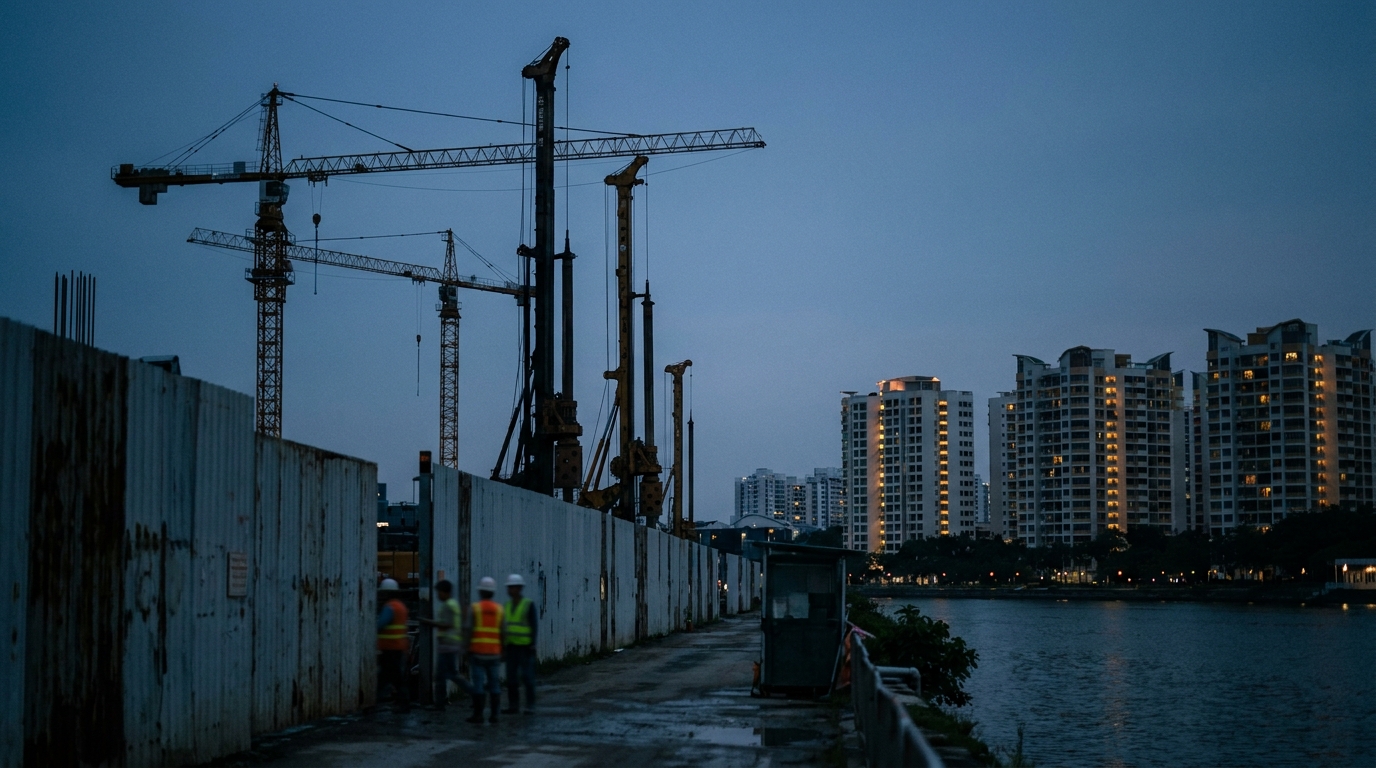
One risk is certain regardless. Brownfield redevelopment of this scale — road restructuring, land preparation, phased construction across three plots, with Kampong Bugis and Geylang Bahru moving on their own timelines — means whoever buys into the first phase is buying a decade or more of an active worksite outside the window.
That is the trade. Rare partly freehold land on a city-fringe river, in an estate that has starved of new private stock for years, in exchange for patience and construction dust. For the right buyer it is a good trade. It is not a trade anyone needs to make this year — the Master Plan amendment is a signal, not a sale.