 plan
planURA’s GFA Review Opens a Design Question, Not Extra Floor Area
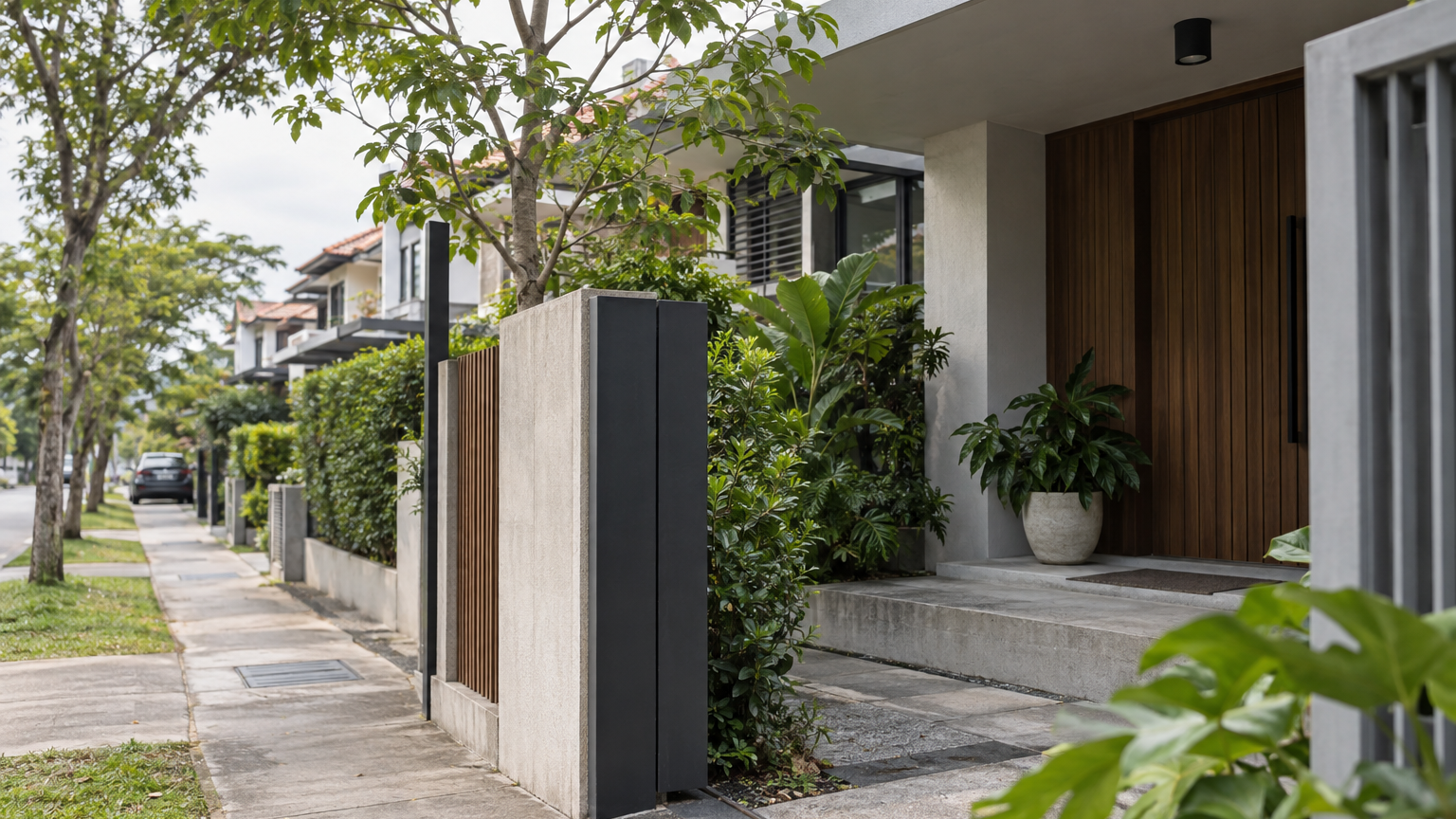
Future rules could support more climate-responsive buildings, but no site has gained extra plot ratio or redevelopment value from the review alone.
National Development Minister Chee Hong Tat said on 21 September 2026 that the Urban Redevelopment Authority is reviewing its gross floor area guidelines after industry feedback. The review is intended to give developers more design flexibility and encourage features supporting heat resilience and thermal comfort, but detailed rules and an implementation date have not been announced.
For Singapore property buyers and owners, the immediate answer is clear: the announcement does not increase a site’s plot ratio, enlarge an existing home or establish a higher collective-sale value today. The review matters because gross floor area, or GFA, affects development feasibility. Its eventual property impact, however, will depend on which spaces, projects and locations qualify under any revised rules.
This is not a blanket increase in development rights
GFA is a planning measure used to regulate the floor area and intensity of a development. URA’s development-control framework and the applicable Master Plan parameters remain central to determining what may be built on a site.
The current framework does not treat every part of a building identically. URA’s guidance sets out how particular spaces are included in or excluded from GFA calculations, alongside detailed rules for different development components.
Chee’s announcement concerns a review of that framework and the flexibility available for building design and mixes of uses. It did not announce a nationwide increase in Master Plan plot ratios or confer a new development entitlement on every property.
That distinction matters. Plot ratio establishes the broad planning intensity, while GFA rules affect how floor space is counted and deployed within the applicable controls. A change in accounting treatment could make a particular design easier to deliver without granting substantially more saleable floor space.
“Flexibility becomes value only when URA specifies what may flex, where, and in exchange for what.”
Better design would not necessarily mean larger homes
Developers must balance private interiors, circulation, lift lobbies, sheltered communal areas and other building components within a finite planning envelope. These spaces do not produce the same commercial return, but many are necessary for a functional and comfortable development.
A future framework could give more favourable treatment to climate-responsive elements such as deeper shading or sheltered, naturally ventilated circulation. That is an interpretation of the announced policy direction, not a confirmed list of concessions: no eligible features or revised calculation methods have been published.
Even if selected spaces eventually receive different treatment, buyers should not assume that new condominium units will become larger. Developers could use the flexibility to improve common areas, integrate different approved uses or resolve constraints involving circulation and building form.
Consider two hypothetical schemes on equally sized sites with the same permitted headline GFA. If revised rules exclude a qualifying shaded communal area from GFA, one scheme might provide that feature without sacrificing as much counted floor area. The result could be a more comfortable building, but it would not automatically add an extra bedroom to each apartment.
| Possible future measure | Potential design effect | What it would not prove |
|---|---|---|
| Different treatment for selected climate features | More scope for shade or semi-outdoor areas | Larger private units |
| More flexibility in the approved use mix | Easier integration of multiple uses | Unrestricted changes of use |
| Targeted additional intensity | Better feasibility for qualifying projects | Higher plot ratio for every property |
The table describes possible mechanisms, not announced policy. URA’s current rules remain the relevant reference until revised guidance takes effect.
Redevelopment sites may have more at stake
The review could ultimately matter more to complex redevelopment projects than to ordinary completed homes. Older commercial and mixed-use sites may have to reconcile legacy conditions, multiple uses, public spaces and modern building-performance requirements.
URA already operates targeted GFA incentive schemes for qualifying commercial redevelopment. These routes are governed by specific eligibility conditions and remain subject to planning assessment rather than applying as universal uplifts.
That existing approach suggests—but does not confirm—that future flexibility could also be conditional. It may apply only to particular development types, locations, design outcomes or climate features. Site constraints and wider planning considerations would still affect whether a proposal could proceed.
Owners considering collective-sale potential should therefore not treat the review as immediate additional land value. A purchaser or valuer would need an applicable rule, confirmed planning parameters and a feasible development scheme before reliably pricing differently treated or additional floor area.
For an existing strata owner, three matters remain separate:
- the legal area of the unit;
- the development’s approved plans and current planning parameters; and
- the hypothetical potential of a future redevelopment.
The announcement alone changes none of them.
Buyers should compare usable outcomes, not nominal GFA
For buyers considering future launches, the eventual planning approval and disclosed layout will matter more than the broad language of the review. GFA operates at development level; it is not a direct measure of the private area that a purchaser owns or can furnish.
If revised rules emerge, buyers should examine the resulting product rather than assume that flexibility is inherently beneficial. Better-shaded communal areas and sheltered circulation could improve daily comfort. A more complicated mix of uses could also bring different movement patterns, operating arrangements or maintenance demands.
The strongest argument for reform is that less rigid rules may allow architects to respond more effectively to individual sites. That case is particularly relevant where useful climate features occupy physical space but generate little direct revenue.
The counterargument is complexity. If exemptions and incentives proliferate, purchasers and neighbouring owners may find it harder to understand a project’s apparent bulk, the balance between private and common areas, and whether a concession survives later redevelopment.
Clear eligibility criteria and transparent approved plans would therefore matter as much as the added flexibility. URA’s present guidance demonstrates that GFA treatment is technical and component-specific, rather than a simple promise of more space.
One item in the frozen evidence ledger is a technical research paper unrelated to Singapore’s statutory planning framework. It does not establish any URA rule or property entitlement and is not used to support the policy interpretation in this article.
The decisive details have not been published
The next meaningful development will be an official consultation, circular or revision to URA’s development-control guidance—not an immediate movement in resale values. Current rules continue to provide the operative planning reference unless revised requirements are formally introduced.
Three details will determine the practical impact: which projects and locations qualify; which spaces receive different GFA treatment; and whether any concession is capped or conditional. Commencement and transitional provisions would also determine whether projects already in planning can participate.
Until those terms appear, estimates of extra units, square metres or redevelopment proceeds would be speculative. The review is a meaningful signal that Singapore may give climate-responsive and mixed-use design more room, but the eventual mechanism will decide whether that flexibility produces measurable development value or simply better-shaped buildings.