 plan
Singapore’s prime CBD office rents jump 2% as AI firms seek more space
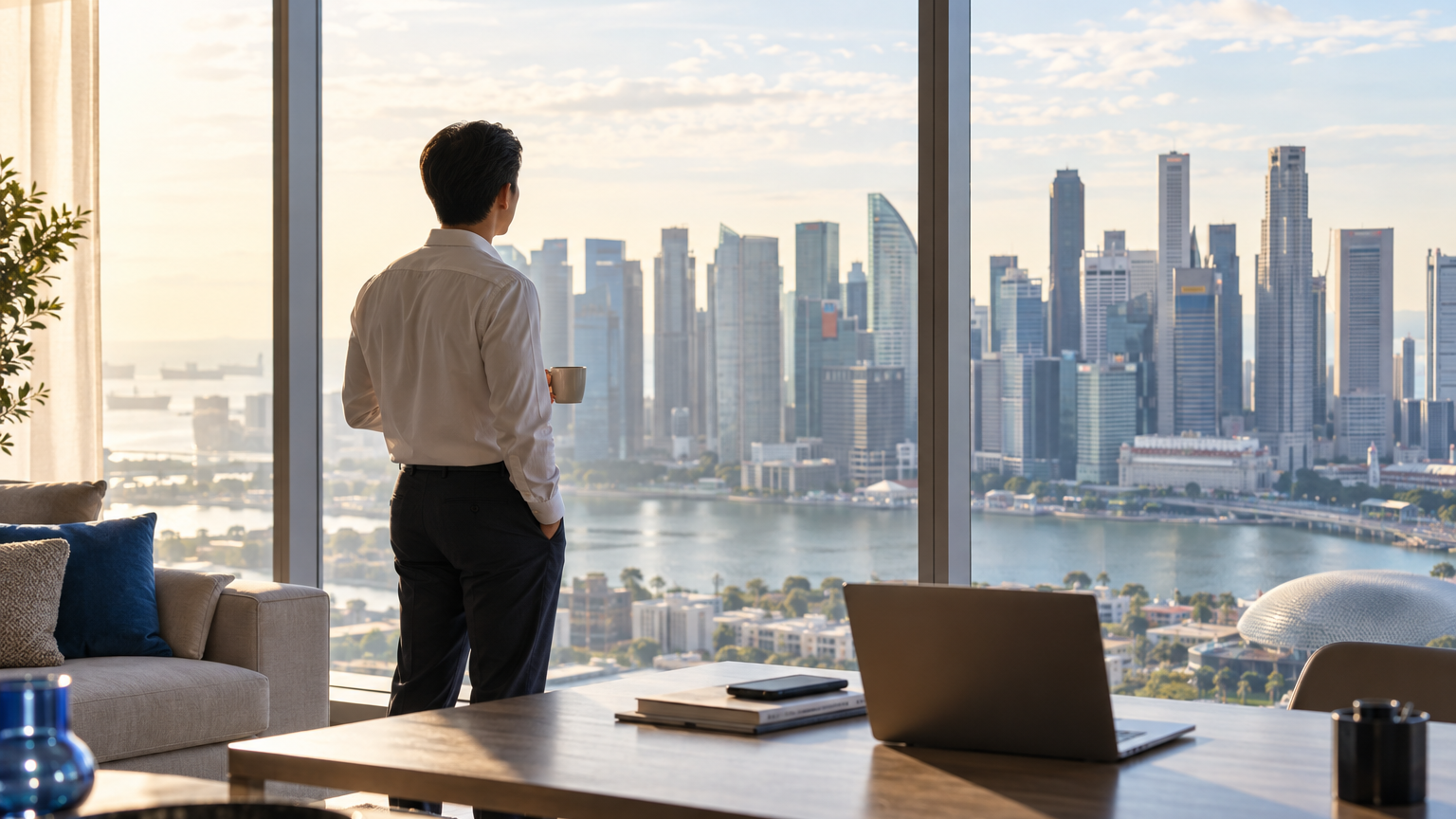
CBRE’s third-quarter 2026 reading covers Core CBD Grade A offices. The broader official increase was 0.8%, with AI adding to demand from several sectors.
Singapore’s top-tier offices became more expensive in the third quarter of 2026: CBRE’s Core CBD Grade A rent measure rose 2% to S$12.75 per sq ft a month, its sharpest quarterly increase since the third quarter of 2022. AI companies were among the businesses adding demand for office space, alongside established financial, professional-services and technology occupiers.
Yet the official figure released by the Urban Redevelopment Authority on 23 October 2026 was a smaller 0.8% increase in Central Region office rents. Both readings can be true. Understanding the difference helps explain where competition for space is strongest—and why the emerging AI-office story is more specific than a general rise in Singapore rents.
Why 2% and 0.8% describe the same quarter
The important words in CBRE’s figure are Core CBD Grade A. Its measure tracks a narrower slice of the office market than URA’s Central Region office-rental index. Grade A refers to the higher-quality office segment; the 2% reading should therefore stay attached to CBRE’s particular market coverage, rather than being applied to every central Singapore office.
URA’s broader index rose 0.8% in the third quarter, matching its increase in the second quarter. CBRE’s narrower series accelerated from 0.8% growth in the second quarter to 2% in the third. The distinction is between different baskets of offices, not two agencies giving conflicting answers to an identical question.
Other consultancies add another layer. JLL and Cushman & Wakefield each recorded 1% quarterly growth in their CBD Grade A rent measures. Their readings support the direction of the change—higher rents for quality CBD offices—but do not reproduce the size of CBRE’s increase.
For a reader comparing headlines, the useful habit is to keep the provider, location and office category attached to the percentage. These figures are separate measurements, not numbers to average into a supposedly more accurate market result.
What S$12.75 means in everyday money
A rent quoted per square foot can feel remote until it becomes a monthly bill. At CBRE’s S$12.75 per sq ft monthly benchmark, a hypothetical 10,000 sq ft office would represent S$127,500 a month in rent. This is an illustration using the reported benchmark, not a quotation for an available unit.
Working backwards from a 2% increase puts the previous quarter’s implied benchmark at approximately S$12.50 per sq ft a month. On that same hypothetical area, the difference would be about S$2,500 a month, or S$30,000 over a year, if the higher monthly rate applied throughout. These are calculations from CBRE’s figures, rather than evidence of any tenant’s actual rent increase.
That comparison makes the stakes clearer without turning the benchmark into a lease offer. For businesses comparing office options, a small-looking percentage can represent a meaningful recurring expense when multiplied across a large floor area. The calculation also explains why the amount of space a company seeks matters as much as the headline rental rate.
What is changing about AI firms’ office needs?
The concrete change described in the research is a move beyond flexible workspace towards larger, dedicated offices. CBRE identifies AI firms as an additional source of leasing demand, rather than the only businesses looking for space. That shift makes them more visible in the market for substantial office premises.
One closely watched example is OpenAI, the company behind ChatGPT. JLL reported that it was in advanced negotiations for about 120,000 sq ft at Shaw Tower. The status matters: this was a reported negotiation, not confirmation that a lease had been signed.
The proposed area is 12 times the size of the hypothetical 10,000 sq ft office used above. That is a comparison of space alone; applying CBRE’s Core CBD rental benchmark to the reported Shaw Tower discussions would not establish the rent being negotiated there.
The example gives the AI story a physical scale. It moves the discussion from an abstract interest in artificial intelligence to the possibility of a sizeable office requirement. What remains unresolved is whether that reported requirement becomes a completed lease, and on what terms.
AI firms are joining an already competitive market
The evidence points to several groups seeking offices at the same time. Cushman & Wakefield describes leasing activity involving financial services, professional services and technology businesses, including more global AI firms expanding in Singapore. AI is therefore an added source of demand within a broader occupier market.
Availability has also tightened. Cushman & Wakefield recorded CBD Grade A vacancy falling from 4.7% to 3.9% in the third quarter. That is a decline of 0.8 percentage points—a different calculation from saying vacancy fell by 0.8%.
Put another way, its measure showed roughly four square feet vacant for every 100 square feet of tracked office space. JLL separately reported vacancy at its lowest in 10 quarters and highlighted tight availability of quality offices and large-format space.
Taken together, those findings offer a more convincing explanation for rising rents than AI demand alone: several types of businesses are seeking space while suitable availability is limited. They also explain why a large office search can attract attention even before negotiations produce a signed lease. That is an interpretation of the combined demand and vacancy evidence, not a measured allocation of rent growth to individual sectors.
The next development is a lease, not another headline
For someone whose main property concern is their home, the immediate value of this news is understanding how Singapore’s office economy is changing. These reports measure commercial rents, vacancy and occupier demand; they do not establish a corresponding change in residential rents or home values.
The established picture is that office rents rose across the cited measures, with CBRE recording a particularly strong increase in its Core CBD Grade A series. The next concrete development to watch is whether sizeable reported AI requirements turn into signed leases. That would clarify how much of this emerging demand becomes occupied space, rather than remaining at the negotiating table.