 plan
Singapore couple pays up to S$2,500 a month while waiting for a BTO flat
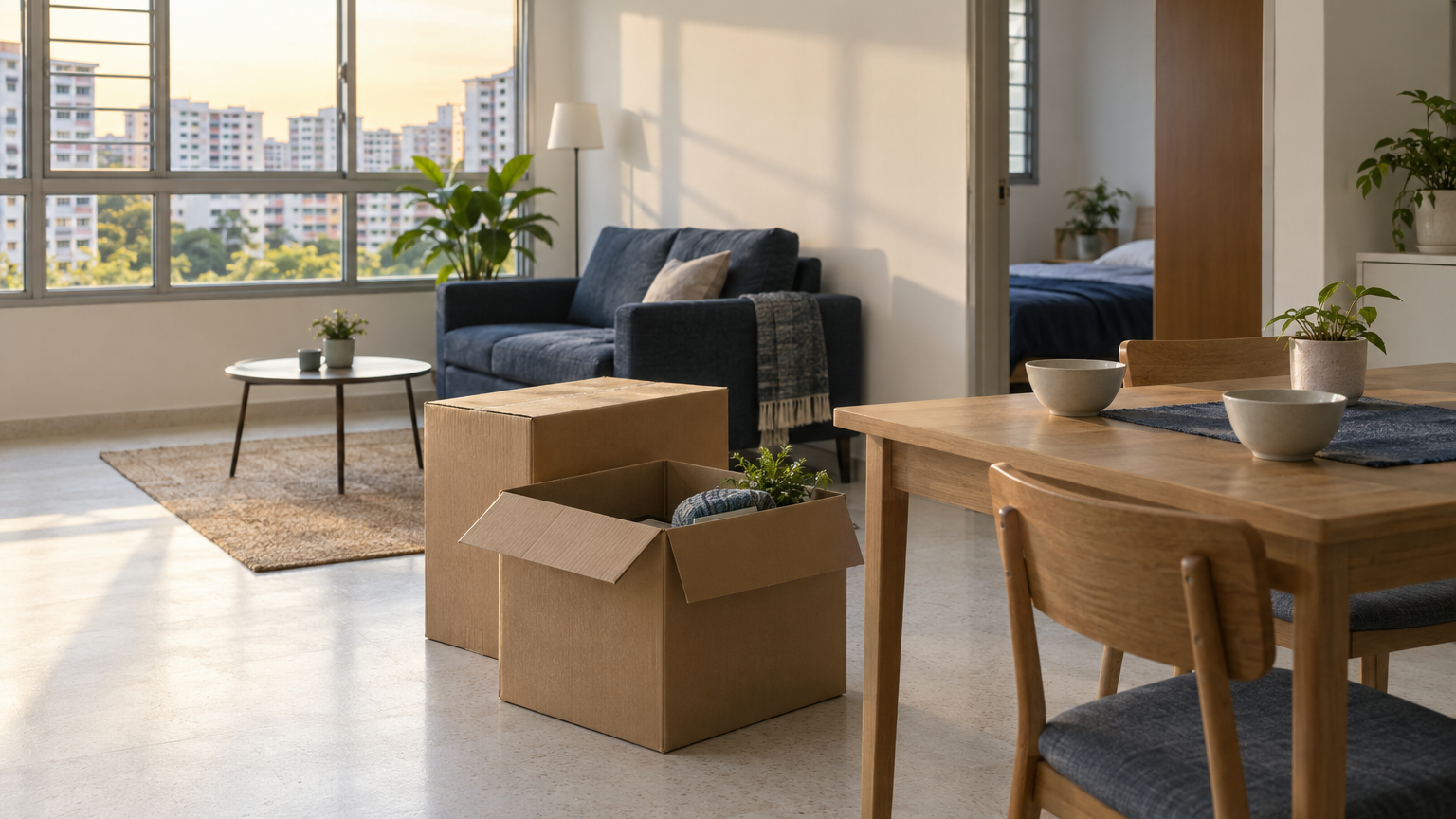
Henry Tay and Sarah Tong chose privacy and proximity to work while awaiting their Tanah Merah home. Their budget gives Singapore’s build-to-rent discussion a human backdrop.
Henry Tay and Sarah Tong spent about a quarter of their combined take-home pay on rent so they could live independently after marrying in May 2024. Their Build-To-Order (BTO) flat in Tanah Merah was then about three years from completion, leaving them to pay S$2,200–S$2,500 a month for an interim home.
Their experience, reported on 2 November 2026 alongside remarks about Singapore considering build-to-rent housing, gives that discussion a concrete human stake. The couple already had a home purchase ahead of them; what they needed was somewhere to begin married life while waiting for it.
Starting married life before the flat is ready
Tay, 36, is a freelance photographer, and Tong, 32, is a civil servant. Personal space and living close to their workplaces were their priorities. Over the two years described in the report, they lived first in a one-bedroom condominium unit in Bright Hill, then in a three-room flat in Ang Mo Kio.
“We thought it’s better to start afresh,” Tong said. To pay for that choice, they cut back on travel and eating out, and decided to keep the renovation of their upcoming flat simple.
Their reported BTO purchase price was S$570,000. The couple estimated that renting could cost up to S$100,000 over three years, with rental furnishings, moving fees and utility bills adding further expenses. That was their estimate of the financial pressure, rather than a completed three-year bill.
How the monthly bill becomes a three-year commitment
A narrower calculation puts the reported rents into perspective. Illustratively, S$2,200–S$2,500 a month over 36 months equals S$79,200–S$90,000 in rent alone, assuming the rent stays within that range throughout. This calculation uses their reported monthly range; it does not reconstruct their actual payments or include furnishings, moving and utilities.
The useful takeaway is the scale of the waiting period, not a claim that every couple needs this budget. Tay and Tong’s rents covered two different homes, and their preference for proximity to work was specific to their circumstances. Their experience is a household example, not a market rental benchmark.
What build-to-rent describes—and what remains a discussion
Build-to-rent, often shortened to BTR, means housing developed for renting rather than selling as individual units. A single institutional landlord often manages the development, unlike a building whose units have been sold to separate owners. The defining difference is how the housing is supplied and managed.
The 2 November report attributed to National Development Minister Chee Hong Tat remarks made in August about looking at flexible accommodation for younger Singaporeans, including BTR, co-living and long-stay serviced apartments. It also quoted a Ministry of National Development spokesperson recognising demand for longer-stay rental housing among people seeking independence or renting before buying. These are reported remarks about options under consideration, not verified terms of a new programme.
Sociologist Tan Ern Ser, an adjunct principal research fellow at the Institute of Policy Studies, described BTR as a possible interim route for people who want private space and independent living. He emphasised affordability, especially compared with the less expensive option of staying with parents.
Eugene Lim, key executive officer of ERA Singapore, argued that BTR would need a clear value proposition against existing rentals if it is intended to support younger Singaporeans. He suggested a discount to median condominium rent as one possible approach. That is an industry view about how an option could compete, rather than a government price offer or an announced entitlement.
Independent living before a resale purchase
Another experience in the reporting shows a different reason to pay for a temporary home. Asher Chua, 31, who works in technology, rented with two friends from 2021 to 2023 before marrying and buying a resale flat with his wife. At his parents’ five-room flat in Jurong West, he had three siblings and no bedroom of his own, so studying or working often meant using the living room.
Chua put the cost of his independent-living experience at S$24,000. He knew that money would not return to his future purchase budget, but valued the experience before marriage. His account describes a personal trade-off, rather than a claim that renting produces a financial return.
Tay and Tong made their own trade-off: monthly rent gave them personal space and proximity to work, while fewer trips, fewer meals out and a simpler future renovation helped them make room for it. The discussion about rental-only housing is therefore attached to a choice households are already making. For this couple, the cost of the wait is visible in how they live now and in the home they are preparing for next.