 plan
Paragon leads a year of mall deals as prime retail rents inch up
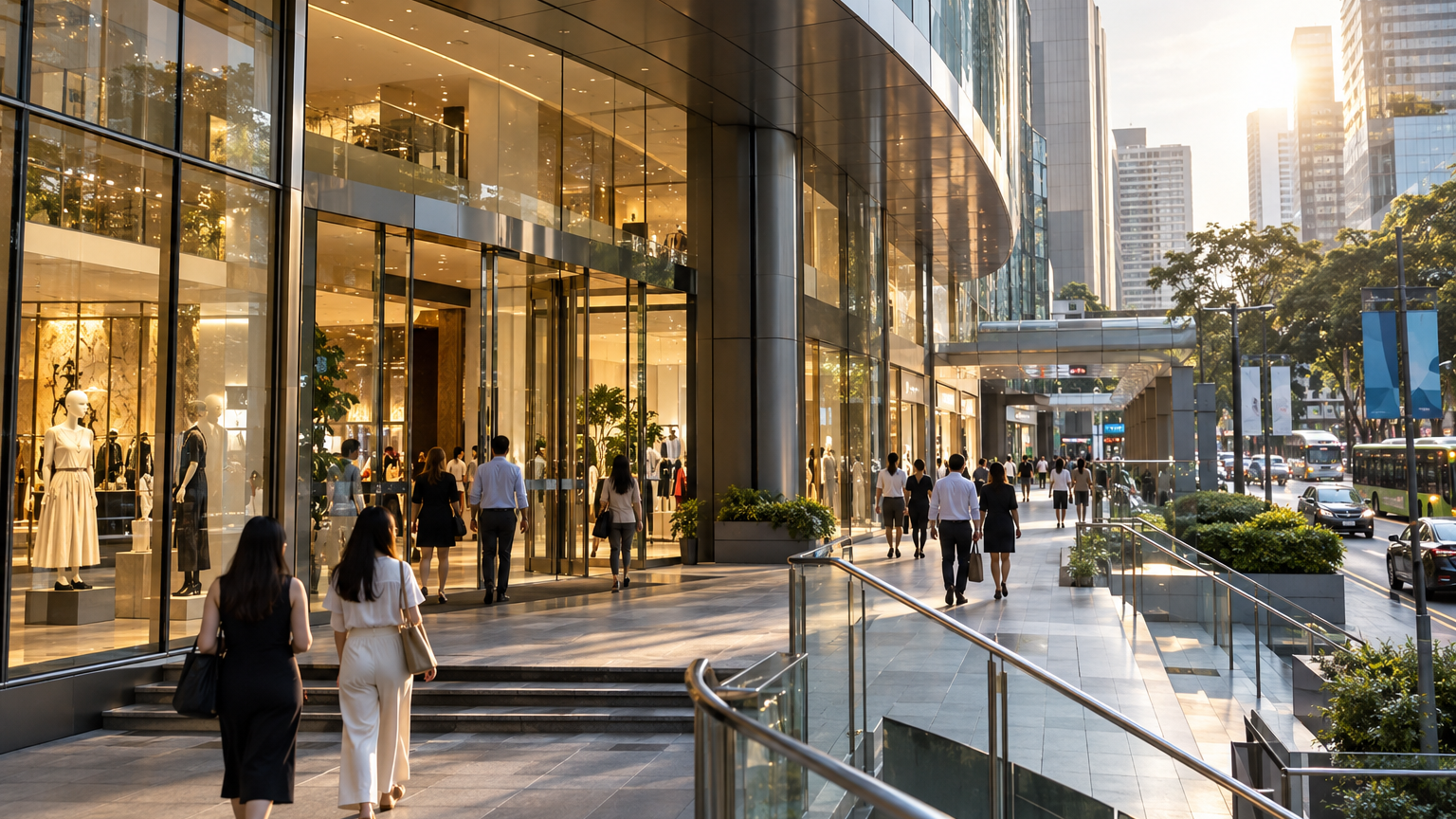
Four familiar shopping properties entered deals or changed hands in 2026, while reported prime rents rose a modest 0.7% in the third quarter.
Paragon, Wheelock Place, i12 Katong and White Sands have something unusual in common this year: each has either changed hands or become the subject of an acquisition or divestment agreement. The largest is CapitaLand Integrated Commercial Trust’s proposed purchase of Paragon at an agreed property value of S$3.9 billion.
That matters more to regular shoppers than Singapore’s latest headline rent movement. Knight Frank Singapore data reported on 20 October put average gross prime retail rent at S$29.20 per sq ft per month in the third quarter of 2026, up 0.7% from the previous quarter. Rents edged higher; ownership of several familiar shopping destinations shifted much more visibly.
The 0.7% rise is a benchmark, not every shop’s rent
“Prime retail rent” generally describes rents for sought-after, higher-quality retail space. It is a market benchmark, not a claim that every boutique, heartland shop or food-and-beverage outlet received the same increase.
The reported average rose 2.5% over the first nine months of 2026 to S$29.20 psf per month. For scale, a hypothetical 1,000 sq ft shop priced exactly at that average would have a gross monthly rent of about S$29,200. Applying a 0.7% increase to the same space works out to roughly S$200 more a month before considering the actual lease terms, service charges or other occupancy costs.
That calculation illustrates why the quarterly percentage looks modest. Individual tenants may have very different experiences depending on their mall, floor, frontage, lease-renewal date and negotiating position.
There is also an evidence limitation worth keeping in view: Knight Frank’s underlying third-quarter report was not publicly retrievable during our research. The rent figure and related commentary are therefore attributed to Knight Frank data carried in a single published report rather than treated as independently confirmed primary data.
Paragon is the biggest deal—but it was not yet complete
On 20 April 2026, CapitaLand Integrated Commercial Trust, or CICT, signed an agreement to acquire 100% of Paragon from Cuscaden Peak and related vendors. Paragon is more than its luxury mall: it is a freehold Orchard Road integrated development containing retail, office and medical space.
The agreed property value was S$3.9 billion. When announced, the proposed acquisition remained subject to conditions, including approval from CICT unitholders. It should therefore be described as an agreed acquisition rather than a completed sale.
Wheelock Place followed on 30 July. Hongkong Land said its Singapore Central Private Real Estate Fund had entered a definitive agreement to acquire the Orchard Road property from an entity owned by Wharf Real Estate Investment Company. The official announcement did not disclose a price or completion date.
These two Orchard Road agreements involve prominent assets, but they do not establish that either property will undergo a particular renovation. Ownership can change first; decisions about construction, shop layouts and tenant selection may come later.
The ownership changes extend beyond Orchard Road
The year’s transactions were not confined to the prime shopping belt.
Keppel announced on 22 April that it had agreed to sell its entire interest in i12 Katong to Altallo Holdings for approximately S$372 million. Keppel said the East Coast Road mall was about 96% committed as at the end of January 2026, meaning that proportion of its available space had tenants committed to it at that point.
In Pasir Ris, Frasers Centrepoint Trust completed its divestment of White Sands by 11 June. White Sands is a suburban mall beside Pasir Ris MRT station and bus interchange, giving it a different role from destination-oriented Orchard Road properties: it serves everyday commuters and residents as part of a transport hub.
Taken together, the four assets form a useful comparison. Paragon and Wheelock Place are high-profile Orchard Road properties; i12 Katong serves the East Coast; and White Sands is closely tied to a suburban town centre. The common thread is changing ownership—not one uniform retail strategy.
| Property | Verified 2026 event | Status in the cited announcement |
|---|---|---|
| Paragon | CICT agreed to acquire it at a S$3.9 billion property value | Subject to conditions including unitholder approval |
| Wheelock Place | Hongkong Land’s fund entered an acquisition agreement | Definitive agreement announced; no price or completion date stated |
| i12 Katong | Keppel agreed to divest it for about S$372 million | Sale agreement announced |
| White Sands | Frasers Centrepoint Trust divested the mall | Divestment completed by 11 June |
What a new owner can—and cannot—change
Sara Ching, director of retail at Knight Frank Singapore, said the recent transactions could lead to asset-enhancement initiatives, revised tenant mixes and new retail concepts. That is an informed outlook, not confirmation that works have been approved for any of these four properties.
An asset-enhancement initiative is property shorthand for improvements intended to make a building work better or earn more. In a mall, that might eventually involve reconfiguring space, improving circulation or changing the balance of shops, restaurants and services. The exact choices depend on each owner and asset.
For shoppers, tenant changes are usually the first visible consequence: a familiar shop may move, a larger brand may take more space or a mall may adjust how much room it gives to dining and services. Renovation may be more noticeable, but it is not an automatic result of a sale.
Tenants face a more complicated equation. A refreshed mall can draw more visitors, yet relocation costs, downtime and lease negotiations can also create pressure. The 0.7% market average says little about how those trade-offs will land for one retailer.
The next chapter depends on execution
The rent number suggests that sought-after retail space became slightly more expensive during the quarter. The transaction record tells a different, more tangible story: major owners are willing to commit substantial capital to established Singapore shopping properties.
But a new name on the ownership documents does not instantly produce a better mall. The useful things to watch are concrete announcements about completed acquisitions, approved enhancement works and actual tenant changes.
For now, 0.7% is the market statistic; four familiar properties changing hands or entering sale agreements are the lived story. What their new owners do next will determine whether shoppers notice more than a change behind the scenes.