 plan
Long Island coastal-protection project begins preparatory works in January 2027
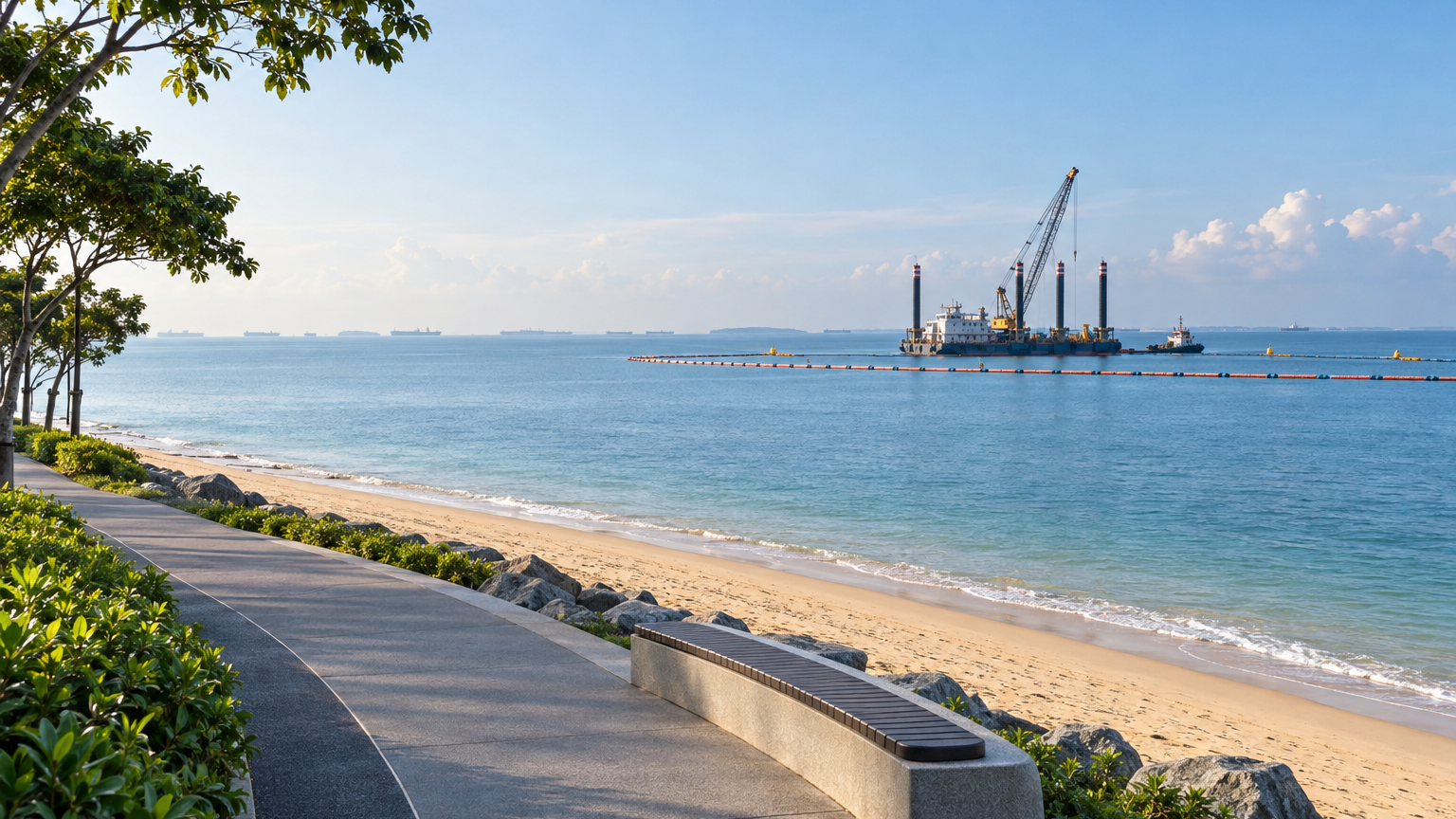
Works start west of Bedok Jetty as public discussions explore recreation and access. East Coast Park’s beaches and paths will remain accessible; the final design is still under study.
Long Island, the planned land-creation project to protect Singapore’s low-lying East Coast from rising sea levels, will begin preparatory works in January 2027, starting in the waters west of Bedok Jetty. Alongside those works, the Urban Redevelopment Authority (URA) will open a fresh round of public discussions on recreation and connections to the rest of Singapore.
For nearby residents and regular East Coast Park users, this brings both an opportunity to shape the future waterfront and a practical change offshore. Sea users will need to keep clear of the marked work area, vessels and barriers, while URA says beaches, exercise paths and tracks will remain accessible throughout the preparatory works. Park-goers can continue using East Coast Park’s facilities.
What can you help shape in 2027?
The new focus group discussions will examine two connected questions: what people could do at Long Island, and how they could get there. The recreation theme covers how new experiences and waterfront areas could complement East Coast Park. Connectivity discussions will explore access between Long Island, the city and Singapore’s eastern region.
Agencies will use the ideas to inform ongoing technical and planning studies, considering recreational options alongside future land-use and infrastructure needs. For participants, the useful question is therefore not just which activities they would enjoy, but how those experiences could work together with access to the waterfront.
The discussions build on feedback from more than 15,000 people since November 2023, gathered through focus groups, dialogues, exhibitions, online surveys and other platforms. Earlier suggestions included water sports in the future reservoir, beaches and nature-based coastal features, and good connections to the rest of Singapore. These are public aspirations, rather than an adopted list of facilities.
URA is inviting members of the public to register their interest in the engagement sessions. For residents who want a say in the waterfront’s future use, the announced discussions offer a route to contribute while recreational experiences and connection options are still being studied.
What will happen west of Bedok Jetty?
Preparatory works will start progressively from January 2027 and take place over the next few years. The sequence begins with removing seabed obstructions, followed by construction of temporary sand bunds—sand embankments—and sand infilling. Vessels will operate offshore, with silt screens and floating barriers marking the designated work area.
For anyone using the sea, that boundary is the practical change to watch. URA advises keeping a safe distance from the work zone, marine vessels and barriers. Safety advisories will be displayed at East Coast Park and published on agencies’ websites before works begin, with updates when necessary.
There is also investigation work on land. HDB has been carrying out site investigations since September 2026, using soil investigation rigs at locations along East Coast Park to understand geological conditions. URA describes these works as localised and temporary, and says they are not expected to affect existing park activities.
These activities serve different purposes: the land-based investigations gather information about ground conditions, while the offshore programme prepares the sea area. Both proceed alongside the environmental and engineering studies that will inform Long Island’s detailed plans.
What stays available—and why east and west differ
Bedok Jetty is the key geographical reference in the announced sequence. Preparatory works east of the jetty will begin only after the 2029 Southeast Asian (SEA) Games are completed. In the meantime, the eastern sea space will remain available for water sports and major international sporting events.
For people planning sea-based activities, the immediate distinction is therefore between the western work area and the eastern sea space. On land, URA’s stated arrangement is continued access to beaches, exercise paths, tracks and park facilities throughout the preparatory works.
Continued access does not mean an unchanged setting. URA says mitigation measures will be implemented to minimise effects on the environment and community, guided by the published Environmental Study. Water quality, suspended sediment levels, noise and dust will be monitored to check the effectiveness of those measures.
What remains open after works begin?
Long Island’s stated purposes extend beyond coastal protection and recreation. The project is intended to add a reservoir to strengthen water resilience and provide land for future needs. The coming discussions address how recreation and connections could fit within that wider project.
Crucially, URA says the preparatory works will not determine the eventual detailed design. Environmental and engineering studies continue, including work on the reclamation profile—the shape of the land to be created.
January 2027 therefore brings two parallel developments for East Coast users: a demarcated offshore work area to keep clear of, and an opportunity to influence recreational experiences and connections. Physical preparations will be starting, but the waterfront’s eventual character remains a subject for planning and public input.