 plan
planHow Tampines GreenOpal’s Builder Recovered Three Months Above an MRT Tunnel
Vico made crucial steel cages in-house and changed its roof-building method to keep 1,070 flats moving.
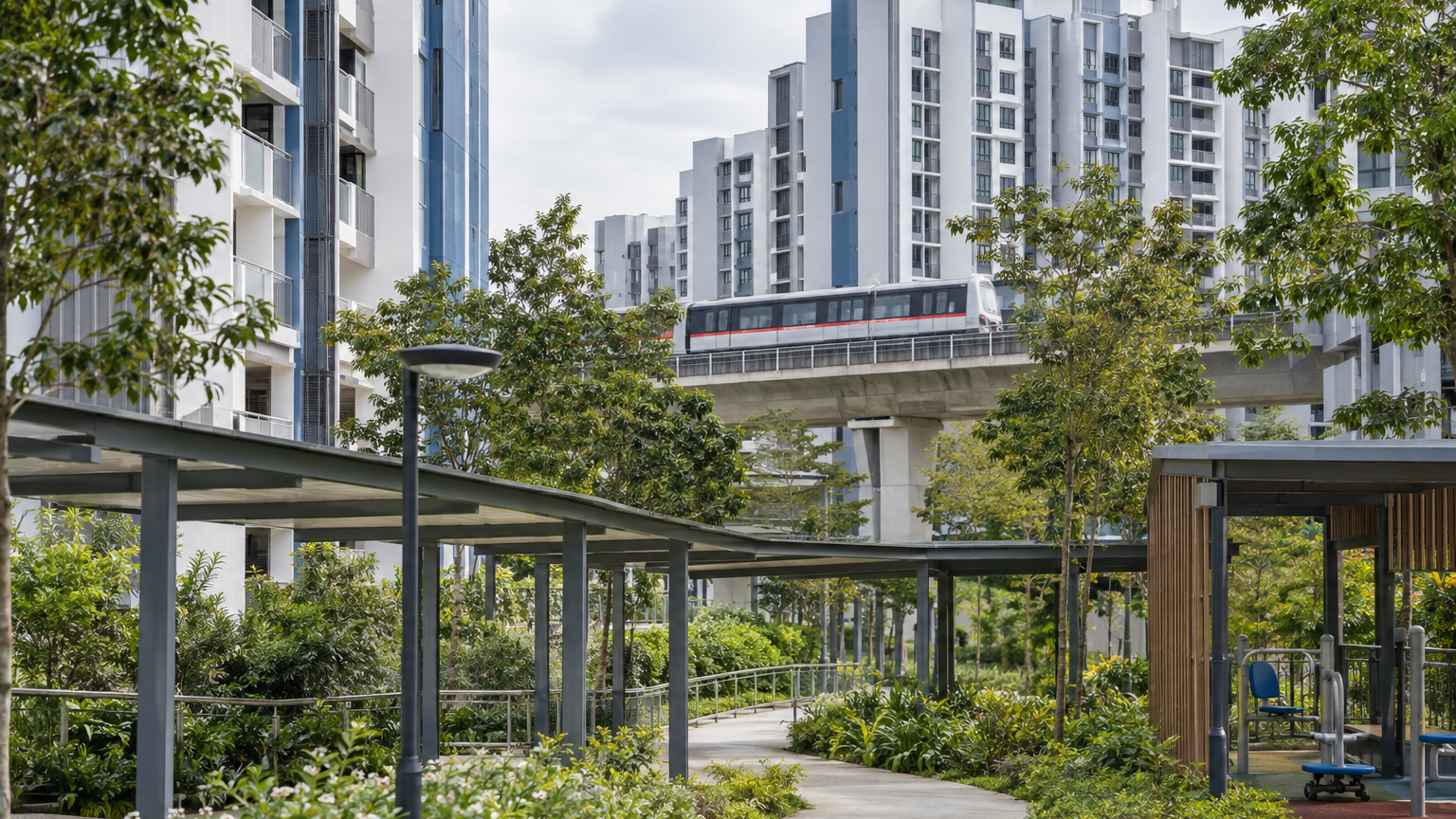
A Downtown Line tunnel runs beneath the centre of Tampines GreenOpal. When a labour shortage disrupted production of the steel cages needed for its foundations, main contractor Vico Construction trained its own workers, made about 30% of the cages in-house and says it recovered roughly three months.
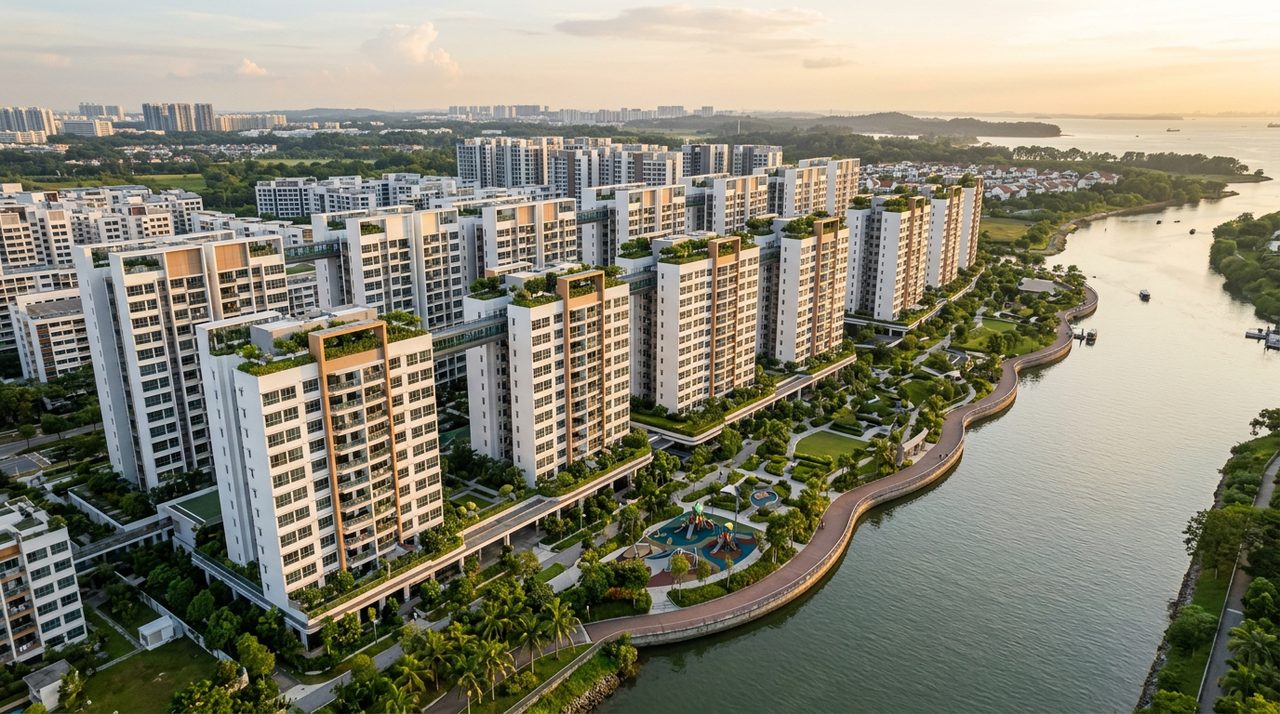
The work helped deliver 1,070 flats across eight blocks beside Bedok Canal and Bedok Park Connector. For residents, this is a glimpse of the complicated construction work that disappears once the hoardings come down and families move in.
An award for Vico’s first BTO project
Tampines GreenOpal was Vico’s first Build-To-Order project as main contractor. The project earned the company its first Certificate of Merit in the construction category for housing at the HDB Awards 2026.
The official announcement for the 2026 awards was published on 23 September 2026. The awards cover work in areas including design, engineering and construction, placing Vico’s recognition within a wider assessment of the teams responsible for public housing projects.
The reasons for this particular award become clearer when the build is viewed as a sequence. The team first had to plan foundations around a rail tunnel and existing underground services. It then had to deal with a shortage of a crucial steel component before finding other ways to recover lost time.
Finding room for foundations above the tunnel
More than half of the project site sat within the Land Transport Authority’s Railway Protection Zone because of the Downtown Line tunnel. Vico and the project consultants used trial holes to locate underground services, then worked out where foundation piles could safely be installed.
A foundation pile is a long structural element that transfers a building’s weight into the ground. A steel reinforcement cage is placed inside before concrete is poured. Where a tunnel and buried services already occupy part of the ground, the team cannot simply position those piles wherever it is most convenient.
The estate is bounded by Tampines Streets 92 and 96, with its eight residential blocks ranging from 12 to 17 storeys. It includes three-, four- and five-room flats rather than a single, uniform block and flat type.
That helps explain the challenge in everyday terms. The builders were not putting up one modest structure over an empty site; they had to coordinate foundations for blocks of different heights while respecting the protected railway infrastructure below.
Importantly, the tunnel is part of the project’s construction story, not evidence of a current danger to residents. The award recognised how the team managed a constrained building site.
Bringing steel-cage work in-house
After the Covid-19 circuit breaker, the supplier producing reinforcement cages for the foundation piles faced a manpower shortage. Project director and senior project manager Poh Kim Siah said Vico trained its own workers and eventually fabricated about 30% of the cages itself. The contractor also used digital building models to spot clashes before work began, tracked precast pieces using QR codes and replaced labour-intensive roof work above 5m with factory-made components. Vico says these measures recovered around three months and saved about 700 man-days across the eight blocks; these are company-reported figures carried in branded content, not independently audited project records.
In plain English, Vico brought part of a disrupted supply chain under its own control. It still depended on outside suppliers, but making some cages itself reduced the pressure from one serious bottleneck.
The roof change shows how savings can accumulate across a large estate. Dividing the reported 700 man-days by eight blocks gives a simple average of 87.5 man-days per block, although the actual workload and saving would have differed from block to block.
The work residents rarely see
Tampines GreenOpal’s scale can be difficult to appreciate now that the cranes and temporary works are gone. Dividing 1,070 flats by eight residential blocks gives a rough average of about 134 homes per block, though the different block heights mean the homes are not distributed evenly.
Today, the estate’s position along Bedok Canal and Bedok Park Connector is part of residents’ daily surroundings. The trial holes, reinforcement cages and component-tracking systems belong to an earlier phase that is now largely buried or enclosed.
The award is recognition for managing that difficult build. It should not be treated as proof that the flats will command higher resale prices, experience fewer defects or cost less to maintain; those outcomes would require separate evidence over time.
Its practical significance is simpler. A large housing project moved forward despite restricted foundation locations and a labour shortage affecting a crucial component. Vico’s first BTO project shows how much planning, adaptation and repetitive behind-the-scenes work can sit beneath an estate that residents now experience simply as home.